English
 Español
 Português
 Français
 Русский язык
 Italiano
 Deutsch
 Nederlands
 لعربية
 한국어
 Japanese
 ภาษาไทย
 Türkçe
 Tiếng Việt
 Bahasa Indonesia
 Hindi
 kazakh
 Uzbek
 Thai
 Farsi

Indoor Floor-Standing Digital Signage Installation Guide: From Site Survey to Acceptance
 2026-11-26
 27



2026-11-26
27
Indoor floor-standing digital signage deployed in shopping malls, hotel lobbies, exhibition halls and chain stores rarely fails because of the display itself. Most rework comes from installation: bases shifted by cleaning carts, exposed cables causing trip hazards, unstable networking leading to unsynchronized content, and acceptance signed off only after confirming the screen powers on. This guide is written for system integrators, contractors, chain procurement teams and overseas distributors, covering five stages: site survey – fixing & anti-tip – cable hiding – power & network commissioning – acceptance & delivery, with executable engineering benchmarks.
Five survey items: floor material and flatness, power point and circuit, network access method, pedestrian/cart traffic flow, and property approval limits (drilling, fire safety, power usage).
Viewing conditions: main viewing height reference 1.5–2.2 m above floor; a 55-inch model is best viewed from 3–5 m; portrait and landscape content require different mounting heights and must be confirmed during survey.
Safety clearance: keep ≥1.5 m front buffer for viewing and passage; ≥80 cm between side-by-side units; avoid fire exits, elevator door travel paths and entrance bottlenecks.
Environment exclusions: direct sunlight or glass reflection zones, directly facing air-conditioner outlets, low-lying or damp floor areas.
Scenario differences: malls prioritize anti-collision and anti-shift; hotel lobbies require hidden cables and décor coordination; exhibition halls follow visitor routes with consistent spacing; chain stores need standardized points for replication.
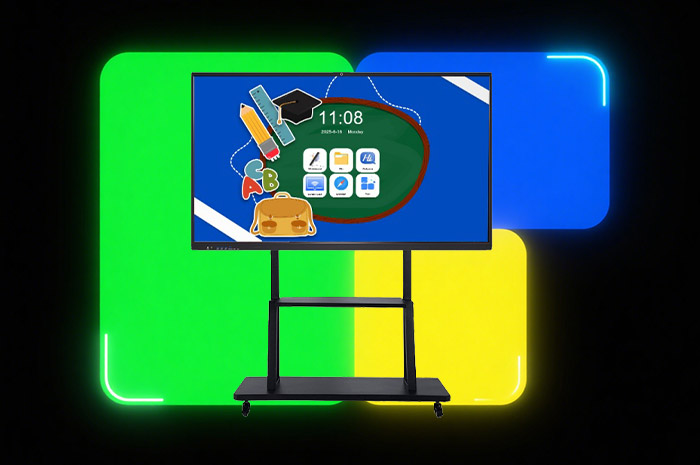
For a matching unit, see our 55-inch indoor floor-standing digital signage.
Unpacking inspection: photograph damaged outer cartons, check screen appearance before power-on, count accessories (base, screws, expansion bolts, cables).
Handling: a 55-inch floor-standing unit is heavy; use two-person handling or lifting straps; protect corners when passing elevators or doorways; never drag bare units.
Base assembly: follow the manual sequence; pre-tighten then cross-lock screws; calibrate level after assembly with tolerance around ≤1 mm/m.
Property approval first: complete drilling, power tap and fire-aisle approvals before entering the site to avoid mid-job stoppage.
When mechanical fixing is mandatory: public areas, child-accessible zones, cart/luggage traffic, or smooth stone/tile floors require mechanical anchoring, not base self-weight alone.
Four options: anti-slip pads (low-risk temporary positions only); weighted base (when drilling is forbidden, fill with lead or concrete to 80 kg+); expansion anchors (concrete/cement floor, M10+, embedment ≥80 mm, anchor spacing ≤600 mm); guardrails/isolation (high collision risk).
By floor type: marble/tile – scan for underfloor heating and conduits before drilling; cement – expansion or chemical anchors; raised access floor – anchor to structural slab or enlarge weighted plate; carpet – fixings must penetrate carpet into substrate.
Anti-tip recheck: push-wobble test after installation, no visible displacement; re-tighten fixings once after 24 h continuous running.
Routing rule: cables exit through base/column internal channels, run along floor edge with cable covers; exposed runs must use flame-retardant trunking or conduit, never bare on floor.
Separate weak and strong current: power and network/signal cables on separate sides, shield at crossings; each point uses an independent breaker, not mixed with lighting circuits.
Three concealment methods: built-in base storage; floor trunking (retrofit projects, waterproof cover); skirting/corner routing (hotels, showrooms).
Trip and pull protection: leave service loop at outlet, joints unstressed; public-area covers firmly fixed and able to withstand cleaning.
Pre-power checklist: voltage matches nameplate, grounding reliable, base fixed, screen film removed, ventilation clearance ≥5 cm.
First boot config: firmware version, resolution and portrait/landscape setting, auto-start and timed on/off policy.
Networking: wired preferred, Wi-Fi as backup; points with Wi-Fi below -65 dBm should use wired or add AP.
Batch commissioning: unified config template, device ID matched to point list, CMS pushes test content to verify reception and playback within agreed time.
Troubleshooting: black screen (power/source/backlight); offline (cable/AP/IP conflict); touch failure (driver/calibration/dirt); color shift or flicker (loose cable/strong interference/panel fault).
Structure acceptance: push-wobble no displacement, re-tightening record, floor intact, levelness per agreement.
Function acceptance: display (resolution/color/brightness uniformity), touch if any, audio, network publishing, offline resume, timed tasks, abnormal recovery.
Continuous run test: baseline 72 h without intervention, log freeze, reboot, overheating, disconnection; larger or chain projects may extend to 168 h per contract.
Delivery pack: signed acceptance sheet, point list (ID/location/height/orientation/network), device list, spec sheet, warranty card, operation manual.
Chain project extra: unified spacing/orientation/height record for next-store replication.
Voltage and plugs: follow local electrical codes; verify nameplate voltage against site supply before power-on.
Certification: CE, FCC, RoHS etc. per destination mandatory rules; confirm compliance before bidding and customs clearance.
Post-sea-freight unpacking: inspect shock marks on packaging, glass and base welds, record appearance before power-on; note damage on delivery receipt with photos.
Remote support: request supplier remote guidance; record fixing, routing and power tests on video as delivery attachments.
Q1. Can a floor-standing ad machine be installed without fixing? Low-risk indoor spots may rely on ≥80 kg weighted base plus anti-slip pads; public areas, cart routes and child-accessible zones need M10 expansion anchors.
Q2. Marble floor cannot be drilled, what now? Weighted base filled to 80 kg+, anti-slip pads and corner isolation posts; never rely on original self-weight.
Q3. How to fix on carpet or raised floor without wobbling? Carpet fixings penetrate into substrate; raised floor must anchor to structural slab or use enlarged weighted plate, not lock on panel only.
Q4. How to batch commission and accept chain store units? Unified template + point list numbering + CMS group push; first store full inspection, later stores sampling plus video receipt.
Q5. What is most often missed in overseas voltage and certification? Nameplate vs local socket check, destination mandatory certification, and pre-power appearance record after sea freight.
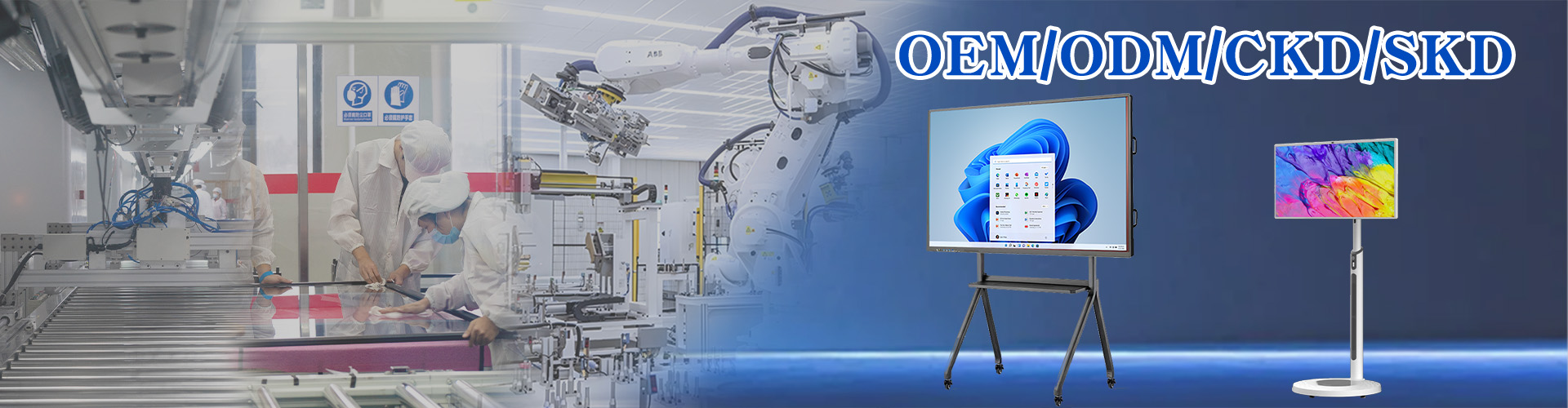
Need OEM/ODM floor-standing solutions or a project work order template? Qunmao Display supports customization of size, system, appearance and mounting accessories for integrators and chain projects.
Contact us:
Tel / WhatsApp: +86 15920011166 | Email: info@szqunmao.com


 Floor 6, Building A, No. 3, North District, Shangxue Science and Technology City, Xinxue Community, Bantian Street, Longgang District, Shenzhen City
 info@szqunmao.com
 +86 13148726043
 +86 13148726043