English
 Español
 Português
 Français
 Русский язык
 Italiano
 Deutsch
 Nederlands
 لعربية
 한국어
 Japanese
 ภาษาไทย
 Türkçe
 Tiếng Việt
 Bahasa Indonesia
 Hindi
 kazakh
 Uzbek
 Thai
 Farsi

OEM Interactive Flat Panels with Your Brand | Qunmao
 2026-11-20
 21



2026-11-20
21
Launching an OEM interactive flat panel with your own brand in Kazakhstan involves more than adding a company logo to a finished product. Distributors and brand owners need to define the product range, hardware configuration, software experience, language requirements, packaging and documentation before moving into production.
A practical approach is to work with an experienced manufacturer through a structured process: confirm the product requirements, approve the branding and customization details, evaluate a sample, and then arrange mass production. This approach also applies to businesses planning to introduce their own interactive whiteboard or smart board product line.
For Kazakhstan buyers, Russian and Kazakh language support, localized user materials and market-specific packaging should be considered early. Qunmao works with distributors, system integrators and brand owners on OEM/ODM interactive flat panel projects, including product configuration and branding customization.
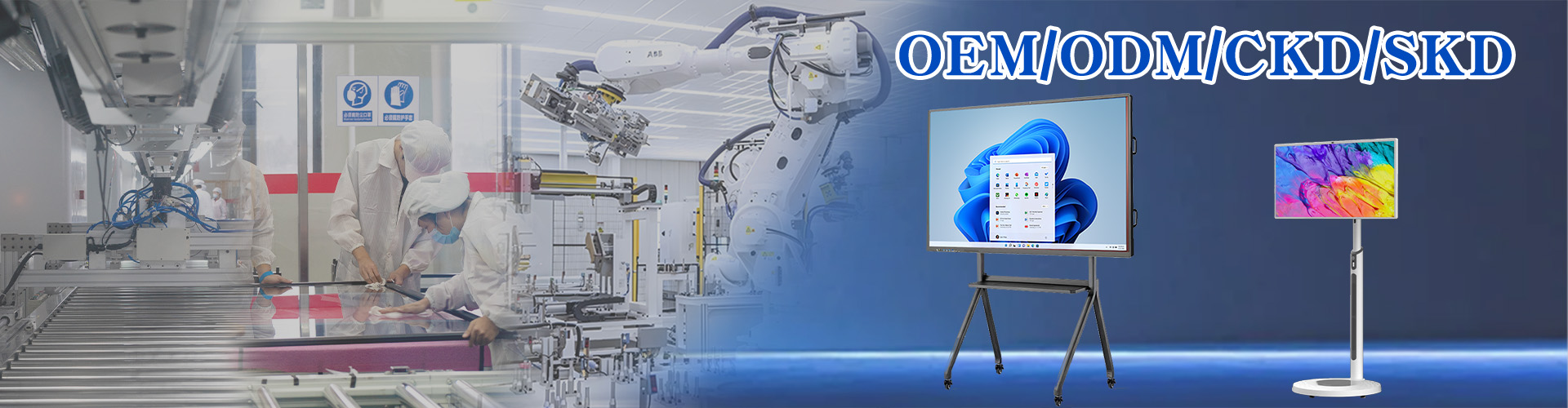
OEM and ODM are two common cooperation models for businesses developing their own branded interactive flat panels. The actual division of design, development and manufacturing responsibilities depends on the project agreement.
In an OEM project, the buyer usually provides a clearer product specification, brand identity or customization brief. The manufacturer produces the agreed interactive flat panel configuration and applies the customer's approved branding and project requirements.
This model can suit established distributors and brands that already understand their target market and have specific requirements for product appearance, hardware, software or packaging.
In an ODM project, the buyer may use the manufacturer's existing product platform as the starting point. The manufacturer can help adapt the product configuration, software experience, branding and packaging to the buyer's market positioning.
This approach can be practical for companies that want to build their own product range without independently developing every part of the hardware and software platform.
| Comparison | OEM | ODM |
|---|---|---|
| Starting point | Buyer-defined product requirements or specifications | Manufacturer's existing product platform or design |
| Product configuration | Based on the agreed customer specification | Selected or adapted from available configurations |
| Branding | Customer's brand identity | Customer's brand identity |
| Software customization | Defined according to the project scope | Adapted according to available platform capabilities and project needs |
| Development responsibility | Allocated according to the agreed specification and contract | Allocated according to the agreed development scope and contract |
| Suitable buyers | Established brands and buyers with defined requirements | Distributors and new brands seeking a customized product platform |
OEM and ODM are not rigid legal categories with identical definitions across every supplier. Before placing an order, buyers should document the product scope, customization responsibilities, development costs, delivery requirements and intellectual property arrangements.
A successful own-brand product should offer a consistent experience across its hardware, software and customer-facing materials. Customization can cover several areas, depending on the selected model and project requirements.
The manufacturer's standard product can be configured with the customer's approved brand identity. This may include the product logo and other agreed brand elements used on the device and related materials.
Buyers should provide clear logo files, brand guidelines and placement requirements before sample production. The final appearance should be checked and approved before mass production.
The startup screen and boot animation can be customized to reflect the customer's brand. This gives the product a more consistent identity when distributors present it to schools, companies and other end users.
Buyers should confirm the required artwork, animation format and display behavior during the customization stage. The final effect should be reviewed on a sample device.
UI elements and system wallpapers can be adjusted according to the project scope. These changes help distributors create a more recognizable user experience across their branded product range.
Before approval, buyers should review the main screens, menus, icons and other agreed visual elements. Any software changes should be checked against the selected hardware platform and system version.
Customers can discuss the pre-installation of selected applications according to their business requirements and the compatibility of the chosen system configuration. This may include education, meeting, productivity or device-management applications.
Application licensing, account requirements, regional availability and third-party permissions should be checked separately. A request to pre-install an application does not automatically include a third-party software license.
Hardware configuration can be selected according to the target market, customer application and product positioning. Buyers may discuss available display sizes, Android configurations, optional Windows OPS solutions, memory and storage options, cameras, microphones and other supported features.
The final specification should be recorded in the quotation and approved sample documentation. This helps prevent differences between the sample, production order and delivered products.
Qunmao can discuss customized packaging, product labels, user manuals, quick-start guides and accessory configurations. These materials help distributors present a consistent brand image and prepare products for local sales channels.
Buyers should provide approved artwork, brand information and translated content where required. Packaging and documentation should be reviewed before production to avoid printing errors or missing information.
Language localization is an important part of preparing an interactive flat panel for the Kazakhstan market. Buyers should consider both the language experience of the device and the materials supplied with the product.
For Kazakhstan distributors, Kazakh and Russian language requirements should be identified before confirming the software configuration. The selected product platform should be checked for the required language settings and input capabilities.
Qunmao can discuss language-related requirements for the selected interactive flat panel configuration. Russian and Kazakh keyboard input and handwriting recognition are supported on the relevant product configurations, while the exact interface translation scope should be confirmed separately.
System language: confirm the required language options in the system settings.
Text display: check Kazakh and Russian characters across menus, labels and supported applications.
Keyboard input: test the required language input methods and keyboard layouts.
Handwriting recognition: verify recognition performance for the intended languages and use cases.
Whiteboard software: review the language options and text display in the whiteboard application.
Pre-installed applications: confirm whether each selected application supports the required language.
User documentation: prepare the required translated manuals and quick-start materials.
Localization scope matters: system language support does not automatically mean every third-party application, software menu or customized interface is fully translated. Buyers should define the exact translation and testing scope before sample approval.
Language localization should reflect how customers actually use the product. For example, schools may need localized whiteboard instructions, while corporate users may focus on meeting tools, device settings and application menus.
Testing the complete user experience with representative local users can help identify translation gaps before a large order is produced.
Packaging and documentation are part of the product experience and should be planned alongside hardware and software customization. For a branded product entering Kazakhstan, buyers should distinguish between commercial branding materials and information required by applicable regulations.
Distributors may choose to prepare Kazakh and Russian versions of customer-facing materials to support local sales and product use. Depending on the project, these materials may include:
Product packaging and printed labels;
Kazakh and Russian user manuals;
Quick-start guides and installation instructions;
Warranty cards and after-sales information;
Product brochures and specification sheets;
Branding materials for distributors and retail channels.
Commercial design preferences should not be confused with mandatory regulatory requirements. The exact product labeling, safety information, instructions, conformity markings and language requirements must be checked against the applicable EAEU technical regulations and Kazakhstan requirements for the product category.
Before mass production, importers should confirm the applicable requirements with their local compliance adviser, importer or relevant authority. They should also verify that conformity documents cover the exact product model and configuration being supplied.
The buyer should provide or approve its brand information, translated content and market-specific wording. The manufacturer can incorporate the agreed materials into the product package, but the parties should clearly define who is responsible for checking translations and regulatory compliance.
For smoother production, buyers should prepare the following information in advance:
Registered or authorized brand name and logo files;
Approved product model names and specifications;
Final packaging artwork and label content;
Approved Kazakh and Russian translations where required;
Manual content and safety information;
Applicable conformity and import documentation requirements.
A structured production process helps both the brand owner and manufacturer confirm responsibilities before a customized product enters mass production. For Kazakhstan projects, language, packaging and branding approvals should be included in the process rather than treated as last-minute additions.
| Stage | Main Activities | Buyer Confirmation |
|---|---|---|
| 1. Requirement Confirmation | Discuss product size, hardware configuration, quantity, brand and target-market requirements. | Product brief and preliminary specification |
| 2. Design and Customization | Prepare agreed logo, startup screen, UI, wallpaper, packaging and documentation materials. | Approved design files and customization scope |
| 3. Sample Production | Produce a sample based on the confirmed configuration and customization requirements. | Sample device and agreed sample checklist |
| 4. Sample Review | Check hardware, branding, language display, software functions and packaging details. | Written sample approval or a list of revisions |
| 5. Pilot Order | Evaluate the agreed production and inspection process on a smaller order where appropriate. | Production and quality requirements |
| 6. Mass Production | Manufacture the confirmed configuration and carry out agreed quality inspections. | Order specifications and inspection arrangements |
| 7. Packing and Shipment | Complete approved packaging, prepare shipment documents and arrange dispatch. | Final packing and shipping information |
For reference, Qunmao's regular sample production typically takes around 3–5 days, while regular bulk production typically takes around 20–30 days. These are production reference periods, not guaranteed end-to-end project lead times.
OEM/ODM projects may require additional time for design preparation, software adjustments, translation, sample testing and customer approval. The actual schedule depends on the selected model, customization scope, order quantity and factory production plan.
To avoid misunderstandings, buyers should ask the manufacturer to confirm the production schedule after the product configuration, artwork, sample requirements and order details have been agreed.
Brand ownership and customization rights should be discussed before production begins. This is particularly important for distributors and companies investing in a long-term private-label product range.
The buyer should confirm that it owns the trademark or has permission to use the brand assets supplied for production. The manufacturer should receive approved files and written instructions covering the permitted use of those materials.
Customized UI elements, startup animations, wallpapers, packaging artwork and other design materials should be identified in the project agreement. The parties should clarify which files are supplied by the buyer, which are developed by the manufacturer and which may be used for other projects.
Where brand exclusivity or confidentiality is important, buyers should discuss the scope of protection and any restrictions on reuse before placing the order. The agreement should specify ownership, permitted use, delivery of editable files where applicable and confidentiality responsibilities.
Practical recommendation: do not assume that every customized design or software element automatically belongs to the buyer. Trademark ownership, design rights, software rights and usage permissions should be clearly documented in the contract.
A private-label interactive flat panel project involves more than approving a sample and placing a purchase order. The buyer needs a repeatable process to maintain product consistency and support its own customers after delivery.
Use the approved sample as the reference for the production specification. Check the display, touch performance, system configuration, language settings, startup screen, logo placement, packaging and included accessories.
Record the approved hardware and software configuration in the purchase order or technical specification. Any later changes should be reviewed and approved to reduce the risk of differences between production batches.
Agree on the inspection requirements, packaging checks and spare-parts arrangements before the first bulk order. A clear process helps the brand owner manage product issues and maintain a more consistent customer experience.
Confirm the warranty scope, claim process, required evidence and responsibilities of each party. Qunmao can provide manufacturing-related technical guidance, spare-parts support and remote assistance according to the agreed service arrangements.
For projects in Kazakhstan, the buyer or its appointed local service partner should plan local installation and on-site maintenance. The factory's role should be clearly distinguished from the responsibilities of the local distributor or service provider.
There is no single MOQ that applies to every OEM project. The required quantity depends on the selected model, hardware configuration, branding scope, packaging requirements and production arrangements. Buyers should provide their expected quantity and customization list for a project-specific quotation.
Qunmao can discuss Kazakh and Russian language requirements for the selected product configuration. Relevant keyboard input and handwriting recognition capabilities are supported on applicable configurations. The exact system interface, application and translation scope should be confirmed and tested during sample approval.
The buyer should provide a logo and brand assets it owns or is authorized to use. Ownership and usage rights for customized UI, artwork, software elements and other project files should be clearly defined in the cooperation agreement.
Regular sample production typically takes around 3–5 days, and regular bulk production typically takes around 20–30 days. Custom design, software adjustments, language localization and sample approval may add time, so the final schedule should be confirmed for each project.
Yes. Qunmao can discuss customized packaging and user documentation, including Kazakh and Russian versions. The buyer should provide or approve the translated content, while applicable labeling and language requirements should be checked for the specific product and market.
Building an interactive flat panel brand in Kazakhstan requires a suitable product platform, a clear customization plan and a reliable manufacturing partner. Whether you are an established distributor or preparing to introduce a new smart board product line, the first step is to define your target market and product requirements.
Qunmao supports OEM/ODM cooperation through product configuration, brand logo customization, startup screens, UI and wallpaper adjustments, pre-installed applications, language-related customization, packaging and documentation. For suitable projects, the factory can also provide sample production, assembly documentation, installation videos, remote video guidance and training support.
Explore our Interactive Flat Panel solutions and Interactive Whiteboard range to review the available product categories.
Ready to develop your own interactive flat panel brand?
Share your target market, preferred screen sizes, estimated order quantity, hardware requirements and branding ideas. Qunmao can discuss a suitable OEM/ODM solution based on your product and business plans.


 Floor 6, Building A, No. 3, North District, Shangxue Science and Technology City, Xinxue Community, Bantian Street, Longgang District, Shenzhen City
 info@szqunmao.com
 +86 13148726043
 +86 13148726043