English
 Español
 Português
 Français
 Русский язык
 Italiano
 Deutsch
 Nederlands
 لعربية
 한국어
 Japanese
 ภาษาไทย
 Türkçe
 Tiếng Việt
 Bahasa Indonesia
 Hindi
 kazakh
 Uzbek
 Thai
 Farsi






Written for distributors, brand owners, resellers, AV integrators and private-label buyers: Building a smart board range under your own brand does not have to mean building a factory. With the right OEM/ODM partner, a buyer can launch a private-label interactive smart board with a custom logo, a custom boot screen and pre-installed branded software — while keeping full CE, FCC, RoHS and ISO9001 certification. This guide explains OEM versus ODM, walks through MOQ, lead time and customization scope, and shows how to structure a private-label program that scales from a single sample to a full production run without giving up compliance or quality.
OEM vs ODM — What Is the Difference?
OEM (Original Equipment Manufacturing) means the manufacturer builds an existing product to your specification and applies your branding: logo, boot screen, packaging and pre-installed software. The underlying smart board design is shared; your brand goes on top. ODM (Original Design Manufacturing) goes further — the manufacturer develops a product to your concept, potentially with custom hardware, panel configuration, interface layout or software features that no one else carries. For most distributors, OEM is the faster, lower-risk route to market; for brand owners with a differentiated vision, ODM creates a product competitors cannot copy.
What You Can Customize
A mature OEM/ODM program lets buyers tailor both software and hardware. On the software side: custom boot screens, pre-installed branded apps, a tailored interface for the target market, and either an office build (video conferencing, wireless casting, annotation) or a classroom build (teaching toolkit, quiz software, collaborative whiteboard). On the hardware side: panel size from 55″ to 110″, RAM/ROM configuration, OPS PC option (Intel i3/i5/i7), and interface layout. Every customized unit retains full CE, FCC, RoHS and ISO9001 certification, so differentiation never costs you compliance.
| Customization | OEM | ODM |
|---|---|---|
| Logo & branding | Yes | Yes |
| Boot screen & UI | Yes | Yes |
| Pre-installed software | Standard options | Fully custom |
| Hardware / panel config | From existing range | Custom design |
| Certification retained | CE / FCC / RoHS / ISO9001 | CE / FCC / RoHS / ISO9001 |
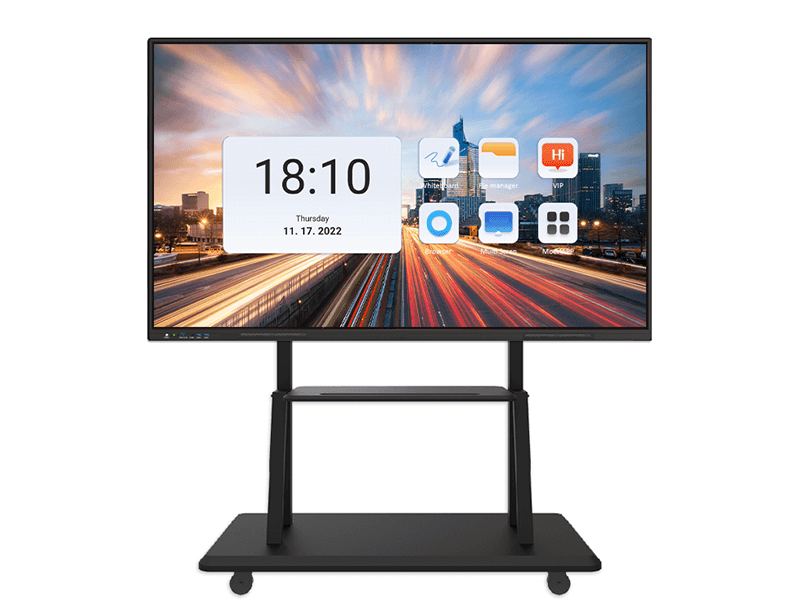
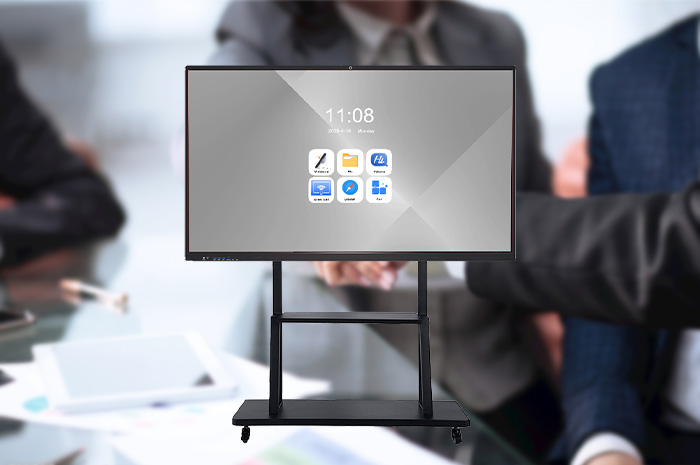
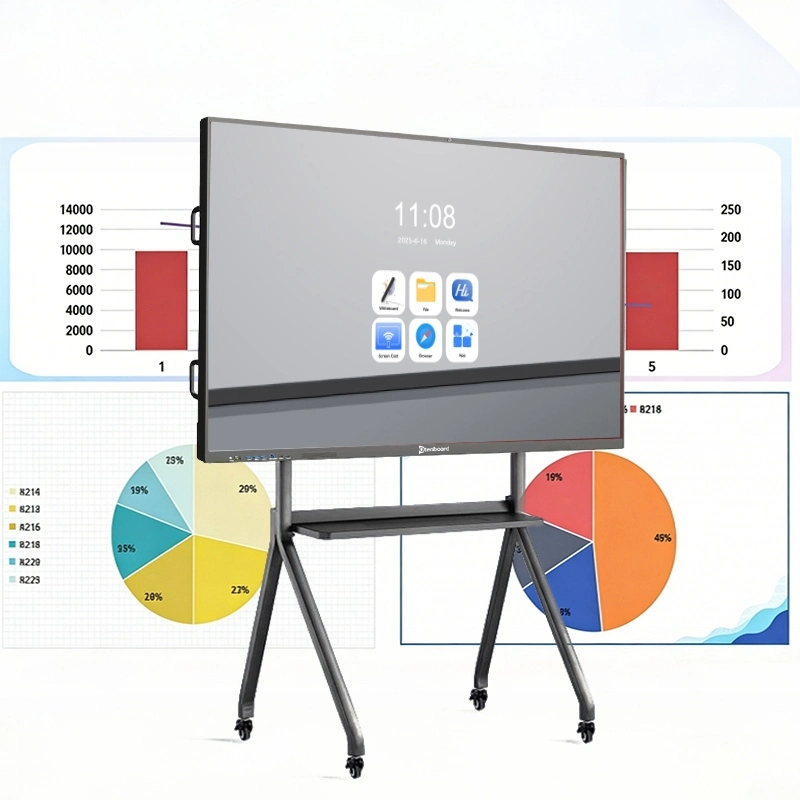
The 98-inch interactive smart board OEM/ODM platform is a common starting point for private-label programs: a 4K BOE A+ panel, 40-point infrared multi-touch, Android 14.0 octa-core, and the option to pre-install your branded software, add your logo and customize the boot screen.
Buyer tip: confirm the certification scope before production starts. A changed boot screen or added app is usually fine, but a hardware change can trigger re-testing. Agreeing the boundary of customization upfront keeps certification intact and avoids mid-run surprises.
MOQ — Sample First, Then Scale
Minimum order is deliberately low: one unit for a sample and 10 units for a production run. This lets a distributor or brand owner validate the product, test the software build and confirm the branding under real conditions before committing to volume. The sample stage is where you verify touch accuracy, panel brightness, wireless casting and boot experience — the details that decide whether end customers accept the board. Only after the sample is approved should the production run proceed.
Lead Time and Stock
Standard lead time is 15–25 days, with express production of 7–10 days at MOQ 5 units for urgent launches or trade-show deadlines. The factory holds 3,000–5,000 units in monthly stock, so approved OEM orders dispatch without long waits. Shipping covers sea freight (FCL/LCL) as the most cost-effective option for volume, air freight for urgent samples and DDP door-to-door delivery with import duties handled. Inquiries are answered within 12 hours, which keeps a private-label launch on schedule.
Factory since 2009230,000㎡ base85%+ export50+ countriesCE / FCC / RoHS / ISO9001
Why Source OEM/ODM Direct From the Factory
Buying direct removes middleman markup and shortens the feedback loop. A manufacturer with its own R&D team, a complete supply chain and a strict ISO9001 process can adjust specifications, turn samples around quickly and answer warranty questions without a layer of resellers in between. The Shenzhen base has produced commercial display products since 2009 across 230,000㎡, exporting more than 85% of output to 50+ countries and regions including India, the USA, Russia, Indonesia, Morocco and South Africa. That export volume means private-label orders get stable supply, QC-tested units and a mature after-sales channel.
Quality Control in a Private-Label Program
Private label puts your name on the board, so quality control is not optional. Every unit should be strictly tested by QC before delivery, with incoming panel inspection, in-process checks and final functional testing. A supplier operating to ISO9001, with A+ grade panels, anti-glare glass and zero-gap bonding, 6ms response and a 60,000-hour LCD life, gives a brand owner a product that performs consistently across the whole run — the hundredth board matching the first. Confirming the QC process and requesting sample test results protects the brand as much as the buyer.
Choosing the Right Partner
Real manufacturer: welcome factory visits and ask to see the production line and test bench.
Certification set: CE, FCC, RoHS and ISO9001 as standard, with scope confirmed for customization.
Range depth: 55″ to 110″ so you can build a full product family from one source.
Responsive support: 12-hour email replies and clear after-sales terms.
Proven export record: 50+ countries of experience clearing customs and supporting distributors.
From Sample to Full Program — A Typical Path
A straightforward private-label path looks like this: request a sample unit of the base interactive smart board, approve the build, define the customization scope (logo, boot screen, software, size mix), place the 10-unit production run, then scale to volume once the market response is confirmed. Because MOQ is low and lead time is short, a distributor can test a product line and expand it without tying up large capital — a structure that suits both first-time brand owners and established resellers adding a smart board category.
What is the difference between OEM and ODM for a smart board?
OEM applies your branding to an existing board — logo, boot screen, packaging and software. ODM develops a product to your concept, potentially with custom hardware and features. OEM is faster; ODM is more differentiated.
What is the minimum order for a private-label program?
MOQ is 1 unit for a sample and 10 for a production run, so you can validate the product before committing to volume.
Does customization affect certification?
No, provided customization stays within scope. Customized units retain full CE, FCC, RoHS and ISO9001 certification — confirm scope with the supplier before production.
What can I customize?
Logo, boot screen, pre-installed branded software, interface build (office or classroom), panel size from 55″ to 110″, RAM/ROM and OPS PC options.
How long does a private-label order take?
Standard lead time is 15–25 days, with 7–10 day express production at MOQ 5. Monthly stock of 3,000–5,000 units keeps supply reliable.
Can I visit the factory before ordering?
Yes. A real manufacturer welcomes visits to the Shenzhen base so you can inspect the production line, QC process and test bench firsthand.
Start Your Private-Label Program
Discuss OEM/ODM scope, order a branded sample and get wholesale pricing with a 12-hour reply.