English
 Español
 Português
 Français
 Русский язык
 Italiano
 Deutsch
 Nederlands
 لعربية
 한국어
한국어 Japanese
 ภาษาไทย
 Türkçe
 Tiếng Việt
 Bahasa Indonesia
 Hindi
Hindi kazakh
 Uzbek
Uzbek Thai
Thai Farsi
Farsi
Qtenboard Interactive Flat Panel Buying Guide for Schools As IT managers
 2026-04-11
 526
526



2026-04-11
526
Qtenboard Interactive Flat Panel Buying Guide for Schools As IT managers, procurement officers and education integrators plan classroom technology upgrades, choosing a reliable interactive flat panel has become a top priority. More than 72% of schools are replacing traditional projectors and whiteboards with interactive flat panels, driven by better clarity, easier collaboration and lower long-term maintenance costs.
Qtenboard specializes in education-focused interactive flat panel solutions, designed to solve pain points of traditional equipment and empower smart teaching for K12 schools, vocational colleges and training institutions. This guide walks you through core selection points, helping you pick the most suitable Qtenboard interactive flat panel and avoid procurement risks. Traditional teaching devices hold back digital transformation in many ways. Projectors have short lamp lifespans of only 2,000 to 4,000 hours, require frequent replacements and suffer from dim images in daylight. Traditional whiteboards only support handwritten notes, cannot save or share content, and force teachers to switch between multiple devices, wasting teaching time. They also fail to support hybrid learning and remote teaching, which are essential in post-pandemic education.
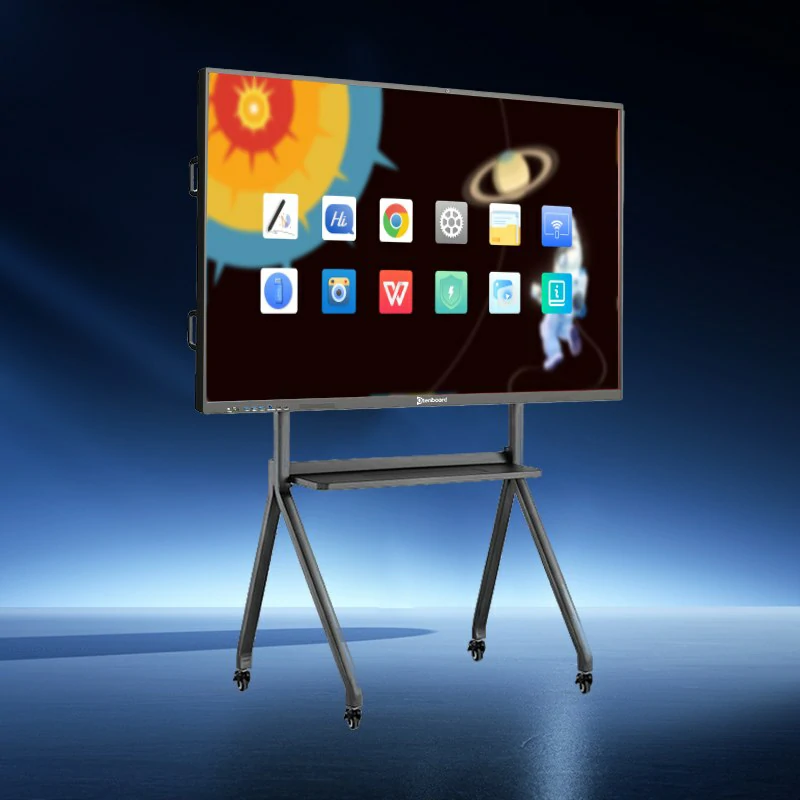
Qtenboard interactive flat panels integrate display, touch, multimedia, screen sharing and video conferencing into one device, creating a seamless teaching experience. With a service life of over 50,000 hours—equivalent to 17 years of daily 8-hour use—its maintenance cost is just one-third of projectors, bringing long-term cost advantages and energy efficiency for green campus procurement. Qtenboard interactive flat panels are built with classroom-optimized core parameters to ensure stable and user-friendly performance. For display, they feature 2K resolution, 400–500 nits brightness and anti-glare screens, preventing reflections in bright classrooms and protecting students’ eyesight. All models carry low blue light certifications such as TÜV, complying with strict educational equipment safety standards. The touch system supports 20–50 touch points with pen-finger separation and zero-lag precision writing, fully replicating the smooth feel of a blackboard. For system configuration, Qtenboard offers Android 11+ built-in single system for basic teaching needs, ideal for standard classrooms, and Android+Windows dual system via OPS slot for schools relying on Windows teaching software and office tools. It also comes with free education-specific software including whiteboard, annotation, lesson recording and courseware sharing, with lifelong free upgrades to lower teachers’ learning curve and boost teaching efficiency.
Optional upgrades like AI auto-framing cameras, multi-device wireless screen sharing, rich interfaces and cloud storage further adapt to remote teaching and multi-classroom linkage. Screen size selection directly matches classroom size and student count, and Qtenboard provides a full range of options. 55-inch models fit small classrooms and meeting rooms under 30㎡ with fewer than 20 students, accounting for 15–20% of education procurement. 65-inch is the global mainstream choice, perfect for 30–50㎡ standard primary and junior high classrooms with 20–40 students, making up 50–60% of purchases. 75-inch suits 50–80㎡ senior high and vocational classrooms with 40–60 students, at 20–25% proportion. 86-inch targets large lecture halls over 80㎡ with more than 60 students, used in 5–10% of projects.
Qtenboard also supports flexible customization for large education projects: hardware customization includes interface expansion, camera upgrades and body logo printing; software customization covers boot animation, multilingual interfaces, preinstalled local teaching software and LMS integration; packaging can be neutral or branded for cross-border export and regional distribution. Choosing a trusted manufacturer is critical for education projects, and Qtenboard meets strict global standards. It holds essential certifications including CE, FCC, RoHS, ISO9001 and professional education certifications like low blue light and CCC, ensuring product compliance and quality. With years of dedicated experience in interactive flat panel manufacturing,
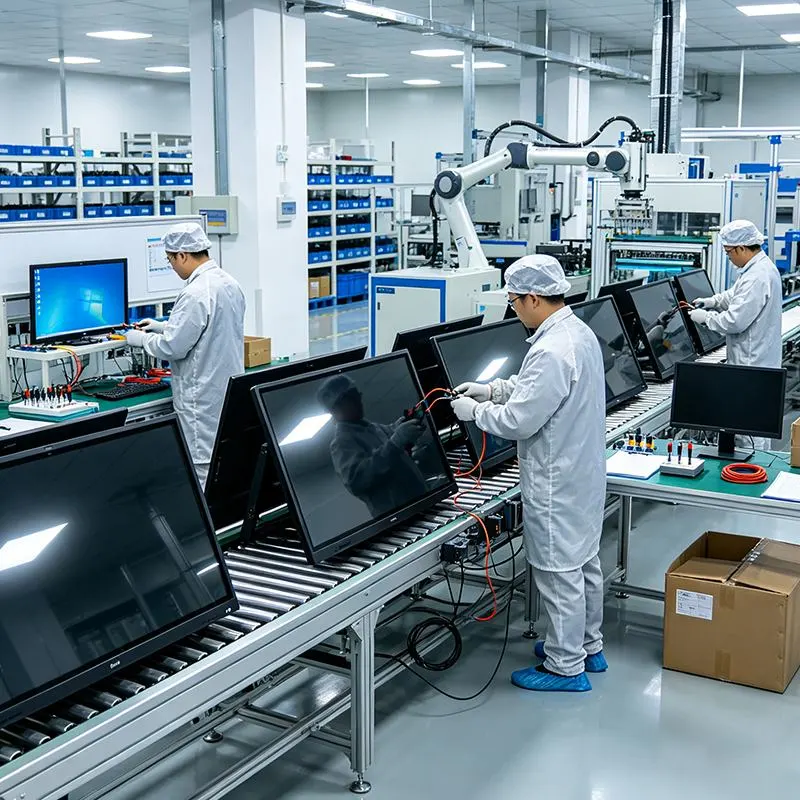
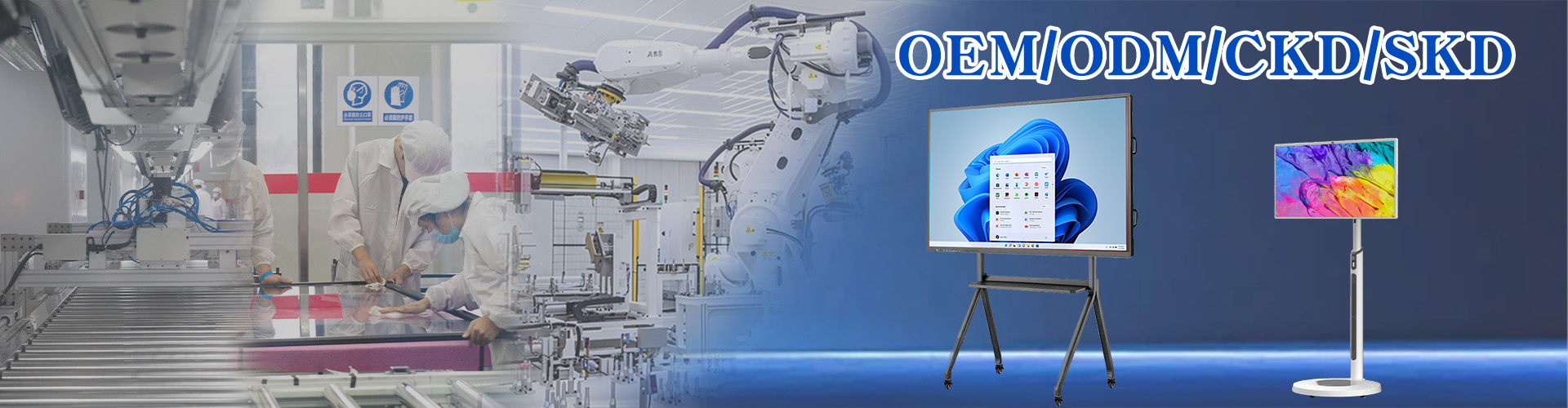
Qtenboard has stable supply chains and strict quality control for core components, avoiding mass quality issues. Its after-sales system is tailored for education: 1-year full machine warranty, 2-hour remote technical support, 48-hour on-site service, regional spare parts warehouses, and free teacher training and software updates. Backed by China’s complete LCD supply chain, Qtenboard offers superior cost-effectiveness compared to European and American brands, with strong OEM/ODM capabilities and mature global export experience to Europe, Southeast Asia, the Middle East, Africa and South America. It avoids trader risks and low-price traps, focusing on stable quality and sustainable support. The procurement process of Qtenboard interactive flat panels is efficient and standardized. Schools first confirm classroom quantity, size, system needs and budget. Then they screen qualified suppliers, confirm solutions, customization and warranty terms. Next, compare quotations based on configuration, warranty and after-sales instead of single price. After signing contracts with clear delivery, installation, training and after-sales clauses, proceed to acceptance, installation, commissioning and teacher training. Real projects worldwide have proven Qtenboard’s value: Vietnam government smart campus project upgraded 70 classrooms with 65-inch dual-system models, improving teaching efficiency by 40% and cutting lesson preparation time by 30%; Spanish private school group adopted 75-inch models with AI cameras, increasing student participation by 50% and resource reusability by 60%. With all-in-one functions, long service life, low maintenance and professional support, Qtenboard interactive flat panels have become the standard for smart campuses, helping schools of all levels complete digital teaching upgrades smoothly.


 Floor 6, Building A, No. 3, North District, Shangxue Science and Technology City, Xinxue Community, Bantian Street, Longgang District, Shenzhen City
 info@szqunmao.com
 +86 15920011166
 +86 15920011166