English
 Español
 Português
 Français
 Русский язык
 Italiano
 Deutsch
 Nederlands
 لعربية
 한국어
한국어 Japanese
 ภาษาไทย
 Türkçe
 Tiếng Việt
 Bahasa Indonesia
 Hindi
Hindi kazakh
 Uzbek
Uzbek Thai
Thai Farsi
Farsi
Qtenboard Interactive Whiteboard | Full Operation Guide for Meetings, Teaching & Creative Presentations
 2026-08-12
 1366
1366



2026-08-12
1366
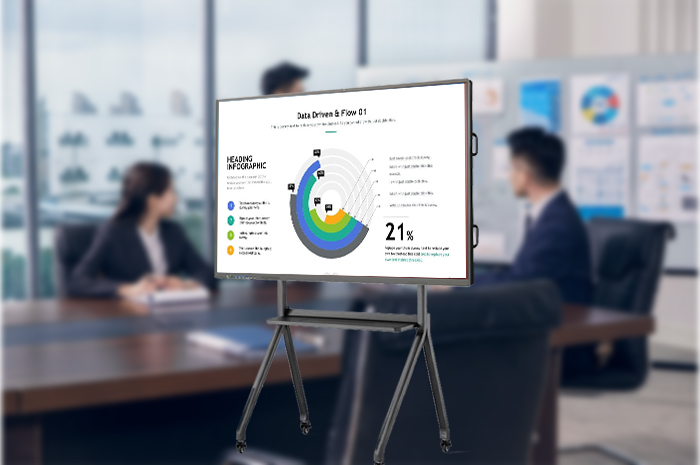
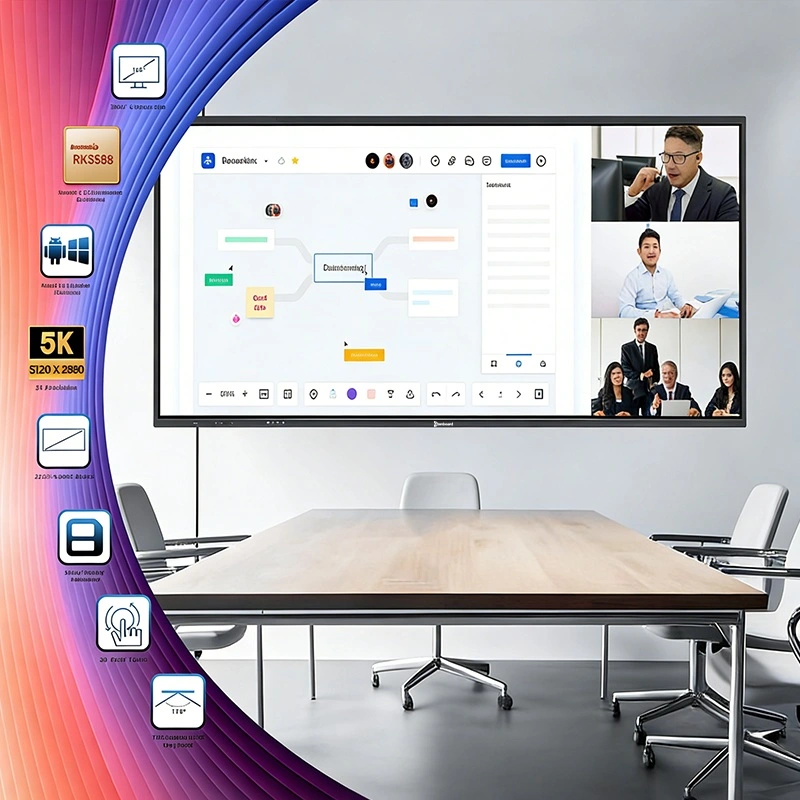
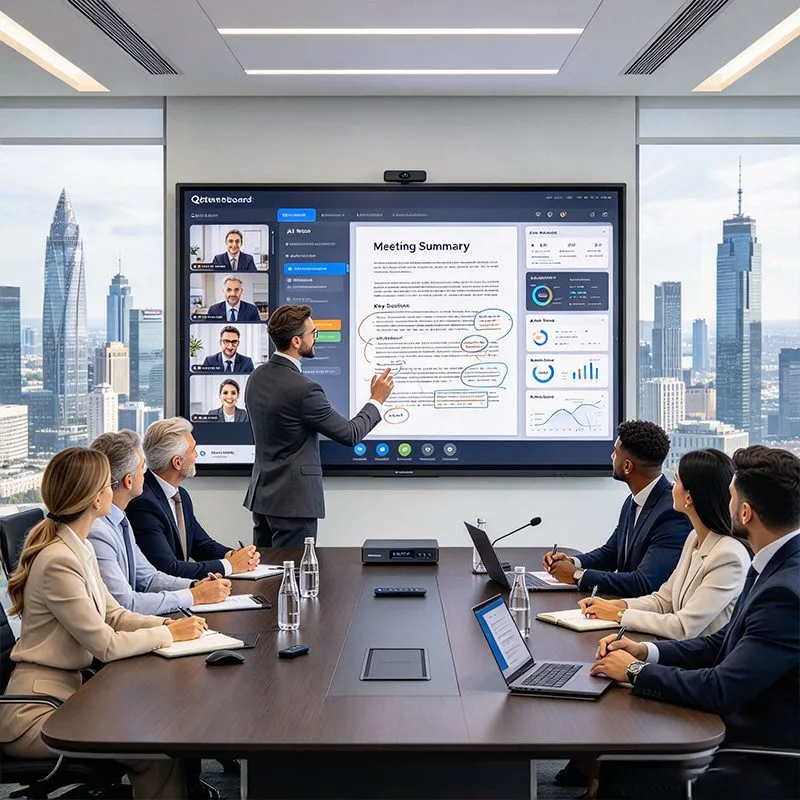
You spend precious minutes juggling multiple devices before every session. You transfer photos and videos to laptops, toggle slide tabs slowly, lean forward to squint at tiny chart details, and scribble notes on paper to mark key content mid-discussion. These small interruptions break your rhythm and pull focus from your core message. Qtenboard interactive whiteboard merges all these separate steps onto a single responsive touch display. Whether you host corporate planning meetings, deliver daily classroom lessons, or lead creative product presentations to clients, every action sits right at your fingertips. Below we break down every core operating function, paired with real usage scenarios so you can start using the device proficiently from your very first session.
Plain text slides rarely hold audience attention for long. Static paragraphs cannot showcase product texture, teaching experiments or project highlights clearly enough. Qtenboard’s built-in whiteboard software supports seamless insertion of mainstream multimedia formats, covering video clips, high-resolution images, background audio files and short animation materials. You access local storage or connected USB drives with just two taps, select your target files, and place them anywhere on the canvas without complicated setup steps.
Corporate product launch events benefit greatly from this feature. You import sharp close-up product shots to display material texture, structural details and appearance design directly on screen. You insert pre-edited promotional videos that demonstrate real usage scenarios for your goods. Clients watch footage and pictures side by side, and they grasp product strengths far faster than they would from verbal descriptions alone. Sales teams report shorter explanation times and clearer customer understanding after switching to this visual-focused display method.
Classroom teaching also gains obvious advantages. Science teachers insert experimental operation videos and microscopic specimen images to show processes impossible to replicate inside the classroom. Language instructors add background audio clips for listening exercises, playing audio directly on the large screen for all students to hear uniformly. Creative workshop tutors embed mood audio and reference artwork to inspire group brainstorming. All media content integrates naturally into your content framework, no external speakers or extra playback equipment required.
Many presenters crowd all information onto one single page. Charts, text notes and attached pictures pile together, leaving audiences confused about your narrative flow. Qtenboard equips complete page management tools to fix this common issue. You create brand new blank pages whenever you need to shift topics, delete redundant pages that no longer fit your agenda, and flip backward and forward between pages freely during live sessions.
Take quarterly business reporting meetings as a typical example. You split your report into distinct page groups. The first page covers overall quarterly performance overview, the next breaks down sales data across regional departments, following pages list existing operational challenges, and final pages outline upcoming adjustment plans. You switch between segments smoothly as you speak. Team members follow your train of thought step by step without getting lost amid dense mixed information.
Teachers apply this layout logic to curriculum arrangements too. Each knowledge module occupies an independent page. You review last class content on the opening page, explain new theories on middle pages, and assign practice exercises on closing pages. You jump back to review content quickly if students raise questions about prior knowledge. Flexible page navigation makes long teaching sessions structured and easy to follow for both educators and learners.
Small laptop screens force you to choose one viewing mode only. You either shrink content to see the full layout or enlarge a tiny section and lose sight of the whole picture. Qtenboard delivers dual zoom methods to adapt to all viewing demands. You pinch two fingers on the touchscreen to zoom in or out naturally, identical to smartphone operation habits. You also click the dedicated plus and minus zoom icons placed on the sidebar interface for precise fixed scaling.
This function shines when you display intricate data visuals and high-definition imagery. Engineering teams open detailed construction blueprints during project meetings. You zoom in to check component sizes, wiring layouts and structural marks for all participants to examine clearly. After confirming details, you zoom back out instantly to review the entire architectural framework. Market analysts apply the same workflow to complex trend charts. They magnify monthly fluctuation curves to discuss short-term shifts, then pull back to observe annual overall trends.
Art and geography classrooms rely heavily on zoom functionality as well. Art teachers zoom into famous painting details to teach brushstroke techniques and color matching logic. Geography instructors enlarge global maps to point out terrain distribution and border divisions, then zoom out to show continental layout relations. Students observe both micro specifics and macro contexts without visual barriers.
When you share documents, web pages and digital materials, critical information often blends into surrounding text. Handwritten notes on paper cannot attach directly to screen content, and typed text highlights feel rigid and impersonal. Qtenboard’s annotation system lets you mark content directly over any displayed material at any time. You draw circles around important data points, underline core sentences, use colored markers to shade key paragraphs, and add brief handwritten comments wherever you see fit.
Academic teaching makes frequent use of these marking features. Math teachers circle formula variables and underline deduction steps while working through problems on screen. History instructors box key historical timelines and jot down cause-effect notes beside event descriptions. These live marks stay on screen throughout explanations, helping students lock in core knowledge points efficiently.
Corporate team discussions also gain massive value from on-screen annotation. Departments gather to review project plans and financial reports. Participants take turns marking risky budget items, circling overdue task nodes and writing revised suggestions directly on the shared document. Everyone views revised content simultaneously, discussion targets stay focused, and teams reach consensus much faster than traditional verbal-only debates.
| Core Function | Laptop + Projector Setup | Qtenboard Interactive Whiteboard |
|---|---|---|
| Video, Image & Audio Insertion | File preloading required, audio often needs external speakers | One-tap import, built-in audio playback, drag placement freely |
| Multi-Page Content Management | Limited slide control, hard to add temporary blank pages | Add, delete, flip pages instantly, flexible content segmentation |
| Image & Chart Zoom In/Out | Mouse drag zoom only, no natural pinch gesture support | Finger pinch zoom + button scaling, smooth two-way adjustment |
| On-Screen Document Annotation | No native touch marking, need separate annotation software | Direct circle, highlight, handwriting over all displayed content |
| Multi-Person Collaborative Marking | Not supported at all | Multi-point touch allows multiple users to annotate together |
| Content Saving After Session | Annotations cannot be saved together with original slides | Export full annotated pages as PDF or images for permanent storage |
Q1: What audio, video and picture formats does the multimedia insertion function support?
The system covers nearly all mainstream formats. Image files include JPG, PNG, BMP and TIFF. Video files support MP4, MOV, AVI and WMV. Common audio formats like MP3 and WAV work perfectly. You insert these files directly without format conversion beforehand.
Q2: Can I reorder pages after creating multiple content pages?
Yes. Open the page thumbnail sidebar, hold down any page preview and drag it left or right to adjust the sequence. You reorganize your entire presentation logic midway through preparation without rebuilding content from scratch.
Q3: Is there a maximum zoom ratio for images and charts?
You zoom content up to 400% of the original size. This range fully satisfies detailed checks for engineering drawings, financial spreadsheets and high-resolution photography used in teaching and business scenarios.
Q4: Can I erase partial annotations without clearing all marked content on the page?
The built-in eraser tool offers two modes. You select the small precision eraser to wipe single handwritten marks and circles, or choose the full-page clear option to remove all annotations in one tap. You retain useful markings and discard temporary scribbles freely.
Q5: Can I import complete PPT files and split them into independent editable pages?
PPT files upload entirely and automatically split into separate whiteboard pages. You add annotations, insert multimedia materials and adjust layouts on each page individually after import.
Q6: Will inserted videos lag or stutter during playback?
The panel adopts dedicated video decoding hardware. Standard-definition and most high-definition videos play smoothly. For ultra-large 4K video files, store the video on a high-speed USB drive to guarantee stable playback performance.
Q7: After the meeting ends, how do I share annotated content to team members?
Export all pages with annotations as PDF or picture files. Save files to USB storage, send them via email, or push documents to shared cloud folders. Every participant obtains a complete record of discussion content and marked key points for follow-up work.
Q8: Can multiple people annotate the screen at the same time during group meetings?
The touch panel supports up to 20 simultaneous touch points. Several team members mark different areas of the screen together during brainstorming sessions, which greatly speeds up group discussion efficiency.
Every core operation of Qtenboard is designed around real pain points users face daily. Multimedia embedding turns plain presentations into vivid visual experiences. Page management arranges scattered information into coherent narratives. Pinch-to-zoom lets you switch between holistic overviews and fine details effortlessly. On-screen annotation locks down core information and shortens group communication time drastically. No extra peripheral devices, no complicated learning curves, no disruptive technical delays mid-session. Whether you run regular corporate conferences, long-term classroom instruction, client product pitching or creative design workshops, this all-in-one interactive panel simplifies your workflow and helps you deliver more persuasive, engaging sessions every single time. Visit our official product page szqunmao.com to view detailed hardware parameters, real scene cases and customized deployment solutions tailored to your meeting room or classroom space.


 Floor 6, Building A, No. 3, North District, Shangxue Science and Technology City, Xinxue Community, Bantian Street, Longgang District, Shenzhen City
 info@szqunmao.com
 +86 15920011166
 +86 15920011166