English
 Español
 Português
 Français
 Русский язык
 Italiano
 Deutsch
 Nederlands
 لعربية
 한국어
한국어 Japanese
 ภาษาไทย
 Türkçe
 Tiếng Việt
 Bahasa Indonesia
 Hindi
Hindi kazakh
 Uzbek
Uzbek Thai
Thai Farsi
Farsi
Top 10 Trends of Interactive Whiteboard & IFPD 2026–2030 | Qtenboard Smart Display Solutions
 2026-07-27
 781
781



2026-07-27
781
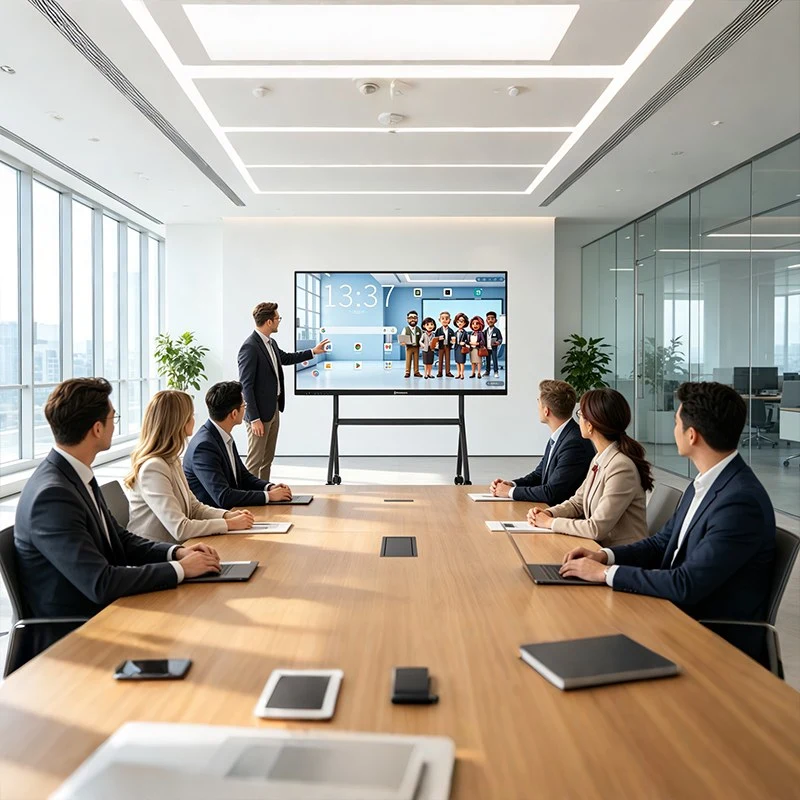
The global interactive whiteboard (IWB) and interactive flat panel (IFPD) industry maintains robust expansion amid the digital transformation of education and corporate sectors. Market analysis from Business Research Insights forecasts a compound annual growth rate (CAGR) of 8.3% across the 2026–2030 period, with overall market valuation expected to surpass $11.2 billion by 2030. Driven by rising demand for hybrid classrooms, remote meetings and cross-regional collaborative workflows, traditional interactive display hardware has evolved from simple writing screens into all-in-one intelligent collaboration hubs integrated with artificial intelligence, cloud architecture and cross-platform interoperability technology. As a world-class manufacturer of commercial and educational interactive displays, Qtenboard continuously optimizes hardware and software to match evolving market requirements. This article systematically sorts out the top 10 dominant industry trends shaping the IWB & IFPD sector worldwide, together with targeted technical solutions delivered by Qtenboard to help education institutions, enterprise buyers, system integrators and distributors select forward-compatible interactive display equipment.
According to research data released by UNESCO IITE, 58% of global K-12 schools and 62% of medium-to-large enterprises list AI-powered interactive whiteboards as priority procurement targets. Core widely adopted AI capabilities cover high-precision handwriting-to-text conversion, automatic meeting and lesson summarization, real-time multilingual translation and intelligent teaching content recommendation. Many low-end display products only provide basic handwriting capture without complete localized AI computing support, leading to slow response and poor accuracy. Qtenboard embeds self-developed edge AI modules inside interactive flat panels, supporting customizable intelligent tools. Educators can automatically generate exercises, quizzes and review materials based on on-screen teaching notes; corporate users realize meeting record synchronization and seamless docking with mainstream project management platforms. The whole AI calculation runs locally with end-to-end latency controlled within 15 milliseconds, avoiding dependence on unstable public network cloud services.
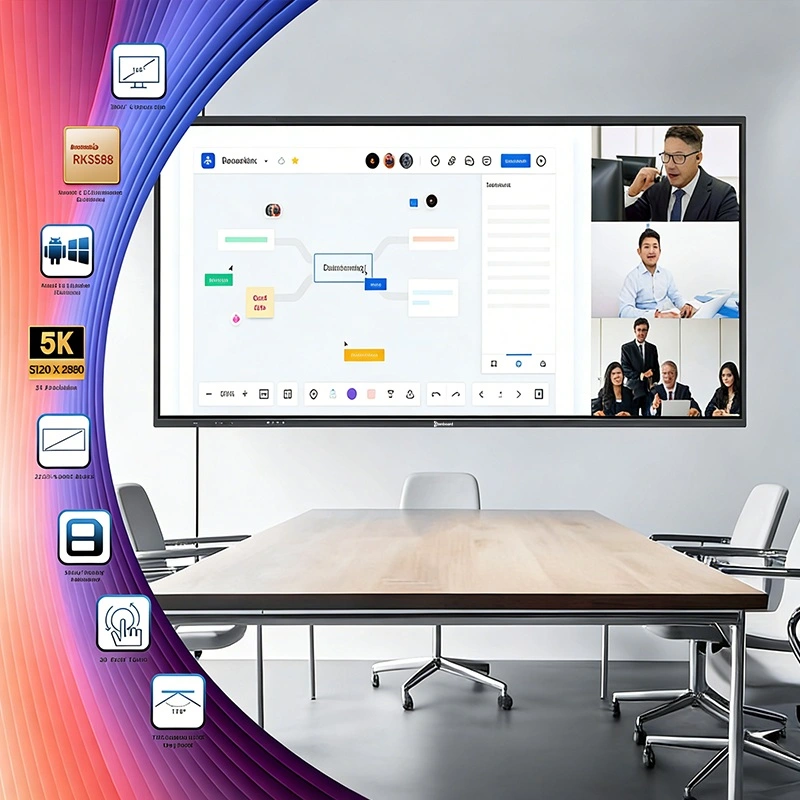
Industry Research Co. statistics indicate that 78% of newly delivered interactive whiteboard models adopt native 4K UHD resolution. Meanwhile, the average standard brightness of educational IFPDs has gradually increased to 500 nits to adapt to classrooms and meeting rooms with abundant natural sunlight. Ordinary screens suffer severe reflection under strong light, affecting viewing experience and reducing classroom participation. All Qtenboard interactive flat panels adopt TÜV certified low-blue-light 4K anti-glare panels. Customers can select optional 600-nit high-brightness configurations for glass-walled offices, sunlit classrooms and exhibition spaces. Equipped with a 120Hz high refresh rate panel, the device ensures smooth dragging, annotation and multi-person writing without stuttering.
Touch latency directly determines writing fluency and interactive experience. Premium commercial interactive displays target latency below 20ms. Qtenboard further optimizes touch control algorithms and hardware circuits to achieve industry-leading 12ms ultra-low latency. The whole series supports up to 40-point multi-touch input, enabling simultaneous operation for 30 students in group classroom activities or 10 team members during corporate brainstorming sessions. Combined with cloud synchronization technology, remote participants can view and annotate screen content in real time, breaking geographical restrictions of offline teaching and meetings.
Market Growth Reports show that 63% of schools and 71% of enterprises treat cloud platform compatibility as a non-negotiable procurement standard. Many traditional interactive whiteboards only support simple file uploads and lack complete cloud-native frameworks, resulting in work interruption once the internet disconnects. Qtenboard cloud-native interactive flat panels achieve seamless docking with mainstream global education and office cloud platforms. The built-in content management portal supports centralized storage, sorting and one-click sharing of whiteboard files, courseware and meeting minutes. Critical content enables automatic offline synchronization. Once the network recovers, data is uploaded automatically to prevent collaboration interruptions caused by unstable local network environments.
Modern hybrid office and smart classroom environments consist of multiple types of software and hardware systems. Modern IWBs need smooth connection with mainstream video conferencing software including Zoom and Microsoft Teams, school LMS learning management systems and daily office productivity suites. Poor compatibility forces IT departments to spend massive time solving docking failures. Qtenboard establishes long-term partnerships with global mainstream software suppliers, achieving true plug-and-play linkage with peripherals such as cameras, microphones and audio systems. Customer feedback data proves that standardized interoperable hardware can reduce daily IT maintenance requests by approximately 40%.
According to 360 Research Reports, 47% of newly launched interactive whiteboards are equipped with Wi-Fi 6 or Wi-Fi 6E wireless casting modules. Bring Your Own Device (BYOD) has become standard in modern offices and education scenarios. Qtenboard independently develops the QtenShare wireless casting system, supporting up to 1Gbps stable transmission speed. Four mobile phones, laptops or tablets can cast content onto the large screen simultaneously. The reverse casting function pushes screen content back to personal mobile terminals, making content viewing and note-taking more flexible for students and remote attendees.
EIN Presswire data indicates global market demand for eco-friendly interactive display equipment increased by 34% year-on-year. Governments and large organizations gradually introduce carbon emission assessment standards for procurement projects. Qtenboard actively implements green manufacturing standards. The equipment adopts high-efficiency energy-saving LED panels which cut power consumption by 35% compared with ordinary models. The cabinet uses 70% recycled aluminum materials. Built-in paperless whiteboard tools reduce printing resource waste. Overall, the integrated green design helps customers lower total cost of ownership (TCO) by roughly 25% throughout the equipment service cycle.
IDC industry tracking reports reveal that 86-inch and larger interactive flat panels have become standard configuration for primary and secondary school classrooms, while 98-inch specifications are widely adopted in university lecture halls, enterprise auditoriums and high-end boardrooms. Small-size screens cannot guarantee clear viewing experience for audiences seated in distant positions. Qtenboard covers a complete size portfolio ranging from 55 inches up to 98 inches. Large-size models adopt ultra-narrow bezel design and support built-in high-definition camera and microphone modules, simplifying construction and wiring for new smart classroom and conference room projects.
Information security risks during remote collaboration attract widespread attention. Statistics show 68% of enterprises and 75% of educational institutions require interactive display products to satisfy strict global data protection regulations such as GDPR and FERPA. Qtenboard builds multi-layer security protection architecture. The system applies AES-256 file encryption algorithm, refined user access permission management and automatic monthly security patch updates to prevent sensitive teaching materials and corporate meeting information from illegal leakage and unauthorized access.
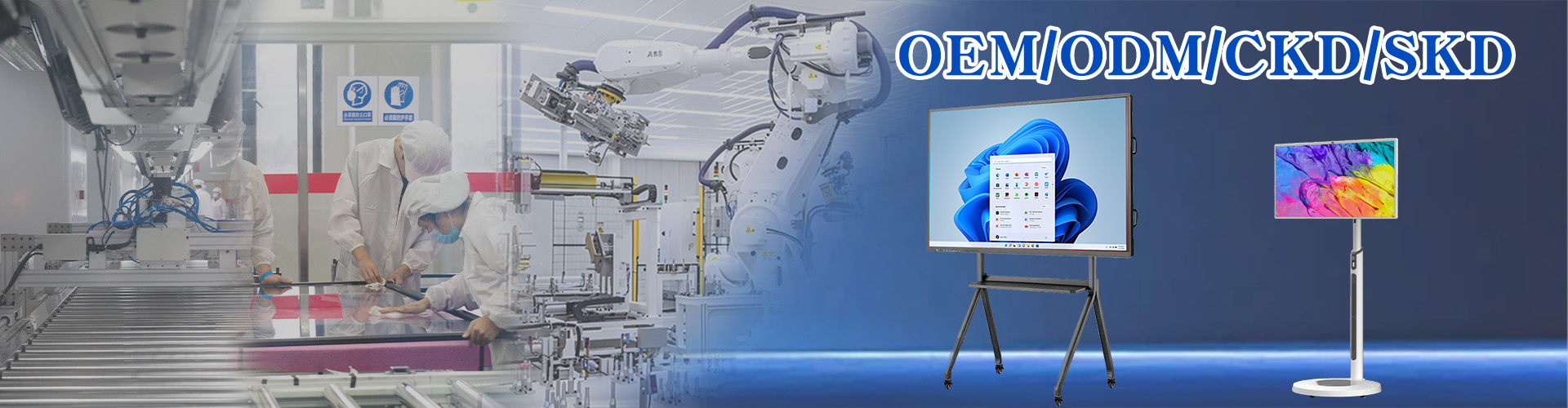
Business Research Insights analysis demonstrates that modular upgradable hardware architecture can reduce customer long-term total ownership cost by approximately 30%. Non-modular integrated devices require full machine replacement once computing performance falls behind demand. Qtenboard supports modular upgradeable CPU and storage hardware. Customers can select Android single system or Android + Windows 11 OPS dual-system schemes according to usage scenarios. The factory also provides comprehensive OEM and ODM services including independent brand logo, multilingual system UI and customized pre-installed software to satisfy regional distributor and government tender project requirements.
| Core Trend Item | Ordinary Generic Interactive Whiteboard | Qtenboard Professional Interactive Flat Panel |
| AI Function Deployment | Basic cloud AI, high latency, limited customization | Local edge AI module, ≤15ms latency, customizable education & enterprise tools |
| Display Specification | 4K optional, regular brightness, ordinary glass, no eye protection certification | TÜV low blue light 4K anti-glare panel, 500/600nit optional, 120Hz refresh rate |
| Touch Performance | 20–25 points touch, latency over 20ms | Up to 40-point multi-touch, 12ms ultra-low latency |
| Cloud Support | Simple file storage, no offline synchronization mechanism | Cloud-native architecture, online-offline automatic data sync, dedicated content portal |
| Casting Technology | Wi-Fi 5, limited simultaneous casting devices | QtenShare Wi-Fi6 casting, support 4 devices + reverse casting |
| System Architecture | Fixed integrated hardware, difficult performance upgrade | Modular design, upgradable computing unit, Android / Dual OPS optional |
| Data Security | Lacking complete encryption and regular security updates | AES-256 encryption, permission control, monthly security patch |
| Green Design | Standard power consumption, ordinary materials | 35% lower power consumption, 70% recycled aluminum casing, reduce TCO by 25% |
A1: Local edge AI works more stably. It does not rely on continuous internet connection, achieves lower response latency and avoids risks such as sensitive data transmission to third-party cloud servers. Qtenboard combines local AI computing with optional cloud synchronization to balance stability and expandability.
A2: 500 nits meets most standard classrooms and enclosed meeting rooms. Select 600-nit high-brightness models if the space contains large-area glass windows, strong indoor lighting or exhibition hall environments where screen reflection is serious.
A3: When software and system requirements upgrade in the future, customers only need to replace the computing module instead of buying a complete new screen. It greatly cuts later iteration investment and shortens equipment replacement cycles for schools and large enterprise groups.
A4: Yes. Qtenboard reserves standard API docking interfaces. The technical team supports customized adaptation work for local learning management platforms for government education bidding and school group projects.
A5: Qtenboard optimizes encryption algorithms on hardware level. Daily whiteboard writing, casting and file storage will not produce obvious lag while data encryption remains active.
A6: Single Android configuration satisfies basic teaching and daily meetings with lower cost. Android + Windows 11 dual OPS is recommended if users need to run professional design software, offline teaching programs and exclusive enterprise office applications.
Qtenboard’s user-centric solutions align with these trends, backed by data-driven product design, rich overseas project experience and complete end-to-end technical support. The interactive display market is continuously evolving toward intelligence, interconnection, low carbon and security. Simply pursuing low prices cannot support long-term stable operation of education and corporate projects. Organizations looking to purchase future-proof interactive whiteboards and flat panels need to evaluate products against these ten major industry trends. By matching forward-looking hardware and software capabilities, Qtenboard delivers measurable value for education and business needs, helping customers avoid repeated equipment upgrading and realize sustainable digital construction


 Floor 6, Building A, No. 3, North District, Shangxue Science and Technology City, Xinxue Community, Bantian Street, Longgang District, Shenzhen City
 info@szqunmao.com
 +86 15920011166
 +86 15920011166