English
 Español
 Português
 Français
 Русский язык
 Italiano
 Deutsch
 Nederlands
 لعربية
 한국어
 Japanese
 ภาษาไทย
 Türkçe
 Tiếng Việt
 Bahasa Indonesia
 Hindi
 kazakh
 Uzbek
 Thai
 Farsi

Indoor Floor-Standing Digital Signage Sourcing Guide for B2B Buyers
 2026-11-18
 36



2026-11-18
36
Indoor floor-standing digital signage is one of the few digital display assets in overseas B2B projects that does not depend on building conditions. The real job for a procurement manager is not simply to compare screen size and brightness. It is to lock duty rating, panel grade, warranty boundaries and certification documents into the purchase order. If any of these four items is left vague at the RFQ stage, it usually turns into a warranty dispute during project delivery. This guide follows the actual sourcing sequence: first define the PO fields, then verify whether the supplier can deliver them, and finally review the practical path for bulk delivery and customization.
View Product Specifications Request a Bulk Quote
The most common sourcing mistake overseas buyers make is treating indoor floor-standing digital signage as a standard catalog item and comparing only unit price. Two units with the same size and resolution can become very different assets once they are written into a purchase order. One may be rated for 16/7 operation, use an A-minus panel and carry a 12-month whole-unit warranty. The other may be rated for 24/7 operation, use an A-grade panel and separate the warranty for screen and power supply. A 15% unit price gap can easily reverse once total cost of ownership is calculated over three years. The five fields below should be confirmed item by item during RFQ and attached to the order.
Duty rating is the most frequently omitted field when overseas buyers source a floor-standing advertising display, and it is the one that should never be left out. A supplier statement such as “supports commercial-grade continuous operation” is not actionable. Commercial panels still have rated daily operating hours. A practical way to lock this down is:
Define the daily operating hours of the target scene. Hotel lobbies are often 16 to 18 hours per day. Airport and station information points may run close to 24 hours. Retail chains should confirm hours against store schedules.
Ask the supplier to confirm in writing the rated duty rating of the specific model at the target ambient temperature. Confirm whether that rating is tied to CMS scheduling, thermal design and warranty terms.
Be cautious with broad “24/7 across the whole range” claims. If a supplier cannot break the rating down by model, its product documentation is probably not organized around project delivery.
For commercial vertical display projects, Shenzhen Qunmao confirms duty rating by scene before locking the configuration, rather than quoting one fixed model for every application. For example, the 55-inch touch floor-standing model QM-C55XJ-PL is positioned for high-traffic indoor environments. Buyers should still confirm the upper ambient temperature limit and thermal margin for their target market in the PO.
The most common acceptance dispute in overseas projects is not “the screen does not turn on.” It is the number and location of dead pixels. The difference between A-grade and A-minus panels directly affects consistency across a multi-unit delivery. Three items should be written into the PO: panel grade, total allowed dead pixels, and whether any bright or dark dot is allowed in the central viewing area. The 55-inch QM-C55XJ-PL uses an IPS panel with optional 4K resolution. Buyers can request a panel-grade declaration and a dead-pixel sampling report by batch.
Another easily missed parameter is how brightness is specified. Typical value and minimum value have different meanings in project acceptance. If the order says “≥450 cd/m²,” confirm whether that figure is typical or minimum, and whether brightness degradation is covered by warranty.
Overseas B2B projects rarely buy “just a screen.” Once indoor floor-standing digital signage is installed, it often needs to connect to a CMS, access control, queue management or external peripherals. At the selection stage, confirm:
SoC and memory. Under Android, 2 GB RAM and 32 GB storage may become a decoding bottleneck for 4K multi-window scheduling. Confirm whether 4 GB RAM and 64 GB storage are needed based on content complexity.
Interface list. Check RJ45, USB count, HDMI output, RS232 and audio output against on-site control or peripheral requirements. Confirm whether a 4G/5G module slot is reserved.
Dual-system options. The ability to switch between Windows OPS and Android directly affects future software ecosystem choices. The QM-C55XJ-PL supports Windows 10/11 and Android dual systems, with DC, USB×4, RJ45, Audio and VGA interfaces.
The base weight and anti-tip design of a floor-standing advertising display are safety acceptance items in overseas retail, hotel and exhibition venues. The purchase order should require the supplier to provide base weight, center-of-gravity data or anti-tip test documentation. The QM-C55XJ-PL uses a heavy-duty base and tempered glass structure, which is Qunmao’s standard structural approach for high-traffic indoor public areas. If the project floor is raised access flooring or has a slope, inform the supplier at the selection stage so base contact area and leveling method can be confirmed.
During supplier verification, overseas B2B buyers should not simply check certification logos. They should verify that the applicant or manufacturer name on the certificate matches the contracting entity, and that the document is valid for the target market and the specific model. Beyond the basic CE/FCC/RoHS set, US retailers or AHJs may require UL/ETL listing. South American projects often focus on SONCAP. Some Middle East markets require SASO. Certification usually takes two to three months, so do not wait until the order is placed to start. Qunmao’s website lists ISO 9001, CE, RoHS and FCC information. Buyers should request copies of the conformity documents that correspond to the ordered model.
Need to cross-check certification lists and PO field templates for your target market?
The four scenes below account for the highest frequency of overseas B2B inquiries. Each recommendation follows the sequence of scene constraint, size and brightness, touch or non-touch, and installation note. This structure can be used directly when justifying the selection to an internal team or an end customer.
Scene constraint: consistent multi-store image, frequent promotion updates and store operating hours that determine duty rating. 43 to 55 inches is the mainstream range; a 55-inch unit works well at an entrance for traffic interception. Non-touch versions have the lowest maintenance complexity in pure playback scenarios. Consider touch only when member registration or product lookup is required. 450 cd/m² is sufficient for most controlled lighting; choose 700 cd/m² if the entrance has strong ambient light. Confirm base weight and entrance cable routing to avoid trip hazards. Qunmao’s 43-inch and 55-inch dual-sided floor-standing models QM-43EG7 and QM-55G7 are suitable for retail aisles and window-side two-way display.
Scene constraint: lobby ambient light is usually higher than in ordinary retail, and the device must fit the interior design language. 43 to 55 inches non-touch is the main choice, with 700 cd/m² preferred. One hardware condition that is often missed is panel-level support for portrait orientation. Some panels have specific thermal and polarizer design requirements in portrait posture; software rotation alone is not a substitute. Qunmao’s 32-inch vertical digital signage solution for hotel scenes matches structure and content management to portrait installation. For restaurant front desks that involve menus and self-ordering, touch versions can reduce staffing pressure, but compatibility between the touch software and the existing POS must be confirmed in advance.
Scene constraint: short booth lifecycle, high reuse requirements after dismantling and clear visitor interaction needs. 55 to 65 inches with touch is a common configuration. Choose 4K based on the actual output resolution of the demonstration software, not by default. A wheeled base makes repositioning easier at exhibition venues, but wheel locks and counterweight must meet venue safety requirements. On the content side, prepare lead capture, 3D product display and document QR pages rather than only looping a brand video.
Scene constraint: unattended operation, high ambient light, long operating hours and a mix of wayfinding and advertising. The 55 to 75 inch range with 700 cd/m² is typical. Lock duty rating against the actual schedule, as public information points often run close to 16/7 or 24/7. Use non-touch for advertising and information loops, and touch for wayfinding queries. Thermal airflow must not be blocked by decorative structures. Cable routing should be concealed and consider anti-theft locks. These projects place the highest demands on the stability of the indoor floor-standing digital signage remote CMS and the reliability of scheduled power on/off. Ask the supplier for a CMS function list covering multi-screen synchronization and permission management.
| Scene | Recommended Size | Touch | Brightness Guidance | Duty Rating Focus |
|---|---|---|---|---|
| Retail store / chain | 43–55″ | As needed | 450 / 700 cd/m² | Confirm 16/7 or longer against store hours |
| Hotel lobby / restaurant | 43–55″ | Optional for wayfinding | 700 cd/m² preferred | Confirm panel-level portrait support |
| Showroom / exhibition | 55–65″ | Touch preferred | 450–700 cd/m² | Confirm against intensive event use |
| Airport / station / mall | 55–75″ | Touch at query points | 700 cd/m² | Confirm against unattended schedule |
A hotel in the United Kingdom was deploying vertical indoor floor-standing digital signage for welcome messages, event notices and local area guides in the lobby and elevator lobby. The initial requirement looked simple. During project development, however, the real constraint emerged: the hotel operations team had no dedicated content staff. If updating multiple screens depended on manual, one-by-one operation, it would become an operational burden within three months of opening.
Qunmao matched the scene with a 32-inch vertical digital signage solution focused not on stacking hardware specifications, but on CMS group publishing and templated content management. The front desk can use preset templates for welcome, event and emergency notices, update multiple screens in sync, and rely on panel-level and structural portrait support rather than software rotation. At delivery, the buyer wrote CMS permission layers, template count and remote publishing response time into the acceptance checklist, instead of checking only whether the screen powered on and what resolution it displayed.
Sourcing takeaway: for hotel commercial vertical display selection, hardware is only half of the decision. The other half is whether content operations are sustainable. If the supplier’s CMS cannot let non-technical staff update multiple screens within five minutes, the device becomes an ongoing labor cost after installation.
A shopping mall in Germany needed to deploy multiple floor-standing digital signage units for a seasonal retail campaign covering promotions, product demos and limited-time offers. The project involved multiple units arriving at the same time, a short campaign cycle and equipment that would be redeployed for the next round after dismantling. The buyer’s core issue was not “which unit has the highest specification.” It was display consistency across units, unified firmware versions, reusable packaging and redeployment efficiency after the event.
Qunmao’s delivery focus was batch consistency control. Panel grade, firmware version, boot screen and logo process were locked to the same standard for the whole batch. Packaging used reusable protective structures to support transport and the next deployment after the event. During the campaign, each unit displayed interactive promotional content, and the mall reported increased customer engagement. The delivery documents included aging test records, packing lists and redeployment instructions, so the buyer did not need to request technical documents from the factory again when dismantling the campaign.
Sourcing takeaway: for overseas retail and event bulk floor-standing signage orders, the real capability divide is not whether the supplier can build one good unit. It is consistency across the second and third batches, and durability when equipment is repeatedly deployed in non-fixed environments. The PO should include batch consistency sampling clauses, not only first-article approval.
When overseas buyers search for a store display signage manufacturer, the real task is to determine whether the quoting entity is an actual factory, whether the certification documents correspond to the order, and whether there is a process that guarantees batch consistency. The three verification actions below can be used directly in a supplier scorecard.
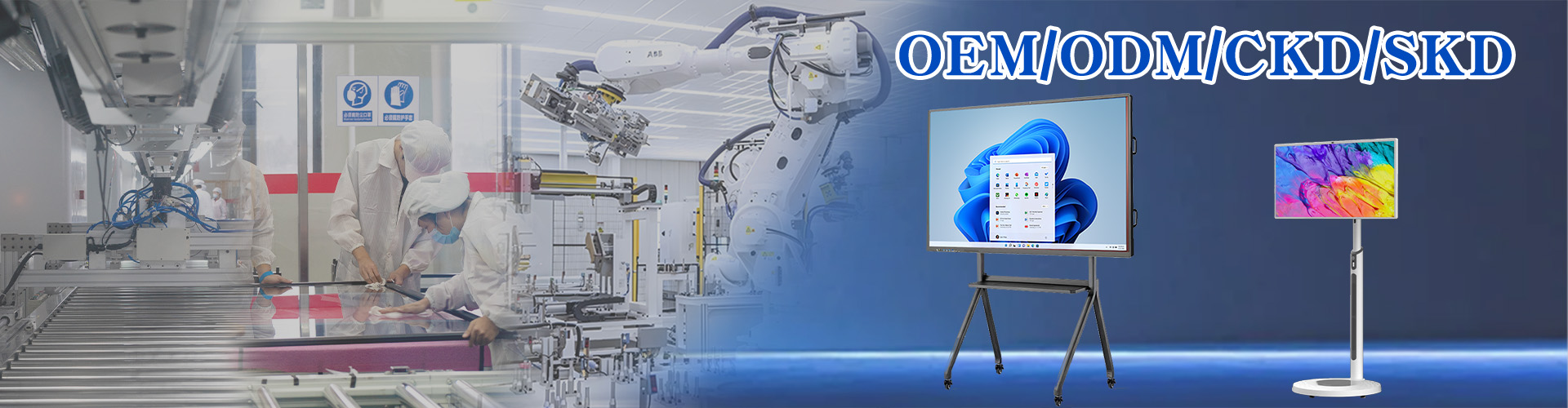
Ask the supplier for complete copies of certification documents such as CE, FCC, RoHS and UL. Check whether the applicant or manufacturer name matches the contracting entity on the quotation. If the certificate is held by an affiliate or trading entity, request an authorization letter or require the certificate holder to sign the contract directly. Shenzhen Qunmao is a source factory. OEM/ODM customization covers logo, hardware integration and software preloading, and certification documents can be provided by target market and ordered model.
For bulk floor-standing signage projects, the PO attachment should specify panel grade and dead-pixel standard, firmware version number, color and logo process approval sample, and packaging drop-test standard. Whether a supplier is willing to put these fields into the contract says more about its project delivery maturity than any verbal promise of “stable quality.”
The decision language for overseas B2B procurement is total cost of ownership, not headline price. Use a comparison table that requires each shortlisted supplier to fill in unit price, MOQ, lead time, Incoterms, payment terms, duty rating, panel grade, warranty scope for whole unit, screen, power supply and touch module, and whether certification documents ship with the order. Qunmao’s indoor floor-standing digital signage range covers 32 to 85 inches. Buyers can review interface, system and structural specifications on the product specification page.
Common customization items in overseas projects include size, housing color, logo silk print or boot screen, retail packaging and manual language, system version, CMS interface language, interface expansion for cameras, scanners or printers, and target-market power plugs. Two things must be confirmed in advance: the engineering approval cycle for the customization and whether it triggers additional certification. For example, adding a wireless module may affect FCC/CE radio conformity assessment, which should start in parallel during sampling. Qunmao’s OEM/ODM process runs from requirement confirmation and quotation to sample approval, mass production, and shipment and after-sales support. Appearance, screen performance, system and packaging should all be signed off at the sample approval stage.
Overseas projects should avoid phrases such as “lifetime warranty” or “global on-site repair” that cannot be executed as written. An executable warranty clause should separately state the warranty period for the whole unit, screen, power supply and touch module, the response time for remote diagnosis and spare-parts shipment, whether the RMA process is “advance spare shipment” or “repair and return,” and whether software upgrades are included. The clearer these boundaries are, the lower the dispute cost after project delivery.
The packaging plan for indoor floor-standing digital signage should match the transport mode. Carton plus pearl foam suits air freight and express delivery. Sea freight or multi-unit container loading should use wooden frames or crates and confirm drop-test standards. The packing list should include base accessories, power cords with target-market plugs, manual language versions, and keys or locks. Incoterms can be negotiated as FOB, CIF or DDP. Destination port, customs clearance responsibility and tax liability should be confirmed in writing at the quotation stage.
It defines the rated daily operating hours of the equipment at the target ambient temperature and is tied to warranty terms. A hotel lobby usually needs 16/7 to 18/7. Airports, stations and unattended information points should be confirmed at 24/7. Do not accept “commercial-grade continuous operation” as a substitute. Require written duty rating confirmation by model.
No. Indoor scenes need a balance between ambient light, heat dissipation, energy consumption and viewing comfort. 450 cd/m² suits most controlled lighting. Choose 700 cd/m² for high-ambient-light areas such as lobby entrances and mall atriums. More importantly, confirm whether the brightness figure is typical or minimum, and whether degradation is covered by warranty.
It depends on viewing distance and content detail. At a 3 to 5 meter viewing distance, FHD is sufficient for most retail content. Consider 4K for close-range product catalogs, fine graphics or touch query interfaces. 4K places higher demands on SoC decoding and storage, so confirm the hardware configuration at the same time.
Start with CE, FCC and RoHS, and verify that the applicant matches the quoting entity. Add UL/ETL listing when required by a US retailer or AHJ. Confirm SONCAP for South American projects. Certification usually takes two to three months, so start before order confirmation rather than after production is complete.
Write panel grade and dead-pixel standard, firmware version, process approval sample and packaging drop-test standard into the PO attachment. Require first-article approval and batch sampling records to ship with the goods. Whether a supplier accepts these fields in the contract is a direct indicator of project delivery maturity.
MOQ depends on the degree of customization. Standard models have a lower MOQ. Orders involving appearance, logo or system customization usually have a minimum threshold. The sample policy should state whether sample cost is deductible from the bulk order and whether samples come from the same production line and firmware version as mass production.
It must be hardware-level support. Some panels have specific thermal and polarizer design requirements in portrait posture, and software rotation is not a substitute. Hotel and retail portrait projects should confirm “portrait orientation at hardware level” in the specification, not just whether a rotation option exists in the menu.
List warranty periods separately for the whole unit, screen, power supply and touch module. State the remote diagnosis response time and spare-parts shipment method. Confirm whether RMA is advance spare shipment or repair-and-return, and whether software upgrades are included. Avoid “lifetime warranty” or “global on-site repair” that cannot be executed.
If you are evaluating indoor floor-standing digital signage for an overseas retail, hotel, showroom or public information project, include the target scene, size range, duty rating requirement, target-market certification list and estimated quantity in your inquiry email. Qunmao can provide specification sheets, certification document lists, packaging plans and bulk quotations by project, and support OEM/ODM customization through the sample approval process. Product specifications are available on the product specification page. For bulk procurement and PO field templates, contact us directly.
View Floor-Standing Signage Product Contact Us for Bulk Quote
Bulk procurement / OEM customization / certification document reviewCall +86 131 4872 6043 WhatsApp +86 131 4872 6043


 Floor 6, Building A, No. 3, North District, Shangxue Science and Technology City, Xinxue Community, Bantian Street, Longgang District, Shenzhen City
 info@szqunmao.com
 +86 13148726043
 +86 13148726043