English
 Español
 Português
 Français
 Русский язык
 Italiano
 Deutsch
 Nederlands
 لعربية
 한국어
한국어 Japanese
 ภาษาไทย
 Türkçe
 Tiếng Việt
 Bahasa Indonesia
 Hindi
Hindi kazakh
 Uzbek
Uzbek Thai
Thai Farsi
Farsi
Qtenboard Advertising CMS: One-Stop Management for the Full Range of Digital Signage
 2026-10-09
 30
30



2026-10-09
30
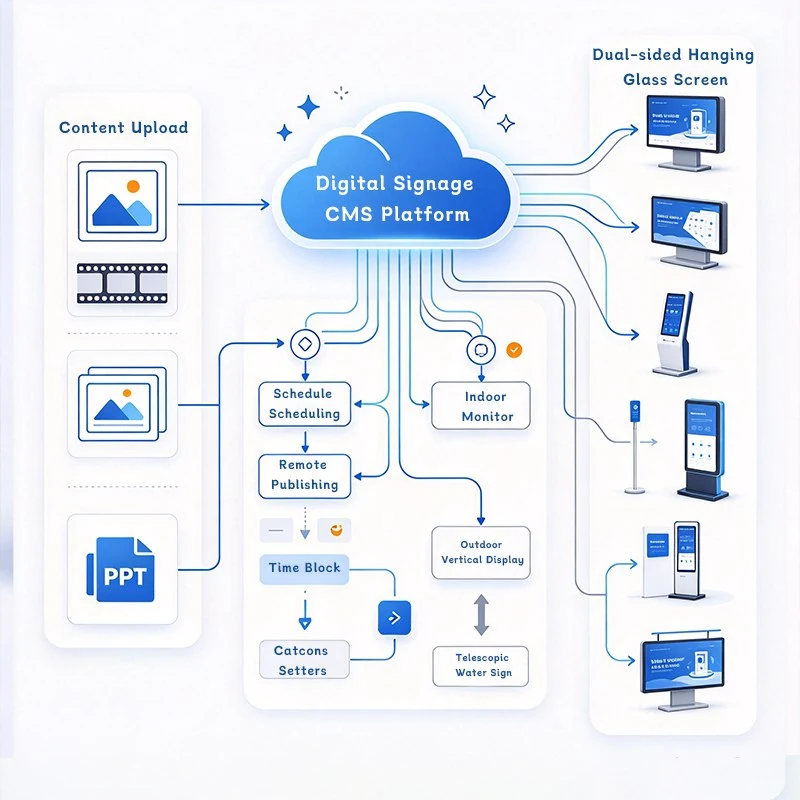
In today's increasingly widespread digital advertising deployment, many businesses face a common challenge: the diverse types of advertising machines within stores and venues—wall-mounted screens, freestanding units, outdoor cabinets, water sign displays, and dual-sided hanging glass screens—operate independently, requiring content updates to be performed one machine at a time, which is time-consuming, labor-intensive, and prone to errors. Qtenboard Advertising CMS was created precisely to solve this pain point. As a cloud-based content management platform, it can uniformly manage the entire Qtenboard digital signage product line, allowing operators to complete content publishing and device monitoring for all screens from a single backend.
Full-Series Hardware Compatibility: One System Covers All Scenarios
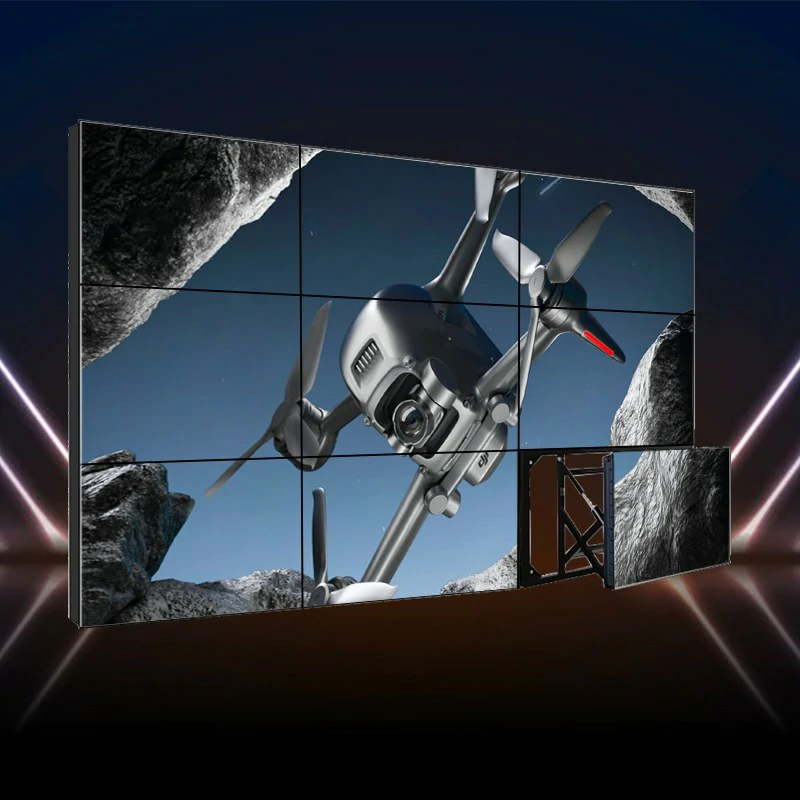
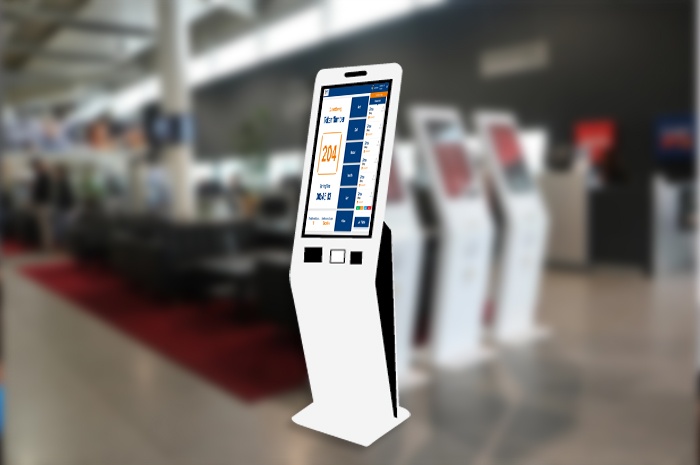
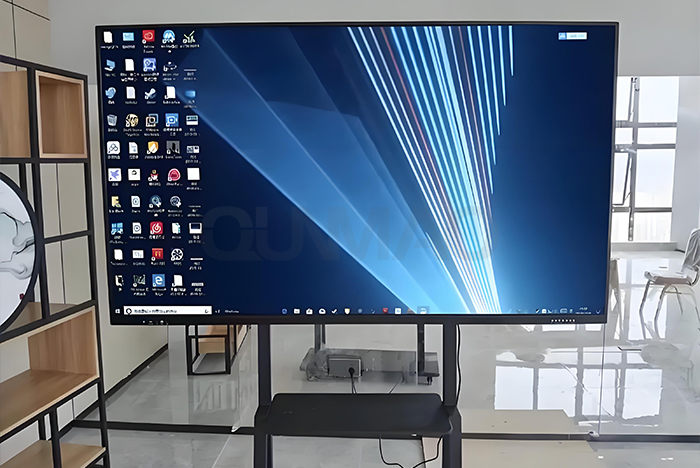
The core advantage of Qtenboard CMS lies in its broad hardware compatibility. Whether it is indoor wall-mounted advertising machines, indoor freestanding units, outdoor freestanding displays, indoor and outdoor water sign machines, or even dual-sided hanging glass screens, all natively support CMS access. Wall-mounted advertising machines are commonly used in elevator lobbies and corridors, suitable for pushing promotional posters and brand videos. Indoor freestanding units are deployed in mall lobbies and store entrances, carrying richer content displays. Outdoor freestanding machines must withstand strong light and weather changes, and the CMS supports high-brightness adjustment and remote management of waterproof and dustproof devices. Water sign machines are suitable for restaurant entrances and exhibition front desks, while dual-sided hanging glass screens leverage their dual-display capability to cover two-way foot traffic. One CMS connects them all.
Remote Control Convenience: From "On-Site Visits" to "Mouse Clicks"
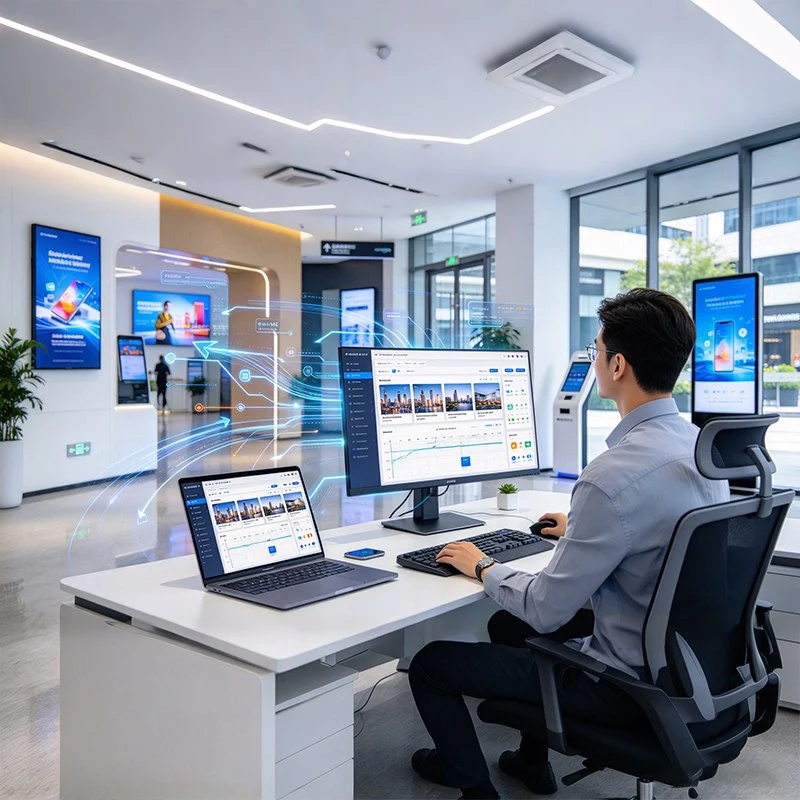
Traditional advertising machine management relies on manually inserting USB drives or debugging each unit individually, but Qtenboard CMS moves all of this to the cloud. Operators simply open a browser to upload images, videos, PPTs, and other content materials, arrange playlists through drag-and-drop, and publish to specified screens or groups of devices with one click. The system supports scheduled playback, allowing promotional campaign content schedules to be planned weeks in advance and automatically going live at the appointed time without manual supervision. For chain brands, headquarters can uniformly produce content and push it to nationwide stores with one click, while allowing regional administrators to make minor adjustments based on local needs, balancing efficiency and flexibility.

Intelligent Operations and Data Insights: Making Every Screen "Controllable and Visible"
CMS does more than solve content publishing issues; it also provides complete device operations and maintenance capabilities. The system displays each advertising machine's online status, current playback content, and operating parameters in real time. Once a device goes offline or experiences an abnormality, administrators immediately receive alert notifications, transforming passive response into proactive maintenance. Additionally, CMS records playback logs and exposure data for each screen, helping operators understand which content is truly seen by audiences and thereby optimize advertising strategies. In the case of an Italian fast-food chain, the client shifted from relying on employees to manually update content to cloud-based unified scheduling, allowing staff to focus on customer service and significantly reducing content update error rates. With an extremely low learning curve, Qtenboard CMS transforms advertising machine operations from tedious manual labor into efficient digital work.


 Floor 6, Building A, No. 3, North District, Shangxue Science and Technology City, Xinxue Community, Bantian Street, Longgang District, Shenzhen City
 info@szqunmao.com
 +86 15920011166
 +86 15920011166