English
 Español
 Português
 Français
 Русский язык
 Italiano
 Deutsch
 Nederlands
 لعربية
 한국어
 Japanese
 ภาษาไทย
 Türkçe
 Tiếng Việt
 Bahasa Indonesia
 Hindi
 kazakh
 Uzbek
 Thai
 Farsi

2026 LCD Video Walls: Finding Certainty in Professional Scenarios Amid Substitution Pressure and Cost Fluctuations
 2026-11-20
 8



2026-11-20
8
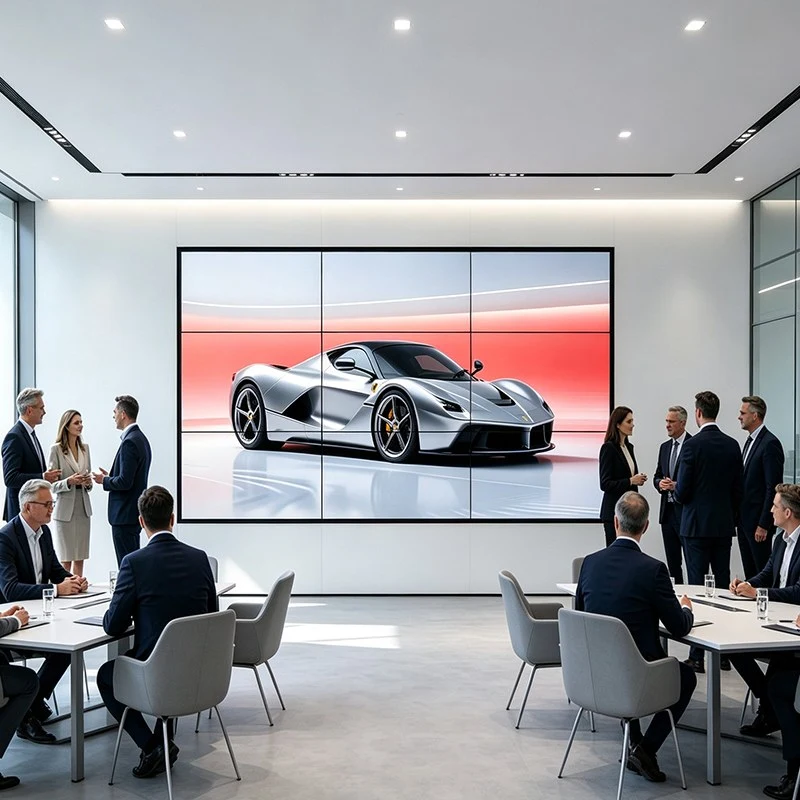
The LCD video wall market in 2026 presents sharply divergent characteristics. Global shipment data shows Q1 video wall shipments exceeding 71,000 units, down 15.7% quarter-on-quarter and 19.2% year-on-year. This decline is not an isolated phenomenon but the result of technology substitution and project-cycle resonance: across the broader commercial display field, direct-view LED solutions are accelerating their erosion of LCD video walls' traditional territory—especially in enterprise meeting rooms and mid-to-low-end display scenarios, where the falling cost of fine-pitch LED has made LCD video walls' price-performance advantage no longer secure. However, in professional fields such as command and control centers, traffic dispatch, and security surveillance, LCD video walls retain an irreplaceable position thanks to mature supply chains, lower maintenance thresholds, and stable color performance. The market is undergoing a round of structural screening, with demand converging toward professional scenarios that genuinely require 7×24-hour continuous operation and centralized presentation of multiple signal sources.
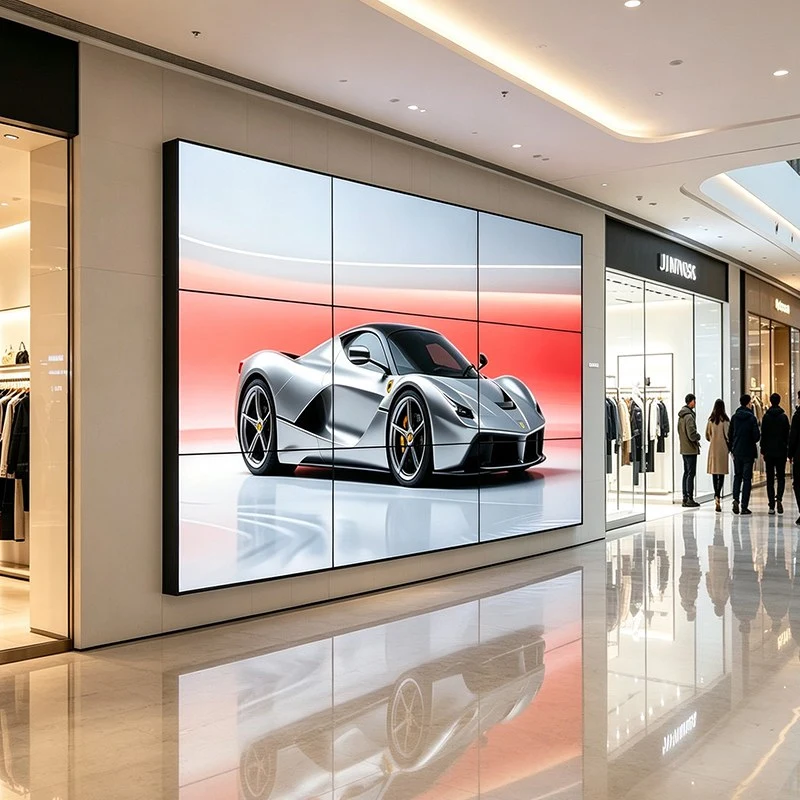
Meanwhile, upstream panel price fluctuations have added cost-side variables to LCD video walls in 2026. In mid-October, BOE issued a price adjustment notice explicitly raising prices to varying degrees for video walls, commercial displays, and other products, citing continuously rising upstream material procurement costs. For video wall projects, panel costs account for the bulk of the overall BOM, and this round of price increases directly compresses the budget flexibility of integrators and end users. Notably, the price rise is not driven by overheated demand but is the result of cost transmission on the supply side. This means procurement parties planning projects from the second half of the year through early 2027 need to more prudently evaluate price-locking windows and stocking rhythms, rather than simply waiting for prices to fall back.
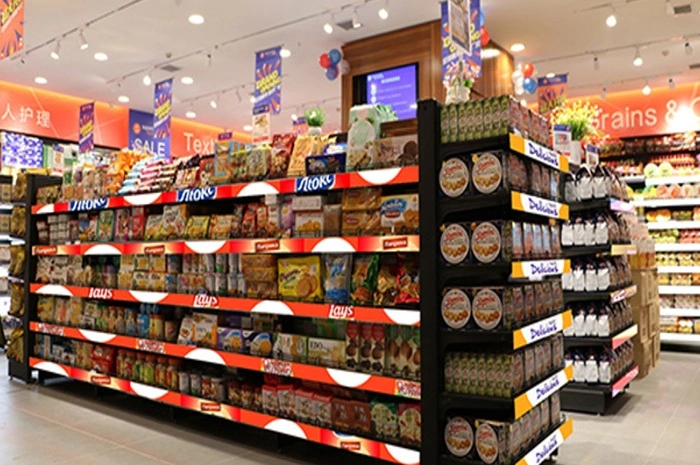
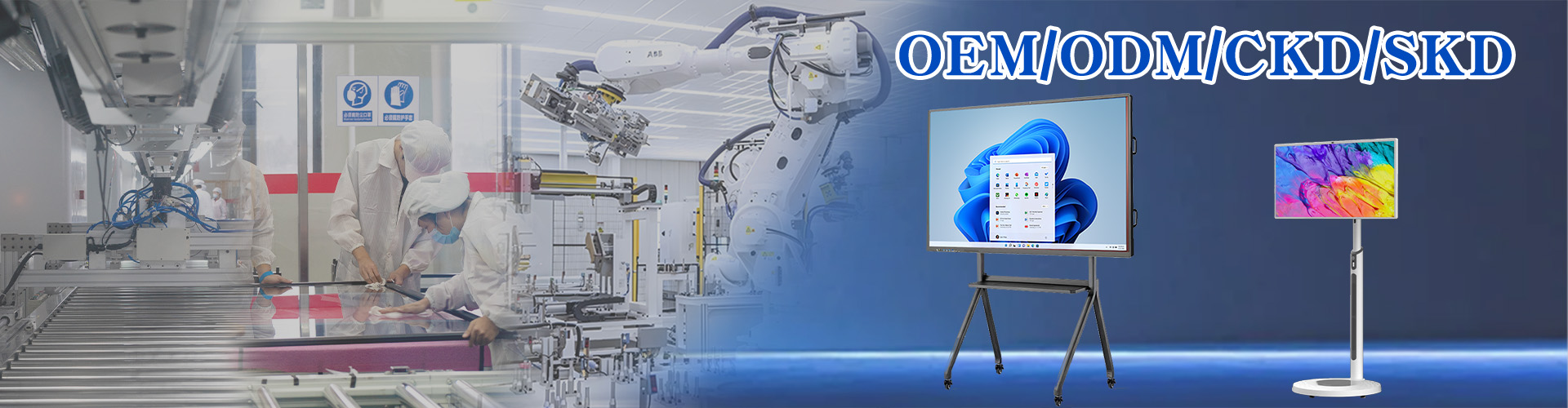
Against this industry backdrop, Qtenboard's LCD video wall product line has chosen a pragmatic product-definition path. As a source manufacturer with manufacturing bases in China, Thailand, and Vietnam, Qtenboard's video walls cover 43-to-75-inch specifications, offer multiple bezel options from 8mm to 0.88mm, and support 2K and 4K resolutions. Its 2026 flagship series features a front-maintenance hydraulic structure: a single panel can be accessed or replaced by pressing it to pop out, without dismantling adjacent screens—significantly reducing downtime and labor costs in long-term O&M for control rooms and retail stores. The accompanying cloud CMS platform supports centralized multi-screen management, remote OTA updates, and energy scheduling; for chain retail brands, headquarters can complete content distribution and device status monitoring for all store video walls from a single backend. In the retail scenarios of brands such as Adidas, Anta, Chanel, and DJI, Qtenboard's video wall solutions are already handling daily tasks of brand image display and promotional information release.
Looking ahead to 2027, competition in LCD video walls will no longer revolve around the single dimension of "narrower bezels." Industry reports indicate that buyers' procurement criteria are shifting from panel specifications to full lifecycle value, including calibration stability, maintenance convenience, heat dissipation performance, and integration capability with existing security and building automation systems. For manufacturers like Qtenboard with flexible manufacturing capabilities, opportunities lie precisely in the mid-to-long-tail projects that leading brands are unwilling to cover: those requiring customized size combinations, flexible minimum order quantities, and one-stop delivery from panels to installation structures. Under the dual squeeze of LED substitution pressure and panel price increases, the survival space for LCD video walls lies not in directly competing with LED for the "seamless" label, but in thoroughly mastering reliability, maintainability, and total cost of ownership in professional scenarios. This is both the market's choice and the battlefield where manufacturing expertise excels.


 Floor 6, Building A, No. 3, North District, Shangxue Science and Technology City, Xinxue Community, Bantian Street, Longgang District, Shenzhen City
 info@szqunmao.com
 +86 13148726043
 +86 13148726043