English
 Español
 Português
 Français
 Русский язык
 Italiano
 Deutsch
 Nederlands
 لعربية
 한국어
 Japanese
 ภาษาไทย
 Türkçe
 Tiếng Việt
 Bahasa Indonesia
 Hindi
 kazakh
 Uzbek
 Thai
 Farsi

The Evolution Logic of Interactive Flat Panels: From Display Terminal to AI Collaboration Hub — Qtenboard's Pragmatic Path
 2026-11-18
 7



2026-11-18
7

The interactive flat panel market in 2026 is undergoing a structural growth cycle driven by AI. According to RUNTO Technology data, global large-size interactive tablet shipments reached 1.307 million units in the first half of the year, up 9.4% year-on-year, with education growing 12.0% and commercial growing 5.9%. Unlike the early hardware race that simply pursued "large-screen touch," the current growth momentum comes from real-world efficiency demands: schools need AI-assisted teaching tools, and enterprises need collaboration terminals that shorten decision-making chains. Interactive flat panels are evolving from "a screen you can write on" into intelligent collaboration entry points that integrate voice recognition, real-time transcription, remote collaboration, and device management. In this transformation, manufacturers with underlying manufacturing capabilities and rapid scenario-adaptation ability are proving to have stronger implementation advantages than players relying solely on brand premiums.
The main line of technological evolution is now clear: AI capabilities are shifting from "a nice addition" to "a core configuration." In overseas education markets, multiple governments have incorporated AI classroom hardware into their budgets, driving education interactive tablet shipments up 21.4% year-on-year. Although commercial scenarios show moderate growth, demand is more pragmatic—conference flat panels need to solve specific pain points such as lengthy meeting preparation, low remote participation, and time-consuming minutes organization. Features like speech-to-text, automatic meeting minutes generation, and AI Q&A assistance are transforming from differentiated selling points into must-have items on procurement lists. Meanwhile, dual-system architecture (Android + Windows OPS) has become the mainstream solution, ensuring smooth daily whiteboard and wireless casting experiences while remaining compatible with enterprises' existing Office ecosystems and professional software.
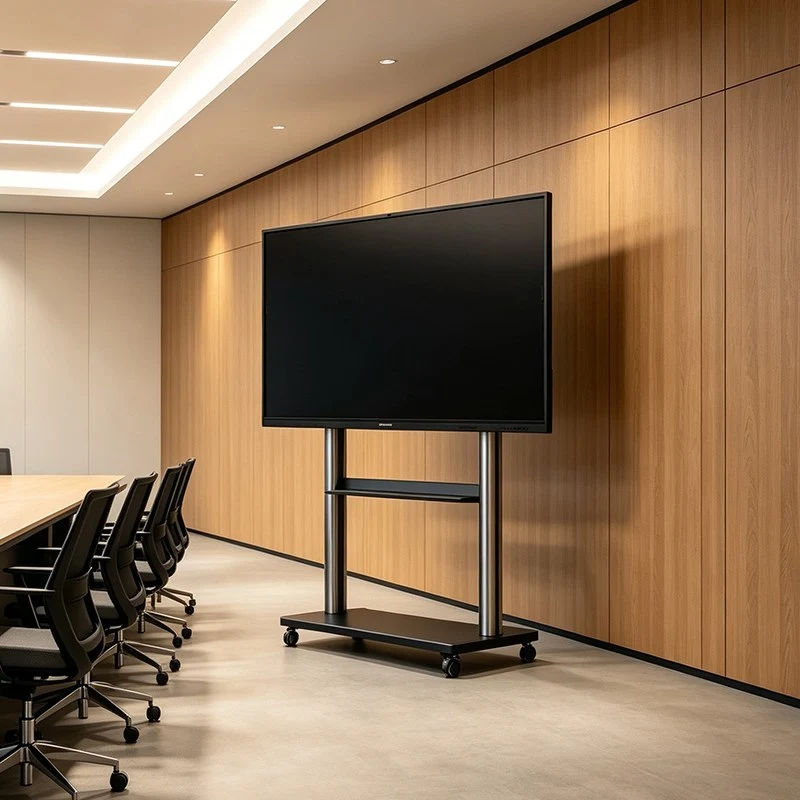
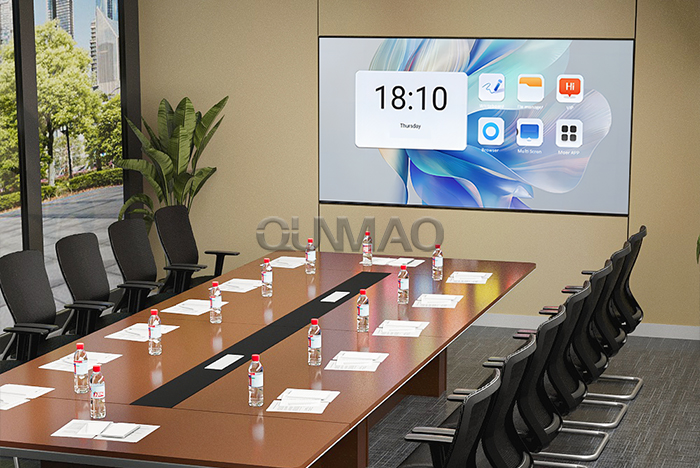
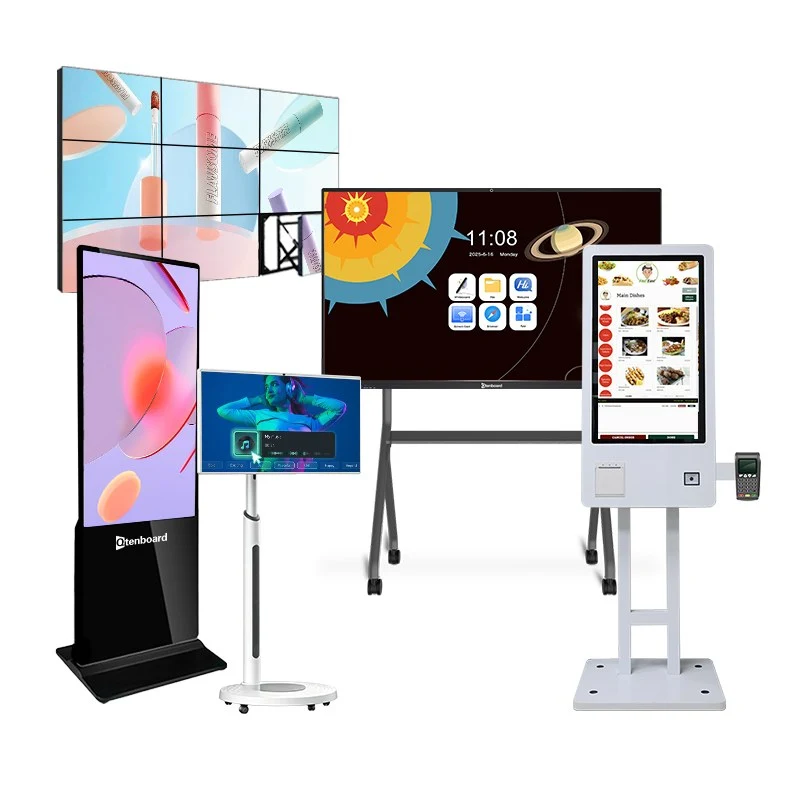
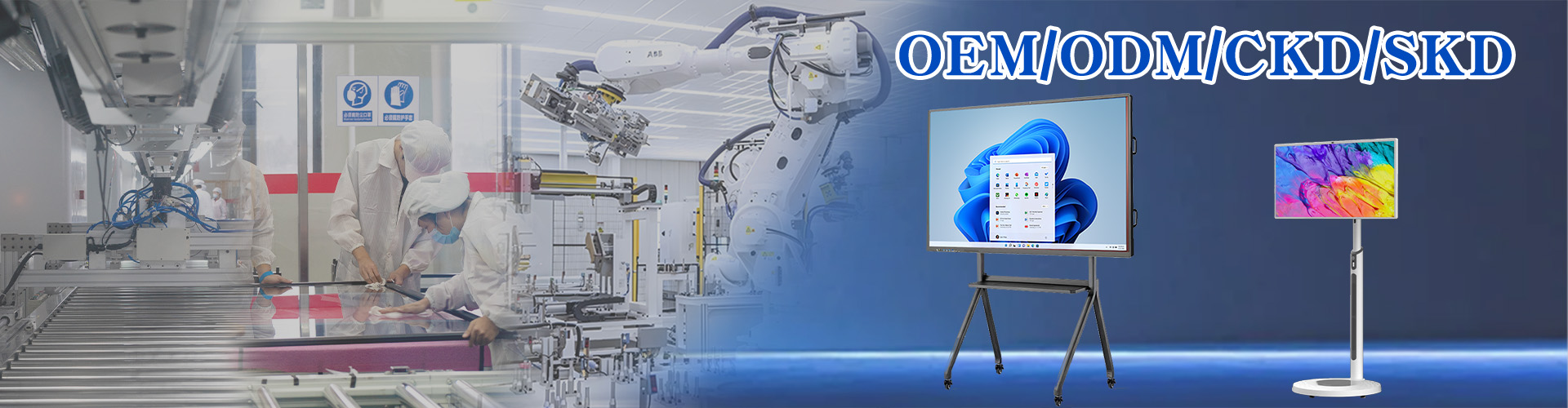
Against this trend, Qtenboard's positioning deserves attention. As a source manufacturer with two own factories in Shenzhen and Guangzhou, Qtenboard continues its manufacturing logic from the commercial display field in its interactive flat panel product line: rather than piling up excessively advanced concepts, it makes configuration trade-offs around real usage scenarios. Its conference flat panels offer a 55-to-110-inch 4K product matrix, support 50-point touch with palm rejection, and come with built-in AI speech-to-text, automatic minutes generation, and multilingual assistant functions. The dual-system design allows users to switch with one click between daily whiteboards and Windows professional applications, while the DMS remote management platform solves O&M challenges in multi-meeting-room, multi-building deployments—IT personnel can complete power scheduling, application pushes, and device status monitoring from a single backend. For education scenarios, Qtenboard also provides a configuration gradient from 65-inch standard classrooms to 98-inch lecture halls, with OPS module expansion and eye-care certification.
From an industry landscape perspective, competition in interactive flat panels is shifting from "spec-sheet comparisons" to "actual utilization rates after deployment." The top six brands in overseas markets already account for 56.6% combined share, with obvious head concentration; in the domestic education market, CR4 is as high as 83.7%, and the clearing out of small and medium brands is essentially complete. This means new entrants or smaller brands must establish verifiable delivery capabilities in segmented scenarios to gain a foothold. Qtenboard's strategy is to leverage the flexible advantages of factory-direct supply: supporting flexible minimum order quantities from a single prototype to bulk orders, and offering brand silk-screening, boot screens, UI customization, and even CKD/SKD散件 export solutions. In landing cases in Thailand and Uzbekistan, its conference flat panels helped clients compress cross-branch decision cycles from several days to same-day, while remote management functions freed IT teams from inspecting meeting rooms one by one. This "sufficient, durable, and manageable" product philosophy precisely matches the current market's transitional characteristics from trial purchases to pragmatic deployment.
The next stage of interactive flat panels will not be about who has a larger screen or more touch points, but about who can truly embed AI capabilities into workflows while supporting large-scale deployment with controllable costs and reliable quality control. Qtenboard's path—built on manufacturing heritage and measured by scenario demands—provides the industry with a pragmatic sample worth referencing.


 Floor 6, Building A, No. 3, North District, Shangxue Science and Technology City, Xinxue Community, Bantian Street, Longgang District, Shenzhen City
 info@szqunmao.com
 +86 13148726043
 +86 13148726043