English
 Español
 Português
 Français
 Русский язык
 Italiano
 Deutsch
 Nederlands
 لعربية
 한국어
 Japanese
 ภาษาไทย
 Türkçe
 Tiếng Việt
 Bahasa Indonesia
 Hindi
 kazakh
 Uzbek
 Thai
 Farsi

Qtenboard 55-Inch Video Wall: A Big-Data Display Solution for Traffic Command Centers
 2026-11-13
 33



2026-11-13
33
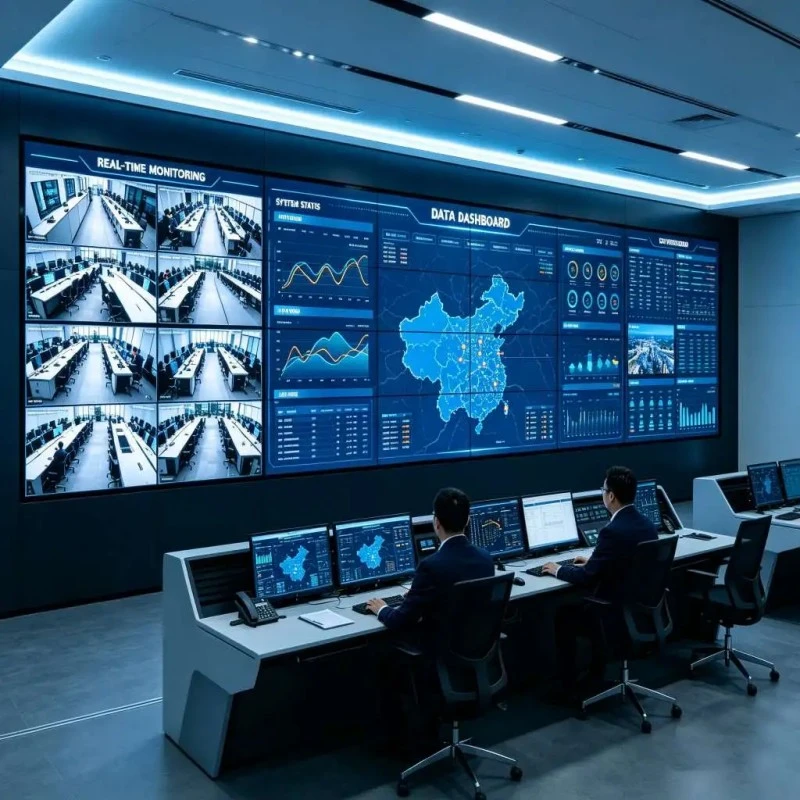
In modern urban traffic management, command centers carry multiple responsibilities — road network monitoring, signal scheduling, emergency response, and data analysis. Facing massive, multi-source, real-time traffic data, the core challenge for any display system is enabling decision-makers to see the whole picture, see it clearly, and see it accurately at the first moment. To meet this need, Qtenboard introduces a big-data visualization display solution for traffic command rooms, built on 55-inch video wall panels arranged in a 5-wide by 3-high configuration. The 15-panel matrix creates a large-format, high-resolution, seamlessly linked "command canvas" for traffic command centers, turning scattered data streams into one unified visual surface the whole room can read at a glance.
The layout itself is central to the solution's logic. With five columns across and three rows down, the structure balances an ultra-wide field of view with a moderate height, making it well suited to the viewing distance of a command-room display wall while remaining easy to manage by zone. Horizontally, the five columns form an ultra-wide canvas that can simultaneously host multiple video surveillance feeds, road network status maps, and data dashboards side by side. Vertically, the three rows naturally form a three-tier information hierarchy of overview, analysis, and detail: the top row presents citywide road network status and key indicators, the middle row shows live footage and analytical charts for priority areas, and the bottom row is reserved for alarm lists, incident handling, and granular data. The 15 screens can either display one complete big-data visualization across the entire wall or be split, windowed, and roamed across screens as needed, adapting flexibly to both routine monitoring and emergency command modes.
Because a traffic command center's display wall must run continuously for long periods, it places strict demands on brightness, color consistency, and stability. Qtenboard 55-inch video wall panels use industrial-grade panels with high brightness and high contrast, remaining clearly legible under the ambient lighting of a command room. Before leaving the factory, each panel undergoes individual color calibration to ensure brightness and color temperature stay highly consistent across all 15 units, so the full wall transitions naturally with no visible color shift. The wall supports ultra-high-resolution display, integrating traffic flow heat maps, GIS maps, checkpoint data, and signal timing into a single image with sharp, clear detail. A narrow-bezel design reduces the visual disruption caused by seams, keeping maps and curves continuous across screens. The product also supports 7×24-hour non-stop operation, meeting the rigid requirement of all-weather duty in a command center.
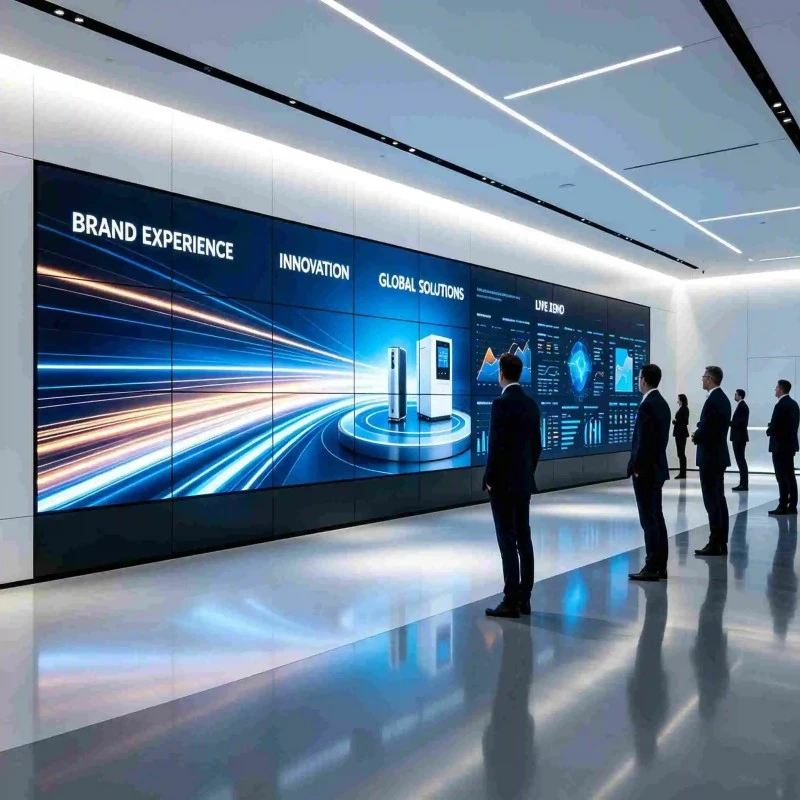
In the traffic command room, the Qtenboard video wall serves as the core carrier for data visualization. The solution can connect to an integrated traffic management platform to deliver a road network overview, displaying real-time city traffic status across the entire wall, with congestion index, average speed, and vehicles in transit visible at a glance. It enables video surveillance on the wall, distributing multiple HD feeds as windows so key intersections, tunnels, and hubs can be called up at any time. It supports data analysis dashboards, presenting flow trends, accident statistics, and violation analysis by zone to assist decision-making. It enables emergency command and dispatch, switching to command mode with one touch during incidents and linking event location, nearby resources, and response progress across screens. It also supports integration with signal control, checkpoint, and variable message sign subsystems for centralized data presentation and unified scheduling. The 5-by-3 matrix demands high installation precision, so Qtenboard provides matching mounting brackets and a standardized installation plan to ensure all 15 units are level, aligned, and evenly seamed. The front-maintenance design allows routine servicing and unit replacement without reserving rear space, suiting compact equipment room layouts, while the video wall processor and control system enable preset switching, scheduled power on/off, and status monitoring to lower long-term operating costs. Big-data visualization in a traffic command center is not simply about making the picture bigger — it is about ensuring data is read efficiently at the right size, in the right layout, and with the right reliability. With its 5-by-3, 15-screen matrix, the Qtenboard 55-inch video wall gives traffic command centers a display solution that balances visibility, zoning, and stability — so every data set is seen, and every decision has a basis.


 Floor 6, Building A, No. 3, North District, Shangxue Science and Technology City, Xinxue Community, Bantian Street, Longgang District, Shenzhen City
 info@szqunmao.com
 +86 13148726043
 +86 13148726043