English
 Español
 Português
 Français
 Русский язык
 Italiano
 Deutsch
 Nederlands
 لعربية
 한국어
한국어 Japanese
 ภาษาไทย
 Türkçe
 Tiếng Việt
 Bahasa Indonesia
 Hindi
Hindi kazakh
 Uzbek
Uzbek Thai
Thai Farsi
Farsi
QUNMAO LCD Digital Signage for Sports Stadiums Arenas
 2026-08-13
 864
864




2026-08-13
864
You run a professional sports venue. Game days bring tens of thousands of fans through your gates. You need to deliver real-time scores to every stand, showcase sponsor brand content without delays, guide crowds toward concessions and restrooms, and send safety notifications the moment emergencies arise. Old fixed billboards cannot keep up with these daily demands. Printed boards stay unchanged for weeks. Manual announcers fail to reach every corner of large venues at once. All these gaps hurt fan satisfaction and cut the revenue you can draw from event days.
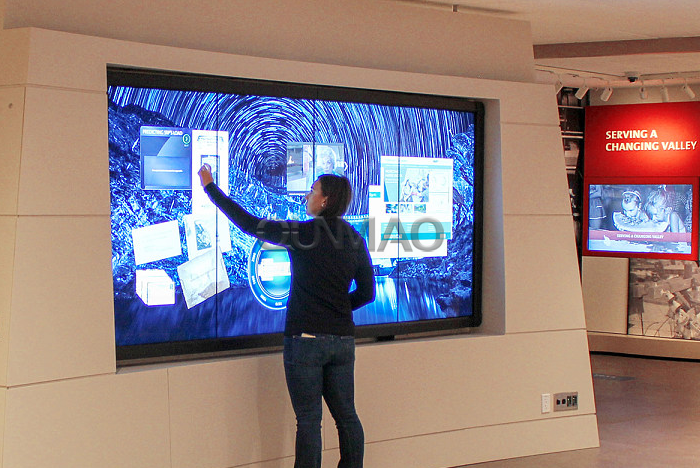
LCD digital signage solves these practical problems for sports facilities of all sizes. Our QUNMAO commercial display hardware matches the strict working conditions inside stadiums. High brightness panels stay clear under indoor overhead lighting and semi-open roof environments. Ultra-narrow bezels form seamless large video walls for central scoreboards and perimeter advertising strips. The cloud content management system lets your venue team edit, upload and push all content remotely from office laptops or mobile devices. No staff need to walk around every screen for manual updates before each match.
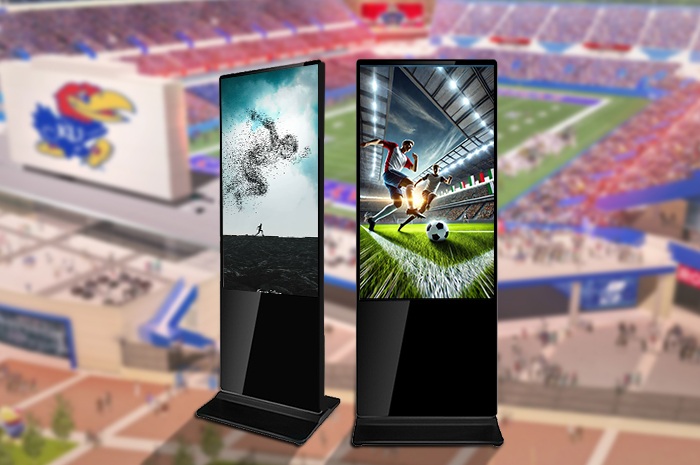
QUNMAO LCD screens deliver sharp, lifelike images to serve fan experience first. Indoor enclosed arenas use combined video wall arrays and independent vertical displays placed along concourses, seating walkways and luxury suite lobbies. These screens broadcast live match footage, slow-motion instant replays and real-time athlete performance data throughout every game. Numbers update the second points change. Team lineups and upcoming fixture lists refresh ahead of kickoff. Fans no longer strain to check small scoreboards far across the field. They catch every key detail from screens close to their seats.
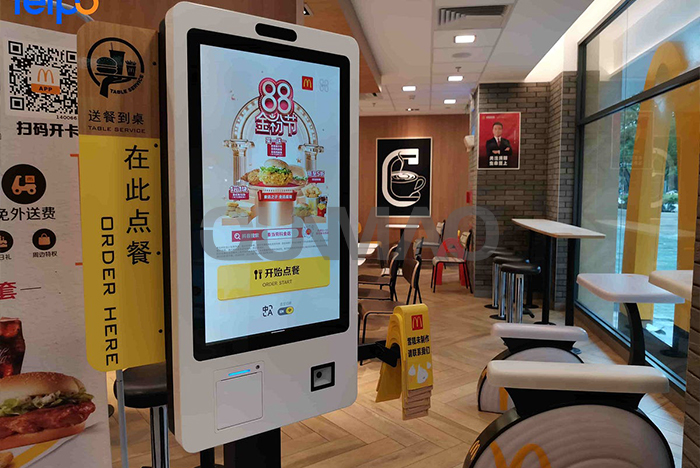
Self-service interactive kiosks extend this convenience further. Fans tap the screen surface to pull up detailed venue floor maps, locate food stalls and merchandise shops, check restroom queues, or browse official team jerseys and accessories. Many visitors use these terminals to post game snapshots to social platforms right on site. Small interactions like these make attendance feel more personal, and surveys collected from major league venues show visitor satisfaction scores rise 28 percent after interactive signage installation.
Sponsor cooperation forms a large share of venue annual income. Static painted perimeter boards limit your ability to adjust brand content. Contracts lock fixed designs for months. You cannot swap advertisements for half-time activities, playoff matches or special themed events. LCD signage removes this restriction entirely.
You schedule different advertising playlists for distinct time windows. Brand ads run during pre-game warm-up periods. Short promotional clips switch in once halftime begins. If a sponsor launches a limited-time campaign mid-season, you upload new visuals to all perimeter screens within minutes. Brands gain more targeted exposure, and you have room to sign extra short-term partnership deals without extra production costs. Calculations from sports facility management groups confirm venues with remote-controlled digital advertising panels see ad revenue climb 35 percent each year on average.
You also use these displays to drive spending inside the venue. Screens near concession areas show food menus, drink combinations and limited match-day snacks. Displays outside premium box suites introduce upgrade packages for future home games. Visitors waiting in long lines notice these recommendations easily, and concession sales record steady upticks across regular seasons. All promotional content adjusts freely to match home team winning streaks, holiday matches or tournament finals.
Sports venues place strict requirements on display hardware durability. Screens run 12 hours or longer on game days. Loud crowd noise, temperature shifts and occasional accidental bumps pose continuous tests to internal components. QUNMAO designs each unit specifically for round-the-clock commercial operation.
Ultra-narrow bezel splicing technologyBezel width shrinks down to 0.88 mm. Multiple panels connect together to form giant unified display surfaces for central stadium scoreboards. The gap between panels stays barely visible to spectators, so replays and score figures present complete, smooth visuals. Traditional thick-bezel screens split images awkwardly and distract viewing experience.
4K high resolution and anti-glare high brightness panelStandard indoor stadium screens adopt 350 cd/㎡ brightness. Concourse and semi-open area models lift brightness to 500 cd/㎡. Special anti-glare coating cuts light reflection from ceiling lamps and window daylight. Fans sitting at any viewing angle can read text and watch video clearly without washed-out pictures. 4K resolution guarantees fine details on player uniforms and facial expressions during playback.
Energy saving and stable long-running structureLow power consumption backlight modules cut electricity use compared with older display generations. Built-in heat dissipation channels discharge internal heat steadily during prolonged working hours. The casing uses sturdy alloy materials to resist collision damage from passing crowds and cleaning equipment. Each unit passes continuous 1800-hour aging testing before leaving our factory.
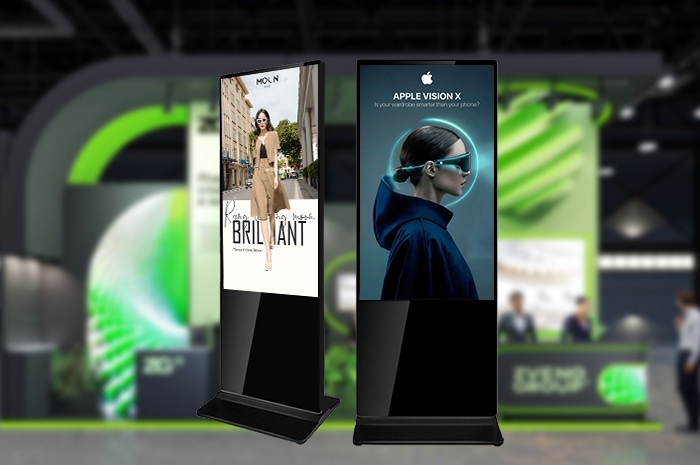
Diverse installation forms fit all venue zonesWall-mounted screens line corridor walls. Vertical floor stands sit at entrance lobbies and plaza areas. Spliced video walls occupy central main scoreboard positions. Embedded panels fit luxury suite interiors and VIP lounges. Our technical team customizes mounting plans to match your existing venue architectural layout without large-scale reconstruction work.
Large stadiums hold dozens or even hundreds of display terminals spread across entrances, stands, concourses, restaurants and rest areas. Manual management wastes massive manpower. Our cloud CMS system puts all devices under one unified control backend.
Your operation team divides account permissions according to job duties. Marketing staff edit sponsor ads and promotional content. Venue security personnel release evacuation guidance and safety reminders. Front desk administrators update fixture schedules and ticket information. No group can modify content outside its scope, and operation risks drop noticeably. You set timed playback tasks in advance. Pre-match welcome videos start automatically two hours before kickoff. Post-game thank-you footage runs once the match ends. The system executes all plans without manual supervision.
The most critical value appears during unexpected incidents. When sudden weather changes, crowd congestion or minor safety incidents occur, you draft warning text or picture materials and send them to every screen across the whole stadium in less than one minute. Unified notification avoids information chaos and helps staff guide crowds efficiently. Many municipal sports centers adopt this function as standard safety notification equipment after large-scale event drills.
| Comparison Item | Static Printed Billboard & Fixed Scoreboard | QUNMAO LCD Stadium Digital Signage |
|---|---|---|
| Content Update Speed | 3~10 days for design, printing, installation and replacement | Remote editing completed within 3 minutes, all terminals synchronized instantly |
| Real-time Data Display | Only basic fixed score display, no instant replay or player stats | Live match feed, instant replay, real-time points, athlete data fully supported |
| Sponsor Advertising Flexibility | Fixed long-term contracts only, cannot switch content by time period | Time-segmented playlists, temporary campaign upload available, expandable advertising income |
| Emergency Notification Release | Unable to update rapidly, rely solely on manual broadcasting | Whole venue push within 60 seconds for evacuation and safety alerts |
| Visual Adaptability to Lighting | Fade under strong light, blurred in dim environments | Adjustable brightness, anti-glare coating, clear view under all indoor lighting conditions |
| Annual Comprehensive Cost | Continuous printing, replacement and manual installation fees accumulate yearly | One-time hardware purchase + low annual cloud service charge, no repeated printing expenditure |
| Service Lifespan | Paper boards discarded after single use; metal scoreboards degrade slowly with limited functions | 6~8 years stable commercial continuous operation with official warranty coverage |
| Interactive Functions | No touch operation or self-service features | Touch query, venue navigation, merchandise browsing and social sharing accessible |
Your overall investment splits into three clear sections. You tailor the plan based on venue scale, seating capacity and functional needs.
Display Hardware ExpenseWe supply single independent screens, touch kiosks and large spliced video wall modules. Small community sports halls with under 3,000 seats usually select 43-inch and 49-inch wall-mounted screens for entrances and concourses. Medium professional arenas adopt 55-inch to 65-inch units alongside stands plus small spliced walls for central score displays. Large comprehensive stadiums combine massive spliced video walls, perimeter advertising strips and dozens of interactive kiosks across the whole site. As direct manufacturers without intermediate distributors, we cut procurement costs around 30 percent compared with retail channel suppliers.
Cloud CMS System Service FeeTwo service packages fit different operation scales. The basic edition suits venues with fewer than 15 display terminals, covering remote content upload, timed playback scheduling and simple permission management. The enterprise version targets large stadiums and sports park clusters, supporting multi-region account separation, playback data statistics, real-time sports data docking and emergency broadcast priority mode. Service fees charge annually with no hidden extra charges during the validity period.
Installation, Debugging and After-Sales SupportWall-mounted and vertical standalone screens finish installation quickly with remote technical guidance for most medium and small venues. Large spliced video wall projects and semi-open area high-brightness equipment require our engineers to travel on site for assembly, splicing calibration and system debugging. All products carry multi-year warranty. When screens break down or system errors occur during daily use, our support team arranges inspection, component replacement and system repair to avoid interruptions to upcoming matches.
Q1: Can small amateur sports halls afford to install digital signage systems?
You can build a lightweight setup with limited funds. Start with two to four wall-mounted screens and the basic cloud CMS package. Annual service costs stay low, and you only pay for necessary hardware. After one full competitive season, the money saved from repeated poster printing and manual replacement offsets most of your initial investment. Local amateur leagues also gain extra sponsorship opportunities through screen advertising space to further balance expenditure.
Q2: Is it possible to connect the signage system with official match scoring equipment for automatic score updates?
We support data interface docking with mainstream sports timing and scoring systems. After simple configuration, match points, team records and match time transmit to all stadium screens automatically without manual input. The system refreshes data synchronously the moment referees confirm scores. This removes human error and guarantees consistent score display across every terminal inside the venue.
Q3: Will long hours of daily operation cause screen burn or brightness decay quickly?
Our panels use commercial-grade liquid crystal materials designed for long-duration continuous lighting. Built-in pixel refresh programs activate during idle hours to reduce static image retention risks. The backlight adopts adjustable constant current control to slow brightness fading speed. Under normal daily game-day use, obvious brightness loss will not appear within five years of operation. Household televisions cannot withstand such working intensity for comparison.
Q4: How does the system cope with temporary power cuts or network disconnection on match days?
Each display terminal stores preloaded content locally inside built-in storage chips. Once the network link fails, screens automatically switch to offline playback mode and continue showing scheduled match content, ads and navigation information. After power resumes, the system reconnects to the cloud backend and synchronizes the latest content updates instantly. This dual backup mechanism prevents total display blackouts during unexpected outages.
Q5: Can we set different advertising content for different seating zones inside one stadium?
The cloud backend supports grouping management. You divide screens into concourse areas, general seating zones, luxury suites and entrance plazas separately. Upload distinct advertising and service content to each group according to audience attributes. Premium suite screens display high-end brand partners and exclusive lounge service introductions. Concourse screens focus on food shopping and team merchandise promotions. Targeted delivery improves advertising results for sponsors.
Q6: Are the screens suitable for semi-open roof stadiums with slight temperature changes?
Indoor and semi-open venues adopt our constant temperature optimized models. Internal temperature control components buffer temperature fluctuations within a reasonable range. The sealed casing blocks moisture and fine dust from entering internal circuits. We do not recommend these units for fully outdoor open-air stadiums without rainproof structures, and we can provide dedicated outdoor waterproof display models for such scenarios separately.
Q7: What preparations do we need to finish before installation?
You only need to reserve standard power sockets and wired or wireless network access near planned mounting positions. Our team surveys the site layout first, confirms screen sizes and installation heights, then completes bracket fixation, screen hanging and system debugging in sequence. No large-scale wall renovation or circuit reconstruction work is required for most existing sports venues.
Modern sports venues need to balance comfortable fan experiences, stable daily operation and steady revenue growth. Outdated static signage limits your room to adjust and expand business. QUNMAO LCD digital signage provides complete hardware, cloud management and after-sales services built around real stadium operation demands. You deliver match information clearly to every spectator, raise sponsor cooperation value, simplify crowd management work and prepare reliable notification channels for safety management all at once.
If you plan to upgrade your venue display system or design a digital solution for a newly built sports arena, visit our product page szqunmao.com/product_details/630.html or send your venue size and functional requirements to our mailbox. Our specialist team will draw up a tailored deployment scheme and offer detailed budget quotations for your reference.


 Floor 6, Building A, No. 3, North District, Shangxue Science and Technology City, Xinxue Community, Bantian Street, Longgang District, Shenzhen City
 info@szqunmao.com
 +86 15920011166
 +86 15920011166