English
 Español
 Português
 Français
 Русский язык
 Italiano
 Deutsch
 Nederlands
 لعربية
 한국어
 Japanese
 ภาษาไทย
 Türkçe
 Tiếng Việt
 Bahasa Indonesia
 Hindi
 kazakh
 Uzbek
 Thai
 Farsi

Qtenboard Self-Service Terminals: A Hardware Partner Worth Betting on for Local Distributors
 2026-11-25
 15




2026-11-25
15
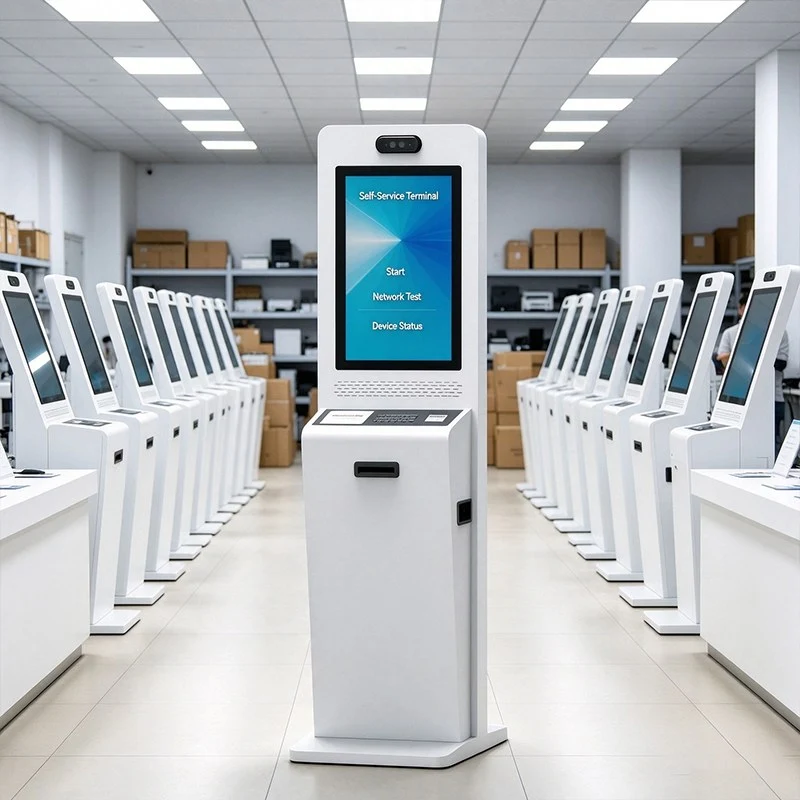
Local distributors doing business in their surrounding areas choose products very differently from contractors handling large projects. You don't need to deal with complex bid specifications or worry about cross-border compliance certifications. What you really care about is: which nearby customers will buy this machine, whether the profit margin is sufficient, whether the manufacturer can back you up quickly when problems arise, and whether repeat customers can bring in new ones. The self-service terminal category is shifting from a "rarity" to a "necessity" in local markets—government halls, community service centers, hospital outpatient departments, bank branches, scenic spot ticketing, and parcel stations are all installing self-service equipment. Qtenboard's value to local distributors lies not in impressive specifications, but in letting you cover multiple nearby scenarios with one product line and turn a single sale into a long-term business.
What local distributors fear most is a product line too narrow to answer when a customer asks, "Can it read ID cards?", "Can it print receipts?", or "Does it support QR code payment?" Qtenboard's architecture solves exactly this pain point: it supports both Android and Windows, offers rich interfaces such as USB, RJ45, and HDMI, and its expansion slots can flexibly add ID card readers, thermal printers, QR code modules, and fingerprint scanners. This means for community center queuing, hospital self-service registration and payment, scenic spot e-ticket validation, or parcel station pickup registration, you don't need to source from different manufacturers—one Qtenboard base model with different peripheral configurations covers them all. For local distributors, the more concentrated the SKU, the lower the inventory pressure and the faster the capital turnover—this is real business math.
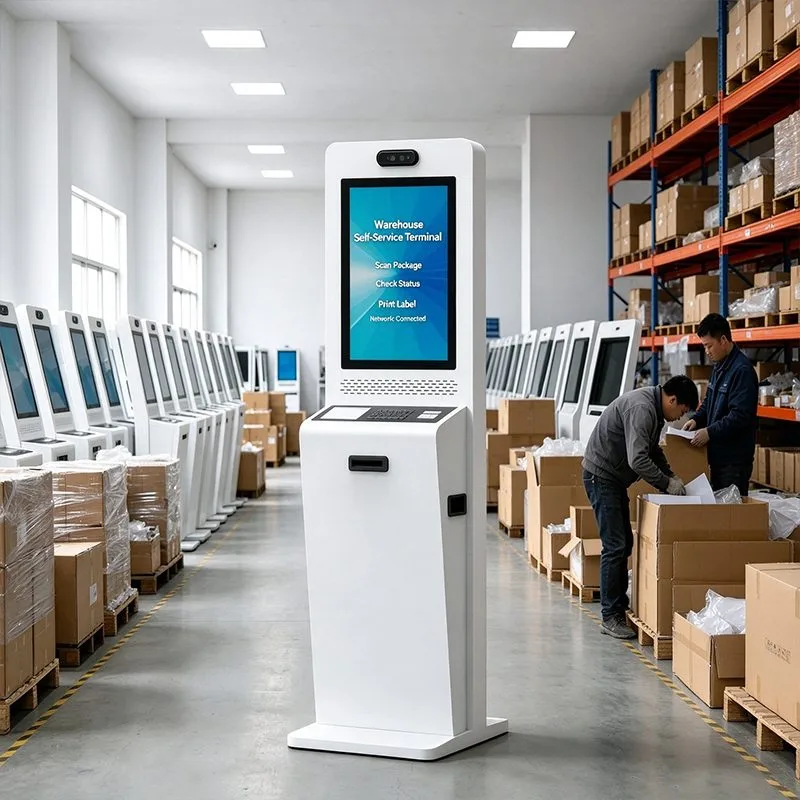
Another feature of local business is that customers are within dozens of kilometers, so after-sales response speed directly determines reputation. Qtenboard is backed by 33,000 square meters of manufacturing space, 8 automated production lines, a daily capacity of 200 units, and a 48-hour aging test process, ensuring stable batch shipments. More practically, Qtenboard supports remote upgrades and third-party APK installation, so many minor software issues can be resolved without an on-site visit, keeping your technical staff free from sporadic failures. Government hall terminals boot at 8 a.m. and shut down at 6 p.m., and must not crash or lag in between. Qtenboard's 24/7 continuous operation design, 3mm tempered glass touchscreen, and 178-degree viewing angle ensure citizens can read guidance from the side. These features let you confidently promise nearby customers "it will hold up"—and in local business, that promise is the most valuable thing.
Qtenboard's existing government deployment cases are ready-made sales talk for local distributors. A UK NHS regional walk-in center uses it for ID reading, queue ticketing, and citizen registration in one unit; a Dutch government department in Amsterdam uses it for ID applications, document printing, and queue ticketing, cutting average waiting time by 40%. You don't need to explain the cross-border background—simply saying "this hardware has run all-day high-frequency use in European government scenarios" is enough to ease concerns about stability. Local customers have short decision chains, often decided by one person in charge, and one credible endorsement beats ten pages of specifications.
A practical suggestion: put Qtenboard on your main product list, but don't rush to stock every model. If nearby customers are mostly government and public service oriented, focus on configurations with ID and printing modules; if scenic spots and parcel stations dominate, focus on QR code validation and thermal printing. Qtenboard offers CKD/SKD flexible shipping for customers needing local assembly or customization. Local distributors' profit lies not in unit price differences, but in customers finding it reliable, coming back when expanding, and neighboring units asking about it too—choosing a hardware partner that reduces after-sales worries and frees you to chase customers is far more worthwhile than simply comparing prices.


 Floor 6, Building A, No. 3, North District, Shangxue Science and Technology City, Xinxue Community, Bantian Street, Longgang District, Shenzhen City
 info@szqunmao.com
 +86 13148726043
 +86 13148726043