English
 Español
 Português
 Français
 Русский язык
 Italiano
 Deutsch
 Nederlands
 لعربية
 한국어
 Japanese
 ภาษาไทย
 Türkçe
 Tiếng Việt
 Bahasa Indonesia
 Hindi
 kazakh
 Uzbek
 Thai
 Farsi

Interactive Flat Panel Price in Kazakhstan | Qunmao
 2026-11-20
 23



2026-11-20
23
For dealers and importers sourcing interactive flat panels for Kazakhstan, the factory quotation is only the starting point of the purchasing budget. International freight, customs duty, import VAT, clearance expenses, exchange rates and local distribution costs all affect the final amount.
As a Chinese interactive flat panel manufacturer, QUNMAO works with overseas distributors, importers and project buyers to discuss product configurations, manufacturing quotations and export arrangements. Understanding how each cost is calculated helps buyers compare supplier offers more accurately and plan a more realistic import budget for the Kazakhstan market.
This guide explains the difference between factory price, landed cost and dealer selling price, and shows which information buyers should prepare before requesting a quotation from QUNMAO.
The total budget for importing an interactive flat panel into Kazakhstan involves several cost stages. Buyers should separate the amount paid to the manufacturer from the expenses incurred during international transportation, customs clearance and local distribution.
| Cost stage | Typical items | Who should confirm it? |
|---|---|---|
| Factory quotation | Panel size, display configuration, operating system, touch technology, accessories and customization | QUNMAO and the buyer |
| International logistics | Freight, insurance where applicable, handling and transportation-related charges | Buyer and freight forwarder |
| Import and customs | Customs value, applicable import duty, import VAT and customs clearance expenses | Importer and Kazakhstan customs broker |
| Local distribution | Warehouse handling, domestic delivery, storage and other local operating expenses | Local importer or distributor |
| Dealer selling price | Operating costs, after-sales provision, sales expenses and target profit | Local dealer |
These categories should not be combined into one unexplained figure. For example, a manufacturer's EXW quotation does not automatically include international freight, import duty or Kazakhstan VAT.
QUNMAO can provide a factory quotation based on the confirmed product specification and agreed trade terms. The buyer should then calculate the remaining import and distribution costs with the relevant logistics and customs service providers.
Landed cost is the internal budgeting amount used by an importer to estimate how much a shipment costs after reaching the agreed destination or warehouse. It is different from the customs value used by customs authorities to assess import charges.
The factory price of an interactive flat panel depends on the confirmed configuration rather than screen size alone. Before requesting a quotation from QUNMAO, buyers should identify the product requirements that affect manufacturing cost.
Screen size: Common purchasing options include 65-inch, 75-inch, 86-inch and larger interactive flat panels.
Display configuration: Resolution, brightness, panel specifications and optical bonding options can affect the quotation.
Touch technology: Touch points, touch accuracy and other interactive functions should be confirmed.
Operating system: Android configuration and optional Windows OPS specifications should be stated clearly.
Accessories: Cameras, microphones, wall mounts, mobile stands and other accessories may change the total order value.
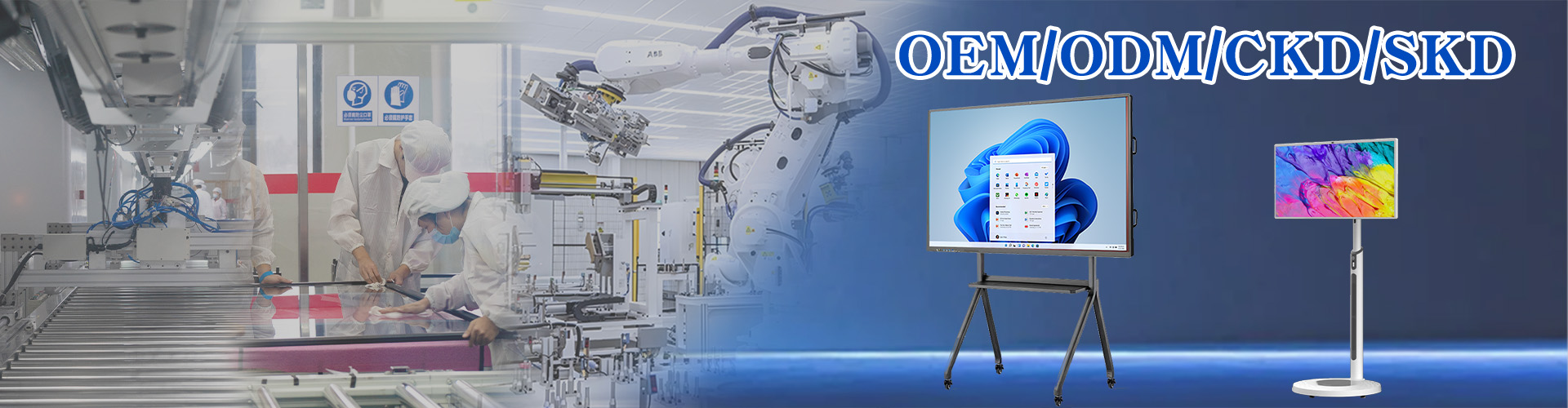
Customization: OEM/ODM requirements may include branding, UI, startup animation, wallpaper, preinstalled applications, languages and packaging.
QUNMAO prepares quotations according to the buyer's requested model, configuration, order quantity and customization scope. A comparison between two factory quotations is meaningful only when the included specifications and accessories are clearly aligned.
Interactive flat panels are relatively large products, so packaging dimensions and shipment volume can have a significant impact on transportation costs. The freight calculation may depend on the shipping method, route, shipment volume, gross weight and delivery arrangement.
When discussing an order with QUNMAO, buyers can request the available shipment information needed for freight quotation, such as:
Packaging dimensions for each model
Gross weight and net weight
Number of cartons or packages
Total shipment volume and quantity
Available shipment and packing details for the confirmed order
Buyers can use this information to obtain comparable freight quotations from their own forwarders. If transportation insurance, destination handling or other charges are required, these should be listed separately rather than assumed to be included in the factory price.
Import duty and VAT in Kazakhstan should be calculated using the applicable customs classification, customs value and tax rules for the specific shipment. An interactive flat panel should not be assigned a duty rate based only on its product name or the supplier's description.
The importer and its customs broker should confirm the applicable TN VED EAEU code, customs valuation method, duty rate, VAT tax base and other import requirements before placing a large order.
For preliminary internal budgeting, buyers can use the following simplified expressions:
Estimated import duty: Customs value × applicable duty rate.
Estimated import VAT: Applicable VAT tax base × applicable VAT rate.
Important: These are simplified budgeting expressions, not complete legal customs formulas. The customs value may differ from the supplier's EXW, FOB or CIF quotation. The VAT tax base, applicable rate and eligibility for input VAT deduction must be checked under the rules relevant to the importer and transaction.
After customs clearance, the importer may still need to pay for warehouse handling, domestic transportation, unloading, storage and delivery to dealers or project sites.
These expenses depend on the destination city, warehouse arrangement, delivery distance and order size. For example, a shipment delivered to an Almaty warehouse may have a different local cost structure from one distributed to several regional dealers.
For internal purchasing analysis, an importer can organize the main cost items using this structure:
Estimated landed cost budget
Product purchase cost
+ International freight not already included
+ Applicable import duty
+ Import VAT
+ Customs clearance and handling expenses
+ Other applicable destination and local delivery expenses
This is a management budgeting model, not a statutory customs valuation formula. Check each quotation carefully to avoid counting freight, insurance or handling charges twice when they are already included in another price component.
Two interactive flat panel orders with the same screen size can have different landed costs. The product configuration, shipping arrangement and customs treatment all influence the final budget.
Larger interactive flat panels generally require larger packaging. Their shipment volume can affect freight charges, warehouse space and handling arrangements.
When comparing 65-inch, 75-inch and 86-inch models from QUNMAO, buyers should request the actual packaging dimensions and weights for the selected configurations instead of estimating freight based only on screen size.
Display specifications, touch functions, operating system options, computing modules and accessories influence the factory quotation. A basic configuration and a project-specific configuration should not be treated as equivalent products when comparing prices.
QUNMAO can discuss different hardware configurations and optional Windows OPS solutions according to the buyer's application requirements. Buyers should specify whether cameras, microphones, stands, wall mounts or other accessories are included in the quotation.
Order quantity may affect production planning, packaging arrangements and unit pricing. OEM/ODM projects may also involve additional design confirmation, sample evaluation and customization work.
For distributors building their own brands in Kazakhstan, QUNMAO can discuss options such as logo placement, startup screens, UI adjustments, preinstalled applications, language requirements and customized packaging. The cost and lead time depend on the confirmed project scope.
Customs duty and other import charges depend on the actual goods, applicable customs classification and current regulations. Buyers should not assume that changing the shipment method or importing products in separate components automatically reduces tax or changes the customs classification.
For CKD and SKD projects, QUNMAO can discuss kit contents and technical documentation with local assembly partners. However, the customs treatment of a kit or partially assembled product must be confirmed independently with a qualified customs broker.
Incoterms define important responsibilities between the seller and buyer, including delivery arrangements, risk transfer and the allocation of certain costs. They help buyers understand what a QUNMAO quotation includes and which expenses need to be arranged separately.
| Trade term | General arrangement | What the buyer should check |
|---|---|---|
| EXW | The seller makes the goods available at the agreed place, subject to the applicable Incoterms rules. | Collection, export arrangements, freight, insurance and import clearance responsibilities. |
| FOB | The seller delivers the goods on board the vessel at the named port of shipment under the applicable rules. | Origin charges, ocean freight, insurance and destination expenses. |
| CIF | The seller arranges cost, insurance and freight to the named destination port for sea or inland waterway transport. | Destination charges, import clearance, duty, VAT and inland delivery. |
| DAP | The seller arranges delivery to the named destination, ready for unloading. | Import clearance, import duty, VAT and unloading responsibilities. |
| DDP | The seller takes responsibility for delivery and import clearance, including applicable import duties and taxes, under the agreed arrangement. | Whether the seller can legally and practically handle the import obligations in Kazakhstan. |
These descriptions are general summaries. The exact responsibilities depend on the named place, the selected Incoterms version and the agreed contract terms.
When requesting a quotation from QUNMAO, buyers should state their preferred trade term and destination. If the buyer has a freight forwarder in China, an EXW or FOB-based quotation may be suitable for comparison. Other delivery arrangements should be discussed according to the actual route and import requirements.
Incoterms do not determine customs classification, duty rates or VAT treatment. Those matters must be checked separately under the applicable customs and tax rules.
Many international interactive flat panel quotations are discussed in US dollars, while Kazakhstan dealers may sell products and manage local expenses in Kazakhstani tenge (KZT). Exchange rate movements can therefore change the actual local-currency cost of an order.
Buyers should distinguish between three exchange rate references:
National Bank reference rate: A published reference that can help buyers understand general currency movements.
Bank transaction rate: The actual rate and fees applied when the importer purchases or transfers foreign currency.
Customs exchange rate: The exchange rate applied for customs valuation or assessment under the relevant rules.
These rates may not be identical. A dealer should not assume that the published reference rate will be the exact rate used for payment or customs calculations.
Record the quotation currency and payment currency.
Confirm the quotation validity period with QUNMAO.
Check the bank's actual exchange rate and transfer fees before payment.
Use a clearly defined exchange rate assumption in the internal budget.
Review the budget again before confirming the shipment and local selling price.
For larger orders, dealers may also discuss payment schedules and shipment planning with QUNMAO to coordinate purchasing and cash flow. The agreed payment terms should be documented in the sales contract.
The landed cost is not the same as the dealer's final selling price. After the goods arrive in Kazakhstan, a distributor still needs to consider local operating expenses and the commercial return required to maintain the business.
Typical dealer-side costs may include:
Warehouse rent and inventory management
Local transportation and delivery
Sales commissions and marketing expenses
Installation arrangements and customer training, where offered
Warranty handling and spare-parts provision
Financing costs and inventory holding costs
Other business operating expenses
Dealers should distinguish between markup and gross margin when setting a selling price.
Selling price = Cost base × (1 + Markup percentage)
For example, if a dealer applies a 20% markup to a defined cost base, the selling price is 1.2 times that cost base.
Gross margin = (Selling price − Cost of goods sold) ÷ Selling price × 100%
A 20% markup does not produce a 20% gross margin. Dealers should use a consistent cost base and account for applicable sales taxes, discounts, commissions and other expenses when evaluating profitability.
QUNMAO can support distributors by discussing product configurations, OEM/ODM requirements and supply arrangements. The Kazakhstan dealer remains responsible for setting its local selling price according to its own market positioning, operating costs and commercial strategy.
A clear purchasing brief helps QUNMAO prepare a more relevant factory quotation and gives the importer enough information to request freight and customs estimates.
Target screen sizes: Specify whether you need 65-inch, 75-inch, 86-inch or other models.
Product application: Explain whether the panels are intended for schools, meeting rooms, training centers or other commercial projects.
Hardware requirements: Confirm display, touch, Android and optional Windows OPS requirements.
Accessories: List cameras, microphones, stands, wall mounts and other required items.
Order quantity: Provide the estimated quantity for each model and configuration.
Branding requirements: Identify any logo, UI, startup screen, language, packaging or OEM/ODM requirements.
Delivery destination: Provide the destination city or warehouse in Kazakhstan.
Trade term: State whether you prefer EXW, FOB, CIF, DAP or another arrangement for quotation comparison.
After receiving the factory quotation, the buyer can use a comparison sheet to organize the complete budget.
| Budget item | Information to collect | Source |
|---|---|---|
| Product cost | Model, configuration, quantity and unit price | QUNMAO quotation |
| Packaging | Carton dimensions, gross weight and shipment volume | QUNMAO shipment information |
| International freight | Route, shipping method and quoted charges | Freight forwarder |
| Customs duty and VAT | Applicable customs code, rates and tax base | Kazakhstan customs broker |
| Clearance and local delivery | Broker fees, warehouse charges and domestic transport | Local service providers |
| Dealer operating costs | Storage, sales, warranty provision and financing | Local distributor |
For a first order, it is often more useful to compare several clearly defined configurations than to request one general price for an unspecified interactive flat panel. This allows the buyer to understand which features affect the quotation and which expenses arise after shipment.
Yes. QUNMAO is a Chinese commercial display manufacturer offering interactive flat panel products for overseas B2B buyers. Quotations are prepared according to the selected model, technical configuration, quantity, customization requirements and agreed trade terms.
Buyers should provide the target screen size, hardware requirements, operating system, accessories, order quantity, branding requirements and destination. The more clearly the configuration is defined, the easier it is to compare quotations and estimate the import budget.
QUNMAO can discuss OEM/ODM requirements such as logo branding, UI, startup animation, wallpaper, preinstalled applications, language options, packaging and hardware configuration. The available scope, project cost and schedule depend on the confirmed requirements.
CKD and SKD cooperation can be discussed according to the project requirements. QUNMAO can work with buyers on kit contents, assembly documentation, installation videos and remote technical guidance. Customs classification and the local regulatory treatment of the imported components must be confirmed by the importer and its customs broker.
No. A lower factory quotation may involve a different product configuration, packaging arrangement or trade term. Freight, customs charges, VAT and destination expenses can also change the final cost. Buyers should compare complete and equivalent quotations rather than unit prices alone.
Import duty and VAT depend on the applicable customs classification, valuation rules and current regulations. QUNMAO can provide product and shipment information for the buyer's review, but the importer should obtain the applicable tax and customs calculations from a qualified Kazakhstan customs broker or tax professional.
Planning an interactive flat panel import into Kazakhstan requires more than comparing factory prices. Buyers need to understand product specifications, packaging volume, international freight, customs requirements, exchange rates and local distribution expenses before confirming an order.
QUNMAO supports overseas distributors, importers, project contractors and brand owners with interactive flat panel manufacturing and B2B supply cooperation. Buyers can discuss standard product configurations, OEM/ODM customization and CKD/SKD project requirements directly with the manufacturing team.
To request a quotation, share your target screen sizes, required configuration, estimated order quantity, branding requirements and delivery destination in Kazakhstan. QUNMAO can then review the project requirements and discuss the relevant factory quotation and shipment information.
Looking for an interactive flat panel manufacturer in China? Contact QUNMAO to discuss product specifications, factory quotations, OEM/ODM customization and long-term distributor cooperation.


 Floor 6, Building A, No. 3, North District, Shangxue Science and Technology City, Xinxue Community, Bantian Street, Longgang District, Shenzhen City
 info@szqunmao.com
 +86 13148726043
 +86 13148726043