English
 Español
 Português
 Français
 Русский язык
 Italiano
 Deutsch
 Nederlands
 لعربية
 한국어
 Japanese
 ภาษาไทย
 Türkçe
 Tiếng Việt
 Bahasa Indonesia
 Hindi
 kazakh
 Uzbek
 Thai
 Farsi





Elevator Advertising Screen Customization: A Complete Project Guide for Media Companies
A procurement guide for overseas media companies, ad agencies, and building operators
Elevator media is shifting from "buy a batch of screens that can play ads" to "deploy a terminal network that spans buildings and cities and can be operated remotely." For media companies, the limits of off-the-shelf hardware tend to surface only when a project reaches its second or third city: inconsistent branding, installation conditions that don't match standard enclosures, devices that can't be managed at scale, and systems that won't connect to the existing ad platform. The real value of elevator advertising screen customization is not a better-looking device. It is turning every terminal into a repeatable, manageable, and monetizable operating asset.
1. What Media Projects Actually Need to Customize: Four Decision Layers
Most buyers approaching media advertising screen customization for the first time assume "custom" means a different enclosure color or a printed logo. What actually determines delivery quality sits in four layers: whether the hardware fits the installation, whether the look reinforces the brand, whether the system connects to existing operations, and whether the fleet can be managed at scale. Each layer carries a different cost and timeline, and they should be assessed separately before a project is quoted.
Hardware and structure: solve "it fits and it survives" first
Installation conditions inside a car, in an elevator lobby, and in a main lobby differ dramatically. Inside a car, usable wall depth is often only a few centimeters, so ultra-thin wall-mount or recessed structures become a hard requirement. Lobby walls may involve property approval and fire code compliance, which means floor-standing or ceiling-hung options need to be confirmed early. Hardware selection should start from the physical constraints of the installation — screen thickness, board placement, heat dissipation, service access — rather than from screen size. These details decide whether the project needs rework later.
Inside the car: ultra-thin wall-mount or recessed, with the mainboard possibly extended externally to avoid taking up passenger space.
Lobby and corridor: slim wall-mount, thickness kept close to the wall to pass property inspection.
Main lobby and mixed-use buildings: floor-standing or large-format displays, but power, network, and fire escape routes must be confirmed in advance.
Connectivity and deployment: elevator shafts have difficult signal environments. Multi-mode 4G / Wi-Fi / Ethernet backup and local playback during outages are baseline requirements for media projects, not add-ons.
Hardware is only the starting point. The real customization decisions happen where structure and system meet — and that is where most projects either scale smoothly or run into repeated change orders.
2. Enclosure, Silkscreen, and Backend Customization: Build Brand Assets and Operating Assets Together
Enclosure customization and backend customization look like two separate workstreams, but in a media project they serve the same goal: keeping the terminal network consistent in both the physical world and the digital interface. Change only the enclosure and the operations team is still working in someone else's interface. Change only the backend and the building still sees a generic device. The two need to be planned together.
Enclosure and silkscreen: from generic device to branded touchpoint
Enclosure customization needs to be judged in layers. Logo silkscreen, frame color, and surface finish are low-cost changes suitable for fast rollout. Structural mold changes, stainless steel housings, and higher protection ratings require tooling costs and longer sampling cycles. For overseas media companies, three environmental factors matter more than aesthetics: cleaner corrosion, condensation, and physical impact. An elevator is a high-traffic public space, and standard sheet-metal enclosures can age prematurely in humid regions or buildings with strict cleaning standards.
Enclosure & Structure Case
UAE Elevator Project: Full Stainless Protection with Remote Board Installation
Challenge: The client needed an elevator display that was waterproof against cleaning and condensation, vandal-resistant against impact and misuse, built with a full stainless steel enclosure, and covered by tempered glass. Commercial elevator screens lacked sealed stainless structures, industrial sealed monitors were too large, and the elevator installation did not allow the mainboard to sit behind the panel.
Solution: A custom 21.5-inch elevator LCD with a full stainless steel housing, stainless bezel, and tempered glass front cover. Because there was no room for electronics behind the panel, the mainboard was mounted remotely using a 2-meter extension cable and a separate extension box, keeping the wall footprint minimal.
Result: The design passed installation acceptance on the first attempt with no design changes. The client won the elevator project with a compliant, durable terminal and expanded their share of the local elevator market. The lesson: enclosure customization is rarely about how the device looks. It is about whether the structural engineer can solve protection, dimensions, and installation constraints at the same time.
Beyond silkscreen and nameplates, boot screens, playback interfaces, and backend login pages are part of the same brand identity system. For overseas media companies, multilingual interfaces and timezone support are not optional. Headquarters, regional operations teams, and building property managers may work in different languages. A single-language backend raises training costs and error rates for local teams immediately.
System and backend customization: integrate with existing workflows, don't replace them
System batch management customization starts with integration. Media companies usually already run their own content management system, ad delivery platform, or client CRM. The value of a customized backend is embedding device management into the customer's existing workflow through APIs, not asking the operations team to learn a new system. Multi-level permissions, content approval flows, scheduling rules, and asset versioning determine whether a headquarters–region–site structure will actually work in practice.
On data security, transport encryption, operation logs, and audit trails are baseline. For media projects that involve advertiser contracts and delivery data, private deployment options need to be scoped at the commercial stage: which modules can be deployed privately, who owns upgrade and maintenance, and whether any functionality differs from the cloud version. These answers affect the customer's IT compliance review cycle. Clarifying them early saves far more time than negotiating after contract signing.
What this means for a media project: customizing enclosure and backend together lets every terminal reinforce the media company's brand inside the building, while letting the operations team schedule, distribute, and monitor from a system they already understand — instead of being slowed down by two disconnected tools.
3. Multi-Device Batch Control: The Real Barrier to Scaling an Elevator Media Network
A pilot with a few dozen screens and a city-wide network with thousands of devices are not the same management problem. Pilots can survive on manual checks and group chat messages. Once a network spans multiple buildings and cities, three questions become daily operational reality: is the device online, did the content actually play, and can delivery proof be produced the moment an advertiser asks for it. Industry estimates put the global elevator advertising market at roughly USD 13.18 billion in 2025, projected to reach about USD 20.29 billion by 2030, at a compound annual growth rate of around 9.0%. Growth is driven by networked operations and programmatic delivery, not by single-device hardware upgrades.
Batch control customization is not about "building a dashboard." It is about designing four capabilities together: grouping architecture, batch operations, remote maintenance, and delivery proof. Device hierarchy needs to support country → city → property → building → site levels. Batch content distribution, scheduled playback, and asset version rollback must cover hundreds or thousands of terminals in a single action. Remote reboot, remote upgrade, and remote screenshots must target specific devices, not "restart everything and see what happens."
Batch Deployment & Remote Management Case
Airport Terminal Media Project: 726 Screens, 15-Day Deployment, Unattended Fleet Management
Challenge: Before the upgrade, content was updated manually via USB drive, one screen at a time — slow and unable to respond to scheduling changes. The old playback boxes supported only 1080P, the elevator shaft signal environment was difficult, device freezes went unnoticed, and there was no scheduled power on/off or portrait/landscape switching capability.
Solution: An Android smart terminal solution covering 726 elevator screens, supporting 4K decoding, dual-screen display, remote content publishing, scheduled power on/off, and hardware watchdog auto-recovery after power loss. Deployment was completed in 15 days. The system moved from "manual USB updates per device" to "cloud-based remote publishing," and from "scattered maintenance" to "unattended fleet management."
Result (project data disclosed by the supplier): Content publishing efficiency improved by more than 50%, and terminal maintenance costs dropped by more than 40%. For a media company, the point is not the technical specifications. It is that the same team can manage more sites, and schedule changes no longer require sending someone on site. That is the direct return on batch management customization at scale.
Delivery proof deserves separate emphasis. If a batch control backend can only show that a device is online, but cannot produce playback logs, monitoring screenshots, and delivery proof reports, the media company still lacks the evidence it needs to settle and renew advertiser contracts. A customized backend should turn monitoring data into standard, exportable reports filterable by advertiser and site, not buried in device logs that require manual screenshotting. As a fleet grows from dozens to tens of thousands of devices, the hierarchy architecture, alert consolidation, and spare-parts response plan must be designed at the same time — otherwise the backend itself becomes a new operational burden.
4. Customization Timeline and Delivery Process: Five Steps Overseas Projects Often Underestimate
For overseas B2B projects, the timeline usually stalls not in production, but in certification support, export packaging, spare parts planning, and software deployment scope. The standard process runs: requirement discussion → solution assessment → sampling confirmation → small-batch trial → mass production → after-sales follow-up. Solution assessment typically takes 3–7 working days; sampling about 2–4 weeks; small-batch trial about 3–6 weeks; mass production generally 4–8 weeks or longer depending on volume and customization depth. These are ranges, not commitments. Actual timelines should be confirmed separately based on certification targets and structural tooling depth.
What to provide at the inquiry stage
Use case: inside the car, elevator lobby, or main lobby, including wall depth and power conditions.
Volume and rollout pace: pilot quantity, first batch, and site plan over the next 12 months.
Brand assets: logo files, brand colors, boot screen, whether silkscreen and nameplates are required.
Target market and certification requirements: who applies for CE, FCC, RoHS, and who provides test samples.
Backend feature list: integration with existing CMS or ad platform, private deployment needs, and required monitoring report format.
Certification, spare parts, and software upgrade boundaries
Certification expectations should be aligned from the start. Suppliers can support customers in completing certifications required for the target market, but certification responsibility, test scope, and cost ownership should be documented during solution assessment. "Fully certified by default" is not a safe assumption. Overseas media companies also need to agree on spare-parts supply cadence in the contract — elevator advertising downtime directly equals lost advertising revenue, so spare-parts response time affects total cost of ownership far more than unit price. On the software side, upgrade cadence for custom features, compatibility commitments, and maintenance responsibility under private deployment should also be documented before delivery, to avoid the grey area where "the feature works but nobody owns the upgrade."
5. Match Customization Direction to Business Role: Not Every Customer Needs the Same Solution
Media companies, ad agencies, property operators, and regional OEM partners prioritize elevator advertising screen customization very differently. Using one configuration to cover every role either makes the customer pay for features they don't need, or leaves a gap at a critical step.
Media companies
The core requirement is an operable network and provable advertising delivery. Prioritize batch control backend, monitoring reports, asset management, and multi-city hierarchy. Enclosure silkscreen and system branding move forward together so the network looks consistent inside every building.
Ad agencies
Focused on scheduling, data return, and client reporting. Customization centers on API integration with the existing ad platform, scheduling rules, and a multilingual backend. Hardware should prioritize stable delivery rather than aggressive structural modification.
Property and building operators
Information publishing, community announcements, and emergency notices take priority over ad operations. The customization direction is scheduled power on/off, zone-based content distribution, and high-priority emergency playback. Enclosure should align with building interior standards.
Regional distributors and OEM partners
Branded enclosures, branded systems, and local after-sales support are key. OEM/ODM flexibility, spare-parts kits, and certification support experience matter far more to long-term channel margins than unit price.
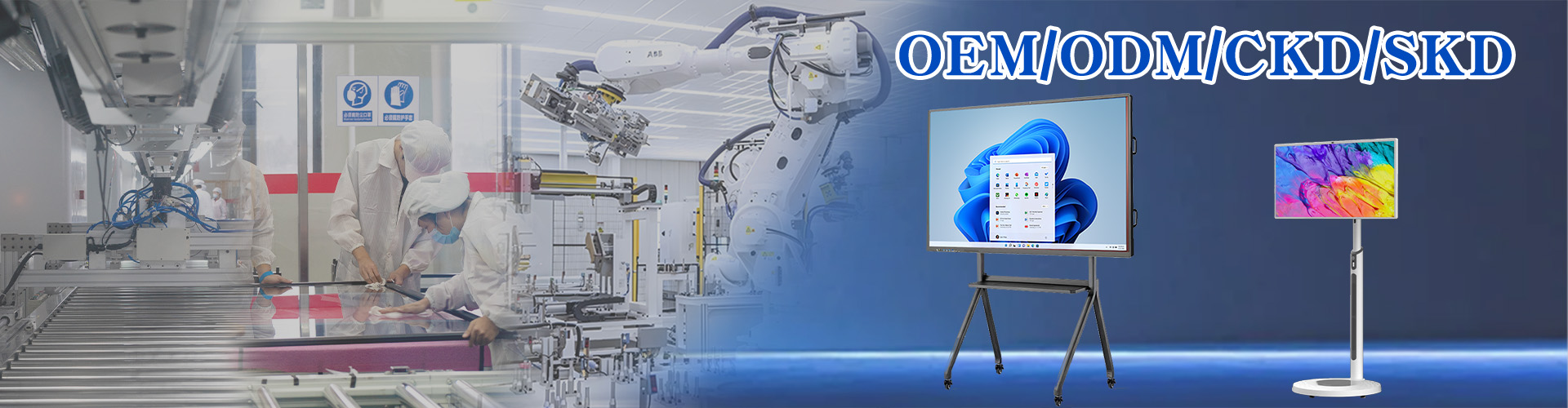
Supplier evaluation should also go beyond the product catalog. The overseas procurement process for media projects typically includes site survey, technical solution review, and pilot installation. Whether a supplier can support these three steps, match the project's sampling pace, and show prior projects with similar building conditions and certification markets is more informative than a spec sheet. Customization boundaries also need to be stated upfront: silkscreen, boot screen, and interface language are low-cost changes; structural tooling changes, deep CMS development, private deployment, and API integration require separate development cycles and costs. Documenting boundaries in the proposal is more useful to project progress than explaining them after signing.
Turn your elevator media project into an executable customization plan
If you are evaluating terminal customization, batch control backend, or structural modification for an overseas elevator media project, start by sharing your use case, volume, and target market. Qunmao will provide a layered customization recommendation and sampling assessment based on installation conditions, operating model, and certification requirements.
Project inquiry hotline: +86 13148726043