English
 Español
 Português
 Français
 Русский язык
 Italiano
 Deutsch
 Nederlands
 لعربية
 한국어
한국어 Japanese
 ภาษาไทย
 Türkçe
 Tiếng Việt
 Bahasa Indonesia
 Hindi
Hindi kazakh
 Uzbek
Uzbek Thai
Thai Farsi
Farsi
Digital Signage vs Traditional Static Advertising | Qtenboard Commercial Displays Higher ROI & Flexible Marketing
 2026-08-12
 1015
1015



2026-08-12
1015
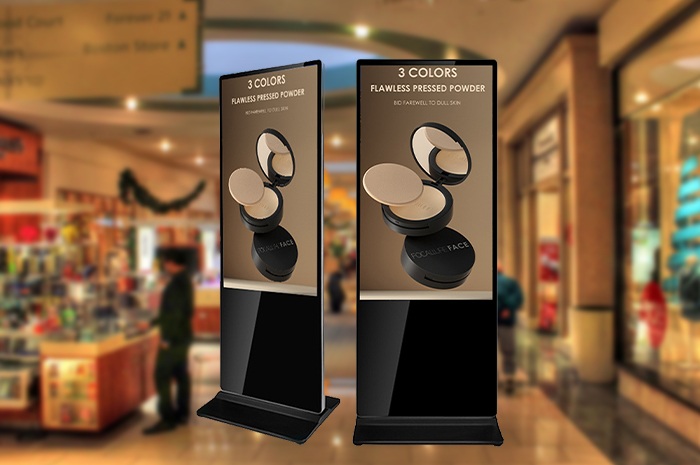
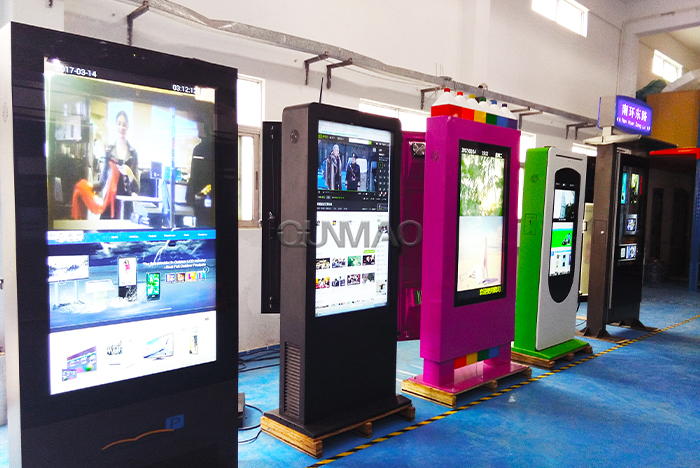
Every brand and retail operator now faces a clear marketing choice. Stick with conventional offline promotion methods including printed posters, roadside billboards and television commercials, or shift budgets toward modern digital signage systems. Neither option is entirely obsolete. Yet evolving consumer shopping habits and digital technology trends steadily tilt market preference toward screen-based advertising. Digital signage delivers flexible content scheduling, interactive customer experiences and trackable campaign results. These tangible perks static printed advertisements simply cannot match. This detailed comparison breaks down the strengths and weaknesses of both promotion forms, and illustrates why Qtenboard, the flagship commercial display brand from manufacturer QUNMAO, stands as the most practical marketing investment for contemporary physical businesses.
Static ads are locked into fixed content once printed or produced. You cannot alter promotional information once production finishes. Digital signage rewrites this rule entirely, centered on real-time content adjustment, vivid dynamic visuals and built-in interactive modules that cater to diverse offline business scenarios.
Retail stores launch flash sales, holiday discounts and limited-time bundle offers every week. Cafés and restaurants adjust seasonal menus, set meal combinations and daily specials frequently throughout the year. Shopping malls update event schedules, store guides and discount zones on a daily basis. With paper posters and fixed billboards, every content change demands new rounds of design, printing, transportation and manual posting. The whole process wastes days of time and piles up repeated printing expenses.
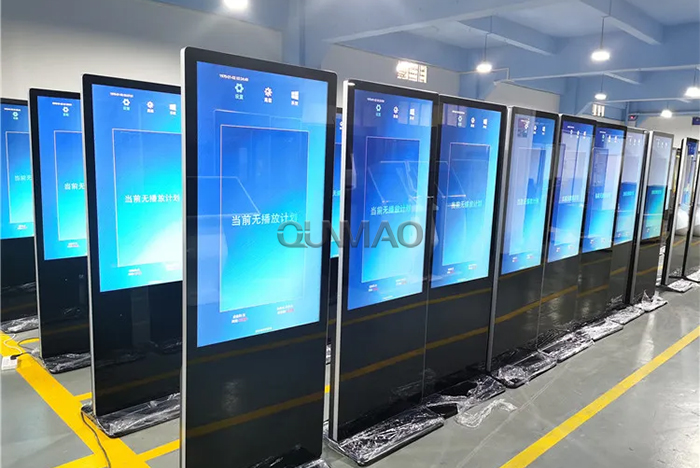
Qtenboard digital signage connects to the dedicated cloud CMS management platform. You upload new promotional pictures, short videos, text notices and menu lists remotely with a few clicks. Content takes effect across all branch store screens within minutes. Morning hot promotions, afternoon clearance activities and evening evening discounts can all switch automatically according to preset time schedules. No printing fees, no manual replacement work, and zero waiting periods for updated marketing messages.
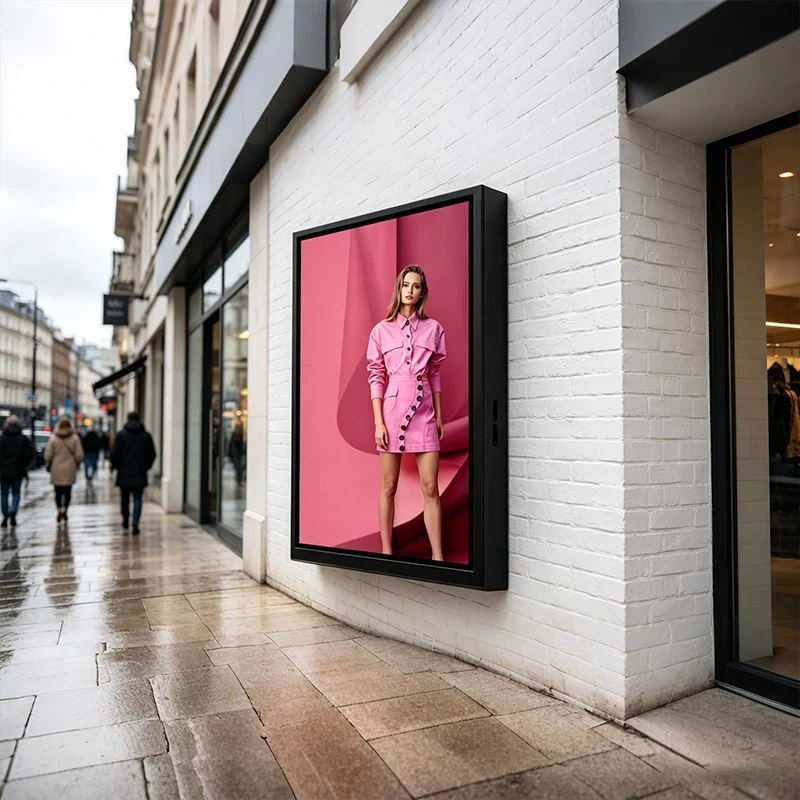
Passersby glance at flat printed posters for just one to two seconds on average. Static graphics fail to stand out amid crowded street scenes and storefront surroundings. Moving images, short promotional clips and sliding picture carousels on digital screens draw eye contact naturally. Bright, high-resolution displays showcase product details, usage scenes and customer feedback vividly. Customers stop to watch for longer periods, and brand memory deepens significantly.
Traditional billboards and TV commercials offer no clear data feedback. You never learn how many people viewed the ad, which content attracted the most interest, or whether promotions brought actual customer foot traffic and sales growth. All marketing evaluations rely on vague subjective judgment.
Qtenboard systems record screen playback duration, content click volume and customer interaction frequency in the backend. You check weekly and monthly data reports to figure out which promotional plans perform well and which need revision. Marketing budgets get allocated accurately, and blind investment gets eliminated completely.
Static advertising has not lost all market value entirely. Large outdoor billboards and prime-time television ads still serve specific brand purposes for big enterprises. Massive roadside billboards deliver widespread regional brand exposure and build premium brand perception quickly. High-cost TV commercials cover huge audience groups within a short time, suitable for national brand image building and major brand launch events.
Yet these formats carry unavoidable drawbacks. Content stays fixed for months, unable to match fast-changing market trends. They cannot tailor information for different customer groups. No accurate viewing data exists to measure conversion effects. For most physical stores, chain outlets, service shops and small-to-medium commercial establishments pursuing operational efficiency and flexible marketing strategies, digital signage creates far more sustainable long-term commercial value.
Return on investment stands as the core factor business owners care about most. We break down cost composition and revenue contribution of both advertising forms clearly.
Traditional advertising accumulates continuous recurring costs: graphic design fees, printing charges, manual posting labor, billboard rental fees and repeated replacement expenses. Once promotional cycles end, old posters become useless waste with no residual value.
Digital signage requires a one-time upfront hardware purchase plus minor annual platform maintenance fees. After deployment, content updates cost nothing extra. The device runs steadily for 5 to 8 years under normal commercial use, covering countless promotional cycles.
Dynamic screen content lifts store foot traffic and in-store consumption rates visibly. Interactive functions such as coupon collection and product inquiry further raise customer willingness to spend. Measurable sales growth makes investment returns intuitive.
With Qtenboard integrated hardware and cloud CMS software, brands launch targeted regional promotions, time-divided marketing plans and interactive customer activities easily. The comprehensive marketing effect far surpasses the limited coverage and static display of traditional offline advertising.
| Comparison Item | Traditional Posters, Billboards & TV Ads | Qtenboard Digital Commercial Signage |
|---|---|---|
| Content Update Ability | Fixed content only; new printing required for every revision | Remote real-time editing, timed automatic switching, unlimited adjustments |
| Visual Attraction | Flat static pictures, low passenger retention rate | Dynamic videos, picture rotation, vivid display, longer viewing time |
| Long-Term Operating Cost | Continuous printing, rental and labor fees, high cumulative expenditure | One-time hardware investment, low annual maintenance cost |
| Customer Interaction Function | No interactive experience available | QR code coupon, product browsing, questionnaire collection supported |
| Marketing Data Tracking | No accurate viewing and conversion data | Backend playback statistics, interaction data, downloadable reports |
| Serviceable Lifespan | Short, discarded after single promotion period | 5–8 years stable commercial operation, reusable for all campaigns |
| Applicable Scenarios | Large-scale brand image promotion only | Retail, catering, hotel, office, mall, chain store full scenarios |
Q1: Is digital signage truly cost-effective compared with long-term traditional offline advertising?
It delivers obvious economic advantages over time. The initial purchase expense is higher than printing a batch of posters. But after several rounds of promotional updates, the savings on repeated design, printing and manual replacement quickly offset the upfront investment. For chain brands with multiple stores, unified remote management cuts branch operation costs drastically, and total profit margins improve steadily year by year.
Q2: Can small independent shops without marketing teams operate Qtenboard digital signage smoothly?
Absolutely. Our CMS operating interface adopts a straightforward layout similar to common mobile applications. Uploading pictures, arranging playback sequences and setting timed tasks take only a few minutes to learn. Even a single screen placed at store entrances can showcase daily specials, discount information and store introductions, effectively drawing passersby and lifting in-store sales performance without professional marketing personnel.
Q3: Does the system support unified management for nationwide chain store outlets?
Yes. Headquarters staff log into the cloud backend once to push unified brand promotional content to all nationwide store screens. Meanwhile, regional branches can upload localized preferential information independently according to local consumption habits, balancing unified brand image and regional flexible operation perfectly.
Q4: Can digital screens adapt to complex environments such as shopping mall entrances and outdoor storefronts?
We supply indoor high-definition models and enhanced high-brightness outdoor waterproof versions separately. Outdoor panels adopt dustproof, waterproof and anti-glare structures, maintaining clear display under strong sunlight and resisting rainy weather erosion, suitable for all indoor and semi-outdoor commercial spaces.
Q5: What after-sales service policies does QUNMAO provide for commercial display products?
We offer long-term hardware warranty, remote system debugging, regular CMS function upgrades and nationwide on-site maintenance services. Technical teams respond rapidly to equipment faults to avoid interruption to store daily business and marketing schedules.
Q6: Can video advertisements, picture albums and text notices be played in mixed cycles?
The playback schedule supports free combination of videos, images, scrolling text and QR code modules. You set playback duration and sequence freely to create layered, rich storefront advertising content and avoid monotonous single content playback.
Consumer attention spans shrink continuously in modern commercial environments. Rigid, unchangeable traditional advertising gradually loses attraction for offline audiences. Qtenboard commercial digital signage breaks the limits of static promotion with flexible content control, eye-catching dynamic display, interactive customer experience and data-driven marketing adjustment. It lowers cumulative operating costs for physical businesses while expanding brand influence and converting passenger flow into tangible sales revenue. Backed by manufacturer QUNMAO’s complete production system and mature software platform, we customize screen sizes, brightness parameters and functional configurations for retail shops, catering chains, hotels, office buildings and large shopping complexes. If you plan to upgrade your offline marketing mode and pursue stable long-term business returns, digital signage stands as the most rational commercial choice available today.


 Floor 6, Building A, No. 3, North District, Shangxue Science and Technology City, Xinxue Community, Bantian Street, Longgang District, Shenzhen City
 info@szqunmao.com
 +86 15920011166
 +86 15920011166