English
 Español
 Português
 Français
 Русский язык
 Italiano
 Deutsch
 Nederlands
 لعربية
 한국어
 Japanese
 ภาษาไทย
 Türkçe
 Tiếng Việt
 Bahasa Indonesia
 Hindi
 kazakh
 Uzbek
 Thai
 Farsi

Interactive Flat Panel Spare Parts and Service | QUNMAO
 2026-11-24
 3




2026-11-24
3
For distributors and importers, purchasing an interactive flat panel is only the first step. Long-term business also depends on how product issues are handled, whether replacement parts can be supplied, and how technical questions are resolved after delivery. A clear after-sales arrangement helps buyers manage service costs and maintain customer confidence.
As a Chinese commercial display manufacturer, QUNMAO provides factory-based support for overseas interactive flat panel buyers. Depending on the product model, order agreement and confirmed service terms, this support may include warranty assessment, spare parts supply, technical documentation, remote troubleshooting and repair coordination.
QUNMAO's support is provided from China. The company does not operate a local spare parts warehouse, on-site engineering team or service center in Kazakhstan. Local installation, routine maintenance and on-site repairs are arranged by the buyer or its appointed local service provider.
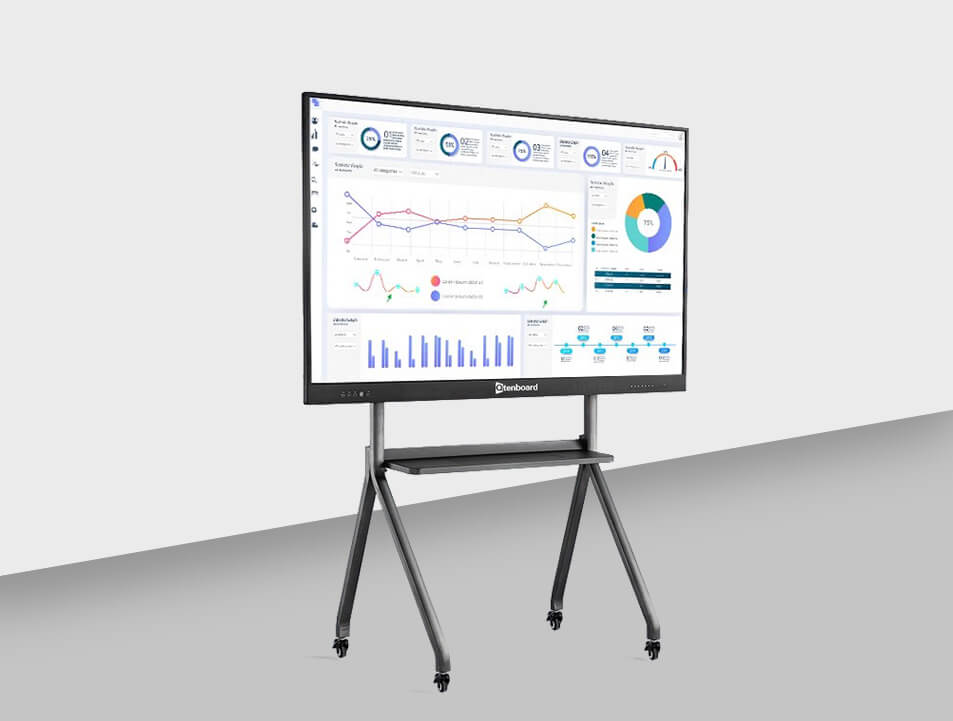
Buyers can review the interactive flat panel product range and the technical support information when evaluating the support requirements for a project.
The warranty period and the date from which warranty coverage begins.
Which parts and types of faults are covered or excluded.
How technical issues should be reported and what evidence is required.
How replacement parts are requested, quoted, packed and shipped.
Who is responsible for local installation, diagnosis and on-site labor.
How freight, customs charges and other transportation costs are handled for warranty-related shipments.
These points should be recorded in the applicable warranty policy, quotation or sales agreement rather than left to informal assumptions.
Warranty coverage should be checked against the policy applicable to the specific interactive flat panel model and the terms stated in the order. Buyers should not assume that every product line, configuration or order automatically has identical warranty coverage.
Before confirming a purchase, Kazakhstan distributors should review the QUNMAO Warranty Policy and request written clarification if any point is unclear.
A clear service request helps the factory identify the product and assess the reported issue. Buyers should prepare the following information where available:
Product model and configuration.
Serial number and, if available, production batch information.
Order number or purchase reference.
A description of the fault, including when it started and whether it occurs consistently.
Photos or videos showing the problem, screen condition, connections or error messages.
Basic troubleshooting steps already completed.
QUNMAO can use these details to review the case and advise on the next step. Depending on the findings and applicable policy, the solution may involve operating guidance, software troubleshooting, replacement parts, repair coordination or another agreed arrangement.
Not necessarily. Product warranty coverage and the cost of transporting parts or equipment are separate matters. International freight, local transportation, customs duties, taxes and handling charges should be checked against the applicable policy and order agreement.
Distributors should clarify these responsibilities before shipment, especially when planning service for customers in different cities or regions of Kazakhstan.
Spare parts planning helps distributors reduce service delays, but stocking every component is rarely practical. The right inventory depends on the installed product base, the expected service period, product configuration, local repair capability, replenishment lead time and the cost of holding inventory.
QUNMAO recommends that buyers discuss spare parts as part of the initial product order. A planned parts package can be reviewed according to the models and quantities being purchased, instead of relying on an arbitrary percentage for every project.
| Category | Examples | Planning Considerations |
|---|---|---|
| Small accessories | Styluses, remote controls and other supplied accessories | Consider loss, wear, customer usage and the number of installed units. |
| Electrical and connection parts | Power cables, adapters and approved connection components | Check compatibility with the exact model and local electrical requirements. |
| Structural parts | Mounting hardware, brackets and model-specific mechanical components | Confirm the part number and compatibility before ordering. |
| Core functional components | Mainboards, power boards, touch components and LCD modules | Evaluate failure impact, replacement complexity, cost and technician capability. |
For accessories, buyers can review the interactive series accessories and the interactive stylus product. The exact accessory list should still be checked against the selected model and order configuration.
There is no universal spare parts ratio that fits every interactive flat panel distributor. A dealer with a large installed base, long replenishment lead times or limited local repair resources may need a different plan from a dealer handling occasional project orders.
A practical planning method is to estimate demand using the installed base and observed service data:
Planning reference:
Estimated spare parts demand = Installed units × Estimated demand rate for the relevant part
The demand rate should be based on actual service records where possible. For a new product line, buyers can start with a conservative pilot stock and adjust it as installation and fault data become available. This is a planning method, not a fixed QUNMAO stocking requirement or a guaranteed failure rate.
For distributors launching a new product line, ordering selected accessories and service parts with the first shipment can reduce the need for a separate urgent shipment later. The package should be agreed in advance and listed clearly in the quotation or packing documentation.
Core components such as LCD modules or mainboards require more careful decisions because of their cost, storage requirements and model compatibility. Dealers should discuss these items with QUNMAO based on expected sales volume and local technical capacity.
Remote diagnosis is useful when the factory and the end customer are in different countries. It allows the distributor and QUNMAO technical team to review the issue before deciding whether the problem requires an operating adjustment, software guidance, a replacement component or physical repair.
The distributor should provide the model, serial number, order reference and a clear description of the issue. Photos or short videos are helpful for problems involving the display, touch function, ports, power supply, sound or physical condition.
Where appropriate, the local technician can check the power source, cable connections, input selection, system settings, connected devices and software version. These checks should follow the product documentation and should not involve unauthorized disassembly.
QUNMAO can review the submitted information and provide remote technical guidance. If necessary and practical, the parties can arrange a video session to observe the fault and guide the next diagnostic steps.
After reviewing the issue, the factory may recommend a settings adjustment, software or firmware guidance, an approved module replacement, a spare part shipment or a repair assessment. The appropriate solution depends on the fault, product condition, warranty status and agreed service terms.
For support arrangements and available technical resources, buyers can refer to the QUNMAO Technical Support page.
Not every reported fault requires the complete unit to be returned or replaced. In some cases, a software setting or connection issue can be resolved through guidance. In other cases, a replaceable component may be the most practical solution.
| Issue Type | Possible Response | What Should Be Confirmed? |
|---|---|---|
| Operating or configuration issue | Remote instructions or settings adjustment | System version, usage conditions and troubleshooting results. |
| Accessory or connection issue | Check compatibility or supply a relevant part | Part number, model compatibility and warranty status. |
| Replaceable module fault | Technical assessment and possible module replacement | Diagnostic evidence, repair capability and replacement procedure. |
| Major hardware or display fault | Further assessment, repair coordination or another agreed solution | Fault severity, transport cost, warranty terms and repair feasibility. |
The final decision should be made after the fault has been assessed and the applicable warranty terms have been checked. A warranty claim does not automatically mean that a complete unit will be replaced free of charge.
For this reason, distributors should keep the original order details, serial number records, fault evidence and communication history. These records make it easier to evaluate repeat issues and agree on a suitable response.
For overseas distributors, a practical first-line service process can improve response times without requiring every issue to be handled by the factory. Local technicians can manage basic checks and approved tasks, while complex hardware problems are referred to QUNMAO for technical assessment.
Record the product model, serial number and installation location.
Check power, cables, input sources and connected devices.
Record software versions and visible error messages.
Capture photos or videos before changing the product configuration.
Follow approved instructions for any module replacement.
Escalate unfamiliar electrical or internal hardware faults to qualified personnel.
Dealers should make sure that technicians understand the product configuration, normal operating procedures and the limits of authorized maintenance. Training materials, installation instructions and remote guidance can help local teams perform appropriate first-line checks.
QUNMAO's source factory information provides background on its manufacturing and quality-control capabilities. Buyers can also review the interactive whiteboard product range when planning product training for their sales and technical teams.
Dealers should maintain a service record for each reported issue, including the serial number, installation date, fault description, action taken and parts used. Over time, these records can help identify recurring problems and improve spare parts planning.
After-sales performance is influenced not only by how faults are handled but also by how products are checked before shipment. Manufacturing controls and clear product records help reduce avoidable issues and make later diagnosis more efficient.
Components should be checked according to the applicable production and inspection procedures. Assembly process controls help verify that the product is built according to the confirmed configuration.
Finished interactive flat panels may undergo functional checks, aging tests and display or touch calibration according to the applicable product and production requirements. Buyers can discuss the relevant test items and acceptance criteria for their order before mass production.
Correct packaging helps protect large-format displays during handling and transportation. Buyers should confirm the packing method, accessory list, product labels, serial number records and shipment documents before dispatch.
QUNMAO's factory overview explains its manufacturing and quality-control background. For product-specific details, buyers can also consult the interactive flat panel product page and request the applicable specifications and inspection information for their selected model.
No. QUNMAO provides factory-based after-sales support from China and does not operate a local service center, on-site engineering team or spare parts warehouse in Kazakhstan. Buyers arrange local installation and on-site maintenance through their own teams or appointed service providers.
Distributors can submit the product model, serial number, required part information and fault evidence to QUNMAO. After compatibility and the applicable commercial or warranty terms are reviewed, the parties can confirm the parts, costs, packing and shipping arrangements.
No. Spare parts quantities should be planned according to the installed base, product configuration, service history, expected demand, replenishment time and inventory budget. A suitable package can be discussed for each order.
Not automatically. The reported fault must be assessed under the applicable warranty policy and order agreement. Depending on the findings, the response may involve technical guidance, a replacement part, repair coordination or another agreed solution.
Prepare the model, serial number, order reference, fault description and clear photos or videos. Include the software version and troubleshooting steps already completed where relevant. This information helps the technical team review the issue more efficiently.
A suitable after-sales plan should be considered before the first shipment, not only after a product issue occurs. Kazakhstan distributors and project buyers can discuss product configuration, spare parts selection, technical documentation and remote support arrangements with QUNMAO.
When making an inquiry, include your target models, order quantity, expected installed base, sales regions and local service capability. This information helps the factory review a practical support plan for your business.
Explore the interactive flat panel range or contact QUNMAO to discuss your project.


 Floor 6, Building A, No. 3, North District, Shangxue Science and Technology City, Xinxue Community, Bantian Street, Longgang District, Shenzhen City
 info@szqunmao.com
 +86 13148726043
 +86 13148726043