English
 Español
 Português
 Français
 Русский язык
 Italiano
 Deutsch
 Nederlands
 لعربية
 한국어
 Japanese
 ภาษาไทย
 Türkçe
 Tiếng Việt
 Bahasa Indonesia
 Hindi
 kazakh
 Uzbek
 Thai
 Farsi

Interactive Flat Panel Factory Audit Checklist | Qunmao
 2026-11-20
 23




2026-11-20
23
Choosing an interactive flat panel supplier in China requires more than comparing quotations, product specifications or company presentations. A factory audit helps Kazakhstan importers verify whether a supplier has the production resources, quality controls and technical capabilities required for the project.
Whether you are sourcing an interactive whiteboard or a smart board, the objective is to confirm how the product is manufactured, tested and prepared for delivery. A practical approach is to begin with a video audit, arrange an on-site inspection for shortlisted suppliers when necessary, and then evaluate a sample before placing a bulk order.
An audit does not guarantee that every future order will be problem-free. It provides evidence that helps buyers assess supplier reliability, identify risks and make more informed purchasing decisions.
Video audits and on-site inspections serve different purposes. A video audit is useful for initial supplier screening, while a physical visit allows buyers to examine production areas, documents and working procedures more closely.
| Audit Method | What It Can Verify | Limitations |
|---|---|---|
| Video Audit | Production areas, visible equipment, assembly procedures, testing stations, staff operations and selected documents shown during the session | Cannot independently confirm long-term production performance, continuous capacity or the complete condition of every process |
| Shenzhen Factory Inspection | Actual production conditions, equipment, material storage, quality procedures, inspection records and discussions with relevant personnel | A single visit cannot guarantee future batch quality or prove long-term delivery performance |
| Order and Delivery Record Review | Previous production records, inspection reports, batch information and shipment documents where available | Historical performance does not guarantee that every future order will achieve the same results |
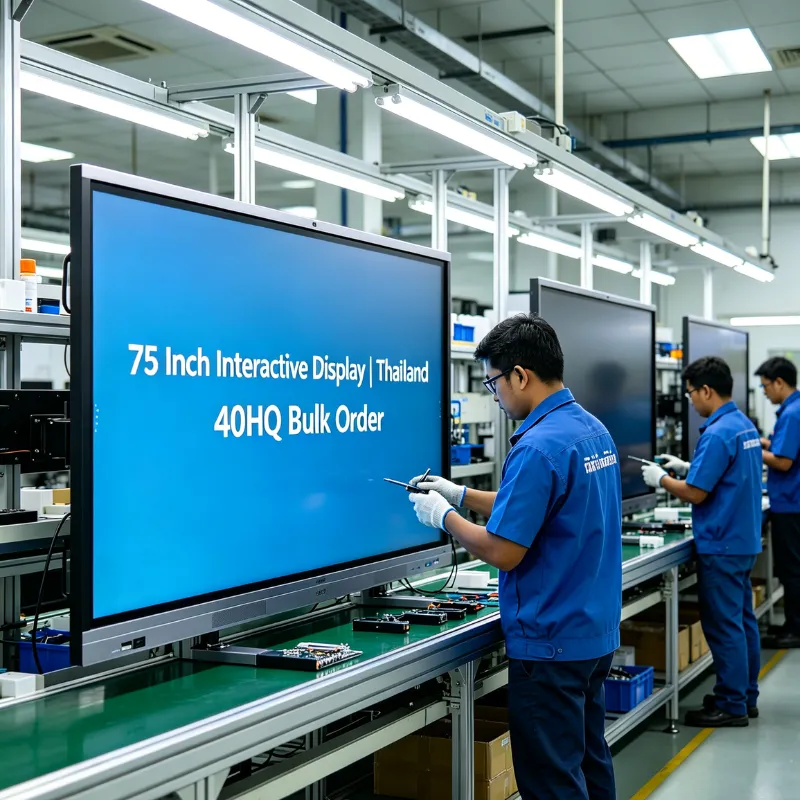
A video audit is a practical first step for overseas buyers who want to screen suppliers without immediately arranging international travel. It allows the buyer to request a live walkthrough of relevant production and testing areas.
Buyers should prepare questions in advance and ask the supplier to demonstrate specific processes rather than relying only on a general factory presentation. Where possible, request to see the product being assembled and tested during the session.
An on-site inspection can be useful before a large order, a long-term distribution agreement or a project involving customized product configurations. It gives the buyer an opportunity to observe actual working conditions and compare the factory's statements with available records.
Inspection arrangements should be confirmed with the supplier in advance. The parties should agree on the production areas, documents and processes that can be reviewed, taking confidentiality and operational requirements into account.
A structured checklist helps importers evaluate different suppliers using consistent criteria. The following 15 checks cover company identity, manufacturing operations, quality control, technical capability and order delivery management.
| No. | Audit Item | What to Verify | How to Check |
|---|---|---|---|
| 1 | Business Entity and Contracting Party | The registered company name, contracting entity and payment beneficiary should be clearly identified and reasonably consistent with the transaction documents. | Review the business registration information, draft contract and bank beneficiary details. Clarify any differences between entities. |
| 2 | Factory Authenticity and Production Control | The supplier should be able to explain its actual manufacturing location and identify which production processes are performed in-house or outsourced. | Request a live factory walkthrough and review the production areas relevant to the ordered product. |
| 3 | Production Lines and Equipment | Available equipment and workstations should be relevant to the product's manufacturing and testing processes. | Observe assembly, inspection, calibration and other applicable production equipment during a video or on-site audit. |
| 4 | Production Capacity and Scheduling | The supplier should explain how production capacity is calculated and how current orders and delivery schedules are managed. | Review production plans, relevant historical records and the proposed schedule for the buyer's order. |
| 5 | Key Components and Supply Chain | Important components such as LCD panels, mainboards, touch components and power supplies should have identifiable specifications and procurement controls. | Check component labels, specifications, incoming material information and supplier management procedures where available. |
| 6 | Incoming Quality Control | The factory should have procedures for inspecting incoming materials and handling non-conforming components. | Review incoming inspection standards, sample records and the process for isolating or handling defective materials. |
| 7 | Assembly Process and Work Instructions | Important assembly operations should follow documented procedures and appropriate process controls. | Observe actual assembly work and request relevant work instructions or process inspection records. |
| 8 | Aging and Reliability Testing | The factory should have applicable operating tests and records for identifying potential product problems before shipment. | Inspect the testing area and review available test procedures and sample records. Confirm the applicable test conditions for the product. |
| 9 | Display and Touch Calibration | The product should have suitable checks for display performance, touch positioning and relevant functional requirements. | Request a live demonstration and review the corresponding calibration or inspection records. |
| 10 | Software and Firmware Management | System versions, firmware configurations, pre-installed applications and customization requirements should be identifiable and controlled. | Check device configuration records, software versions, upgrade procedures and sample approval documents. |
| 11 | Final Inspection and Quality Records | The factory should have defined finished-product inspection procedures and records before shipment. | Review final inspection reports, applicable sampling procedures and non-conformity handling records. |
| 12 | Certifications and Compliance Documents | Available certificates and test documents should correspond to the relevant product model, configuration, applicant or manufacturer and applicable scope. | Check the document details against the product specification and verify the applicable status and scope. |
| 13 | Serial Number and Batch Traceability | The supplier should have a method for identifying products and linking relevant production or inspection information to a batch or serial number. | Select a sample unit and ask the supplier to demonstrate the available traceability records. |
| 14 | Packaging, Spare Parts and After-Sales Support | Packaging protection, spare-parts arrangements, warranty scope and technical support responsibilities should be clearly defined. | Review packaging specifications, warranty terms, spare-parts arrangements and technical support procedures. |
| 15 | Commercial Documents and Delivery Management | Product specifications, contract terms, payment arrangements and delivery responsibilities should be clearly documented. | Review draft contracts, approved specifications, invoice and packing list arrangements and the agreed delivery terms. |
A large industrial site or a high number of production lines does not automatically prove that a supplier can deliver your specific order on time. Buyers should understand which processes are available, how production is scheduled and whether the proposed configuration can be manufactured within the agreed period.
Ask the supplier to explain the capacity calculation behind its quotation. It is also useful to distinguish between theoretical production capacity, current available capacity and the schedule committed to the buyer's order.
An interactive flat panel combines display hardware, touch technology, computing components and software. The audit should therefore include both manufacturing processes and the management of product configurations.
For OEM/ODM projects, check how the supplier records approved logos, startup screens, UI changes, software versions and pre-installed applications. These details help prevent differences between the approved sample and the products delivered in bulk.
Important: audit thresholds such as sampling ratios, aging duration and testing limits should be agreed according to the product specification and purchase contract. There is no single numerical threshold in this checklist that should be treated as a universal industry requirement.
Document checks should cover both the Chinese supplier and the Kazakhstan importing company. These are separate parts of the transaction and should not be confused during a factory audit.
Business registration information: confirm the legal name and registered entity of the supplier.
Contract information: check that the contracting party and product specifications are clearly identified.
Bank beneficiary details: confirm the payment recipient and clarify any differences from the contracting entity.
Product specification: record the model, hardware configuration, software requirements and agreed accessories.
Commercial documents: confirm how invoices, packing lists and shipment documents will be prepared.
Technical and conformity documents: request applicable documents for the actual product model and configuration.
The importing company should confirm its registered business details and provide the information required for the agreed transaction and import arrangements. BIN, or Business Identification Number, is an important business identifier in Kazakhstan, but the documents required for a specific shipment should be confirmed with the local customs broker or relevant professional adviser.
Depending on the transaction, buyers may also need to coordinate company details, authorized representatives, payment information and product documentation with the supplier before shipment.
Do not assume that a certificate held by a manufacturer automatically covers every product in its catalogue. Review the product model, configuration, applicant or manufacturer details and applicable scope.
For Kazakhstan-bound products, confirm the applicable EAEU conformity requirements and supporting documents for the specific product. Importers should obtain local professional advice where classification, conformity assessment or customs documentation is unclear.
Document responsibility: the supplier and importer should agree in advance who prepares each document, who checks its accuracy and when it must be provided. Local import and customs requirements should be verified for the specific transaction rather than assumed from a generic checklist.
Completing an audit is only useful when the findings are translated into a purchasing decision. Buyers should record the evidence, identify unresolved issues and determine whether the supplier is ready for sample evaluation or an order.
| Audit Result | Evaluation | Recommended Next Step |
|---|---|---|
| Pass | The company identity, relevant production processes, quality controls and technical capabilities meet the project's requirements. | Proceed to sample evaluation, final specification confirmation and commercial review. |
| Conditional Pass | Some documents, process details or product tests remain incomplete, but the issues may be resolved. | Request missing evidence, corrective actions or additional sample tests before making a larger commitment. |
| Fail | Important information cannot be verified, major inconsistencies remain, or significant production, quality or compliance concerns are identified. | Pause the purchasing process and consider alternative suppliers until the issues are resolved. |
After the audit, prepare a written record of the questions asked, documents reviewed, areas inspected and issues identified. Where possible, attach relevant photographs, videos or document references with the supplier's permission.
Assign responsibility and a deadline to each unresolved issue. This makes it easier to compare suppliers and prevents important audit findings from being forgotten during later negotiations.
A successful factory audit should normally be followed by product evaluation. The buyer should test the sample against the approved technical specification, including display, touch, operating system, software configuration and accessories.
Once approved, the sample specification and any agreed inspection requirements should be recorded in the purchase documentation. Any changes to hardware, software or customization should be reviewed before production.
Even experienced importers can overlook important details when they focus only on the factory's presentation. The following mistakes can make an audit less useful.
A showroom demonstrates product appearance but does not prove that the supplier controls the manufacturing process. Ask to review relevant production, testing and quality inspection areas.
A certificate should be reviewed against the actual product model and configuration. Do not assume that one document covers every size, model or hardware version offered by the supplier.
A sample can demonstrate product functions, but it does not independently prove production consistency. Review the supplier's process controls and confirm how the approved configuration will be maintained during mass production.
Interactive flat panels rely on both hardware and software. Buyers should check how firmware versions, pre-installed applications and customized settings are recorded and controlled.
Verbal explanations are difficult to compare or enforce later. Record audit findings, outstanding issues and agreed corrective actions before proceeding with an order.
A video audit is useful for initial supplier screening and can demonstrate selected production activities. However, it cannot fully replace an on-site inspection when the buyer needs to examine physical records, working conditions or specific processes in greater detail.
Start with the supplier's legal identity, actual production location, relevant manufacturing processes and product quality controls. Then review technical documents, sample performance, commercial terms and delivery arrangements before making a purchasing decision.
The sequence depends on the project size and supplier relationship. For a new supplier or a large planned order, an initial video audit can help screen the factory before investing in sample evaluation. A sample should still be tested before mass production.
Common documents to review include business registration information, product specifications, applicable conformity documents, inspection records, draft contracts and relevant commercial document samples. The exact list depends on the product, transaction and import requirements.
No. An audit provides evidence about the supplier's current facilities, processes and management practices, but it cannot guarantee every future product. Sample approval, agreed inspection criteria, batch traceability and clear contractual responsibilities remain important.
For Kazakhstan importers, a reliable supplier evaluation process should combine company verification, production review, document checks and sample testing. This helps buyers understand not only what a factory claims to offer, but also how its manufacturing and quality processes work.
Qunmao supports overseas B2B buyers through project-based manufacturing discussions, product evaluation and technical communication. Video communication or factory inspection arrangements can be discussed according to the project and the areas that need to be reviewed.
Before arranging an audit, buyers can prepare their target product sizes, hardware requirements, expected order quantity, customization scope and key quality concerns. This allows both sides to focus the discussion on the manufacturing and delivery requirements that matter to the project.
Explore our Interactive Flat Panel solutions and Interactive Whiteboard range to review the product categories relevant to your sourcing plan.
Planning to audit an interactive flat panel manufacturer in China?
Share your target model, purchasing requirements and audit questions with Qunmao. We can discuss the relevant production information, technical details and possible video or on-site communication arrangements for your project.
Contact Qunmao through the company's inquiry channel to discuss your factory audit and sourcing requirements.


 Floor 6, Building A, No. 3, North District, Shangxue Science and Technology City, Xinxue Community, Bantian Street, Longgang District, Shenzhen City
 info@szqunmao.com
 +86 13148726043
 +86 13148726043