English
 Español
 Português
 Français
 Русский язык
 Italiano
 Deutsch
 Nederlands
 لعربية
 한국어
한국어 Japanese
 ภาษาไทย
 Türkçe
 Tiếng Việt
 Bahasa Indonesia
 Hindi
Hindi kazakh
 Uzbek
Uzbek Thai
Thai Farsi
Farsi
Transit Digital Signage for Metro, Bus & Train Station | Qunmao Smart Public Transport Display
 2026-07-24
 1221
1221



2026-07-24
1221
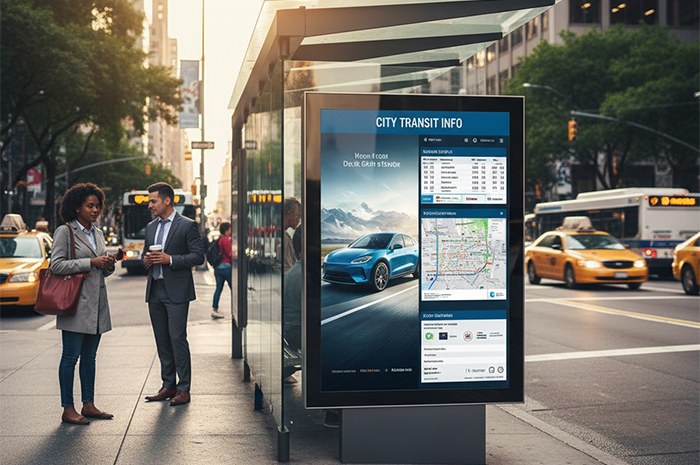
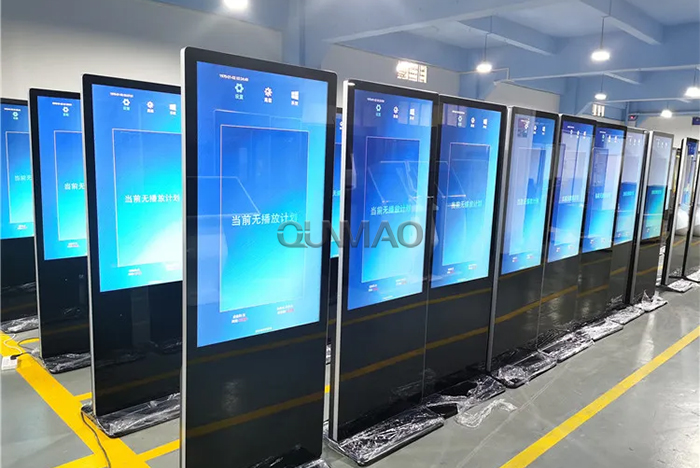
Qunmao Digital signage is transforming public transportation infrastructure — including city buses, intercity trains, urban light rails and metro stations — into intelligent connectivity hubs for real-time information delivery, commercial interaction and passenger engagement. Global transit authorities are gradually replacing outdated static posters and printed notice boards with professional transit-grade digital display solutions. As urban population expands and public travel demand keeps rising, passenger experience management becomes a core priority for transportation operators. In this article, we will deeply analyze how transport digital signage reshapes modern public travel experiences across multiple core dimensions, and explain why more transit operators choose durable industrial digital signage for long-term station and onboard deployment.
The era of fixed printed timetables has come to an end. Professional transit digital signage can seamlessly connect with local public transport scheduling systems, automatically pushing instant transport updates to passengers. The supported content covers train arrival and departure countdowns, temporary service delays, platform adjustment notices, severe weather early warnings, road traffic congestion data, and emergency evacuation reminders. Many mature transit systems around the world have adopted this technology. Commuters inside Tokyo Metro stations view continuously refreshed real-time arrival timetables on wall-mounted digital screens. Passengers taking London city buses can check interactive route maps showing line disruptions, transfer alternatives and estimated journey duration. Dynamic digital information eliminates travel uncertainty, greatly reduces passenger anxiety while improving public transport punctuality perception. Meanwhile, transit management teams can cut continuous printing and poster replacement expenses, realizing low-carbon, flexible information release mode without frequent manual updates.
Public transport waiting areas and vehicle cabins represent high-value advertising environments, and network-connected digital signage maximizes commercial marketing influence through time-based and location-based precise targeting. Taking New York City subway stations as a typical example: screens near financial business districts broadcast coffee promotions and fintech application advertisements during morning rush hours. After office hours, content automatically switches to restaurant dinner packages and local ride-hailing service promotions. Tourist hub train stations play immersive promotional videos of nearby scenic spots, equipped with embedded QR codes enabling visitors to complete attraction ticket reservations with one mobile scan. Statistical data shows urban citizens spend an average of 45 minutes every day on public transit. In such relatively low-distraction environments, brand information achieves repeated stable exposure, effectively lifting advertisement conversion rate and overall marketing ROI for merchants. Operators of public transport systems can also obtain stable diversified revenue streams via commercial screen broadcasting, offsetting daily operation expenditure.
Modern transit digital signage perfectly integrates industrial-grade hardware performance and outstanding visual appearance. Anti-glare high-definition display panels guarantee readable screen content under strong sunlight beside bus windows as well as dim underground metro platforms. Built-in human body motion sensors support automatic screen brightness adjustment according to surrounding ambient light, lowering long-term power consumption and extending display service lifespan. The playable content library is not limited to simple static text. Operators can publish animated transit route diagrams, multi-lingual public safety guidance, landscape relaxing images for long-distance rail passengers and public welfare announcements. Seoul Metro widely installs curved LED digital signage, transforming monotonous waiting platforms into digital art exhibition zones. This kind of deployment fully proves transit displays can merge practical service functions with urban aesthetic innovation, upgrading the overall image of public transport facilities.
The next generation of transport digital signage evolves from passive information broadcasting to interactive self-service equipment, putting travel planning control directly into passengers’ hands. Touchscreen kiosks placed inside major train stations allow travelers to design multi-modal transfer routes, check real-time train seat availability and inquire about luggage service policies. Intelligent outdoor bus stop signage supports touch operation to check vehicle arrival timeline or browse surrounding catering shops for pre-order takeaway pickup. Singapore public transport system widely adopts QR code interaction solutions on onboard digital screens. Travelers scan codes to synchronize transit schedules to mobile applications, constructing smooth closed-loop online and offline travel experience. These interactive functions turn empty waiting time into active travel preparation, improve passenger satisfaction and strengthen public recognition of urban transit networks.
Comparison ItemTraditional Static Paper PostersQunmao Transit Digital Signage
Content Update ModeManual pasting, high printing & labor costRemote cloud one-click update, real-time schedule linkage
Information TimelinessCannot display temporary delays or emergency alertsInstant push for emergency & schedule adjustment data
Advertising FlexibilityFixed static picture, cannot time-divided broadcastTime & location targeted rolling advertisement playback
Interaction AbilityPure viewing, no passenger interaction supportedOptional touch screen, QR code mobile linkage service
Weather & Wear ResistanceEasy fading, damaged by wind, rain and sunlightIndustrial housing, anti-glare, optional IP rated protection
Environmental FeatureProduce waste paper and printing ink pollutionNo consumables, support energy-saving automatic dimming
Yes. Qunmao digital signage CMS platform supports standard data interface docking. Transit operators can synchronize real-time arrival data, delay notifications and route change information to all networked display terminals automatically without manual content editing every day.
Qunmao supplies two categories: indoor metro/train station displays and waterproof outdoor transit digital signage. Outdoor models adopt sealed industrial cabinet, constant temperature cooling system and anti-UV tempered glass, adapting to long-time outdoor all-weather operation.
Not required. Simple information broadcasting screens inside carriages usually adopt non-touch models to lower cost. Large transfer hub self-service kiosks can be configured with projected capacitive multi-touch for passenger route inquiry.
Absolutely. The CMS software supports customized playback schedules. Administrators set different advertising materials to play automatically in morning rush hour, daytime and evening peak periods to realize targeted marketing for different passenger groups.
Yes. The player supports multi-language text, subtitles and video materials. It meets the travel service demand of foreign tourists in international transit hubs, airports connected railway stations and cross-border transportation lines.
All terminals connect to cloud CMS via 4G, 5G or wired network. Managers log into one unified backend to group manage screens, push content remotely, monitor online status and collect equipment running data in real time.
As urban mobility systems continuously upgrade towards intelligent management, transit digital signage has evolved from optional auxiliary facilities into indispensable core infrastructure. It effectively bridges information asymmetry between transport operators and passengers, expands sustainable commercial advertising revenue channels, and brings humanized service experience to every traveler. Whether deployed on urban buses, suburban trains, underground metro platforms or open-air bus shelters, these digital displays are far more than simple screens for text and video playback. They serve as the vital connective tissue supporting smarter, safer and more engaging public travel ecosystem worldwide. Qunmao keeps optimizing industrial-grade transit digital signage hardware and cloud management software, providing reliable long-running display solutions for urban public transport projects across global markets.


 Floor 6, Building A, No. 3, North District, Shangxue Science and Technology City, Xinxue Community, Bantian Street, Longgang District, Shenzhen City
 info@szqunmao.com
 +86 15920011166
 +86 15920011166